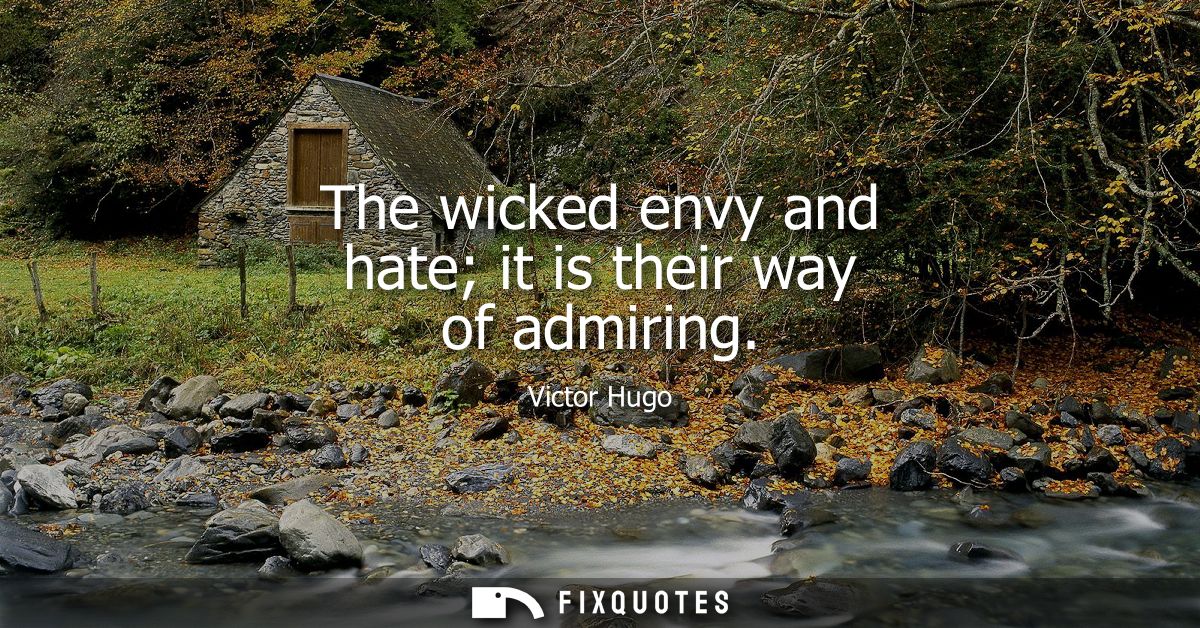
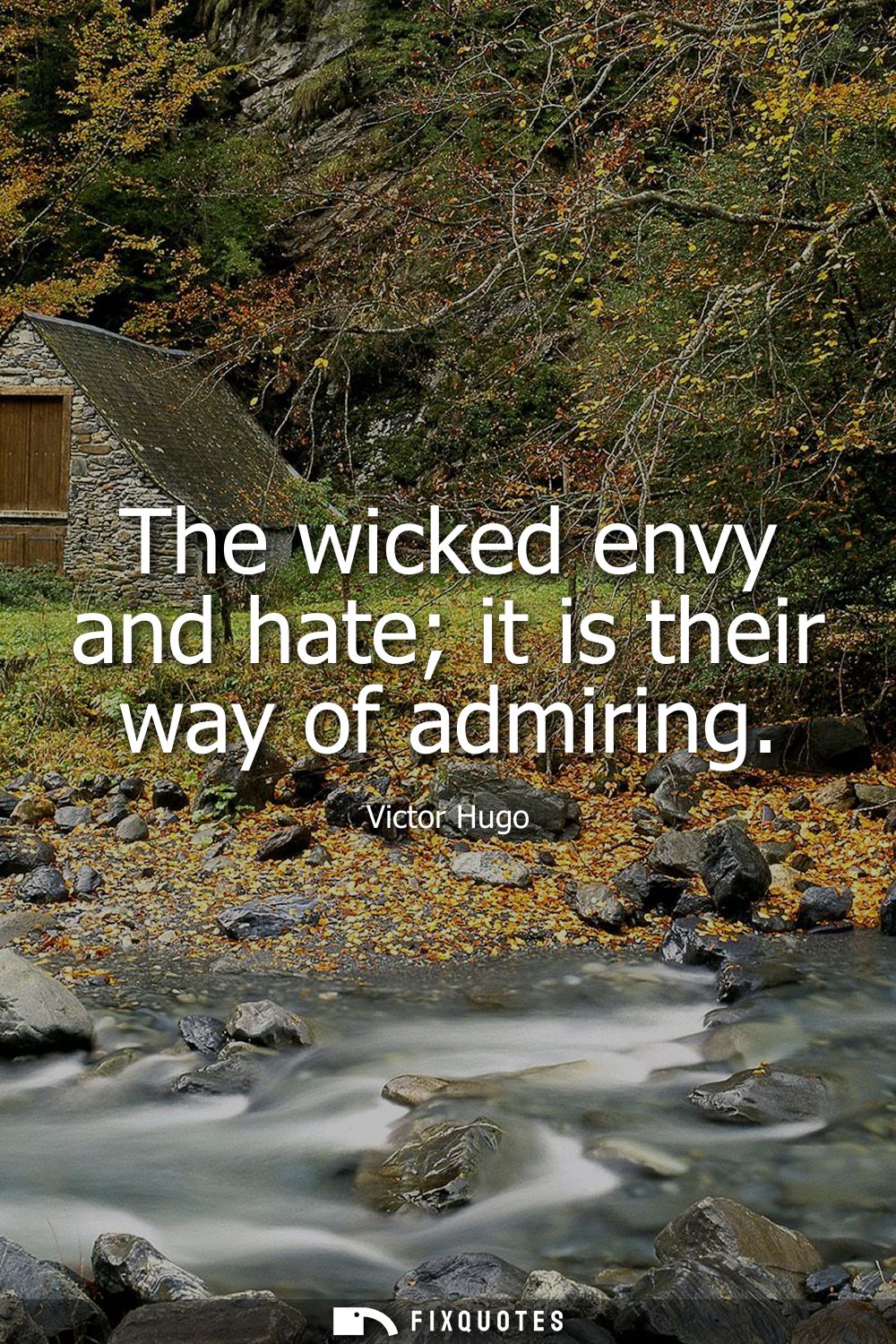
"The wicked envy and hate; it is their way of admiring"
About this Quote
Hugo lands the knife with a velvet handle: he reframes malice as a kind of tribute. “The wicked” don’t just dislike you; they study you, measure themselves against you, and then translate that recognition into envy and hate because admiration would require humility. It’s an indictment, but also a psychological exposure. The line doesn’t absolve cruelty; it demystifies it. If admiration is the honest response to excellence, hatred becomes the counterfeit version for people who can’t bear the debt of acknowledging someone else’s worth.
The subtext is almost theatrical in its moral clarity, a signature Hugo move. He liked characters and societies that reveal themselves through the way they treat the vulnerable and the exceptional. This aphorism turns resentment into a confession: the “wicked” are not powerful villains; they’re compromised spectators, stuck in a reactive posture. Their hostility is proof that something in you has unsettled their self-image.
Context matters: Hugo wrote in a 19th-century France addicted to reputations, factions, and public takedowns, and he himself was a target - celebrated, exiled, canonized, attacked. The sentence reads like a survival tactic forged in that furnace: when the mob snarls, don’t romanticize it, don’t internalize it. Read it as distorted praise from people whose moral vocabulary is too impoverished to say “I wish I were you” without choking on it.
It works because it offers both sting and consolation: hate is real, but it’s rarely random. It’s often admiration with its teeth filed into weapons.
The subtext is almost theatrical in its moral clarity, a signature Hugo move. He liked characters and societies that reveal themselves through the way they treat the vulnerable and the exceptional. This aphorism turns resentment into a confession: the “wicked” are not powerful villains; they’re compromised spectators, stuck in a reactive posture. Their hostility is proof that something in you has unsettled their self-image.
Context matters: Hugo wrote in a 19th-century France addicted to reputations, factions, and public takedowns, and he himself was a target - celebrated, exiled, canonized, attacked. The sentence reads like a survival tactic forged in that furnace: when the mob snarls, don’t romanticize it, don’t internalize it. Read it as distorted praise from people whose moral vocabulary is too impoverished to say “I wish I were you” without choking on it.
It works because it offers both sting and consolation: hate is real, but it’s rarely random. It’s often admiration with its teeth filed into weapons.
Quote Details
| Topic | Wisdom |
|---|---|
| Source | Help us find the source |
| Cite |
Citation Formats
APA Style (7th ed.)
Hugo, Victor. (2026, January 18). The wicked envy and hate; it is their way of admiring. FixQuotes. https://fixquotes.com/quotes/the-wicked-envy-and-hate-it-is-their-way-of-10567/
Chicago Style
Hugo, Victor. "The wicked envy and hate; it is their way of admiring." FixQuotes. January 18, 2026. https://fixquotes.com/quotes/the-wicked-envy-and-hate-it-is-their-way-of-10567/.
MLA Style (9th ed.)
"The wicked envy and hate; it is their way of admiring." FixQuotes, 18 Jan. 2026, https://fixquotes.com/quotes/the-wicked-envy-and-hate-it-is-their-way-of-10567/. Accessed 12 Feb. 2026.
More Quotes by Victor
Add to List