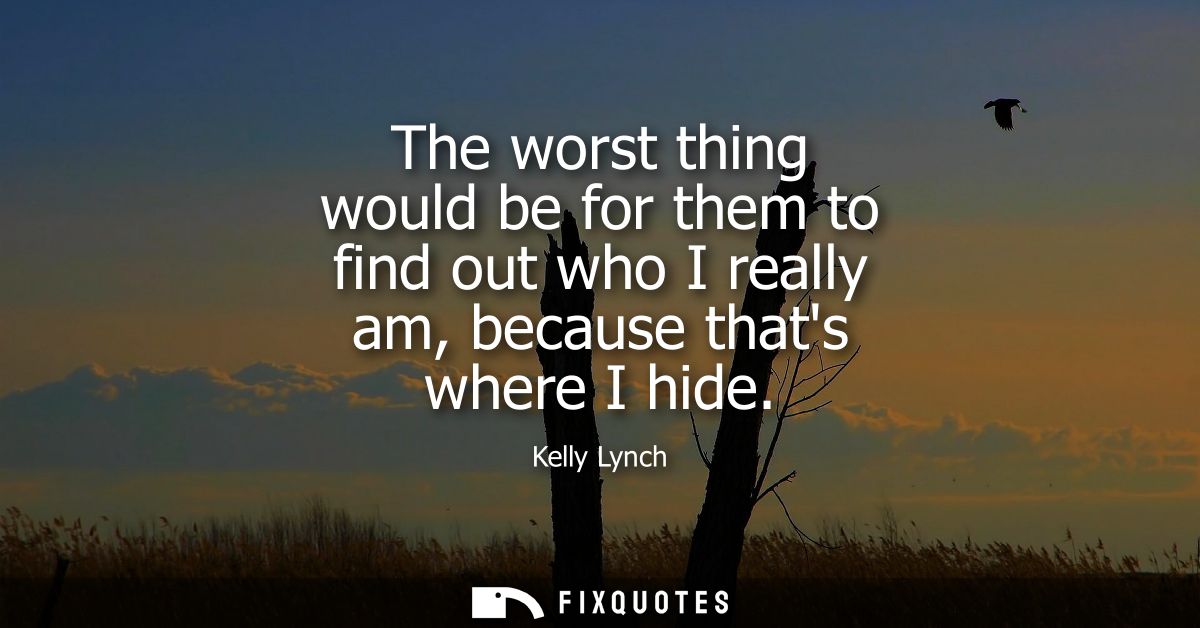
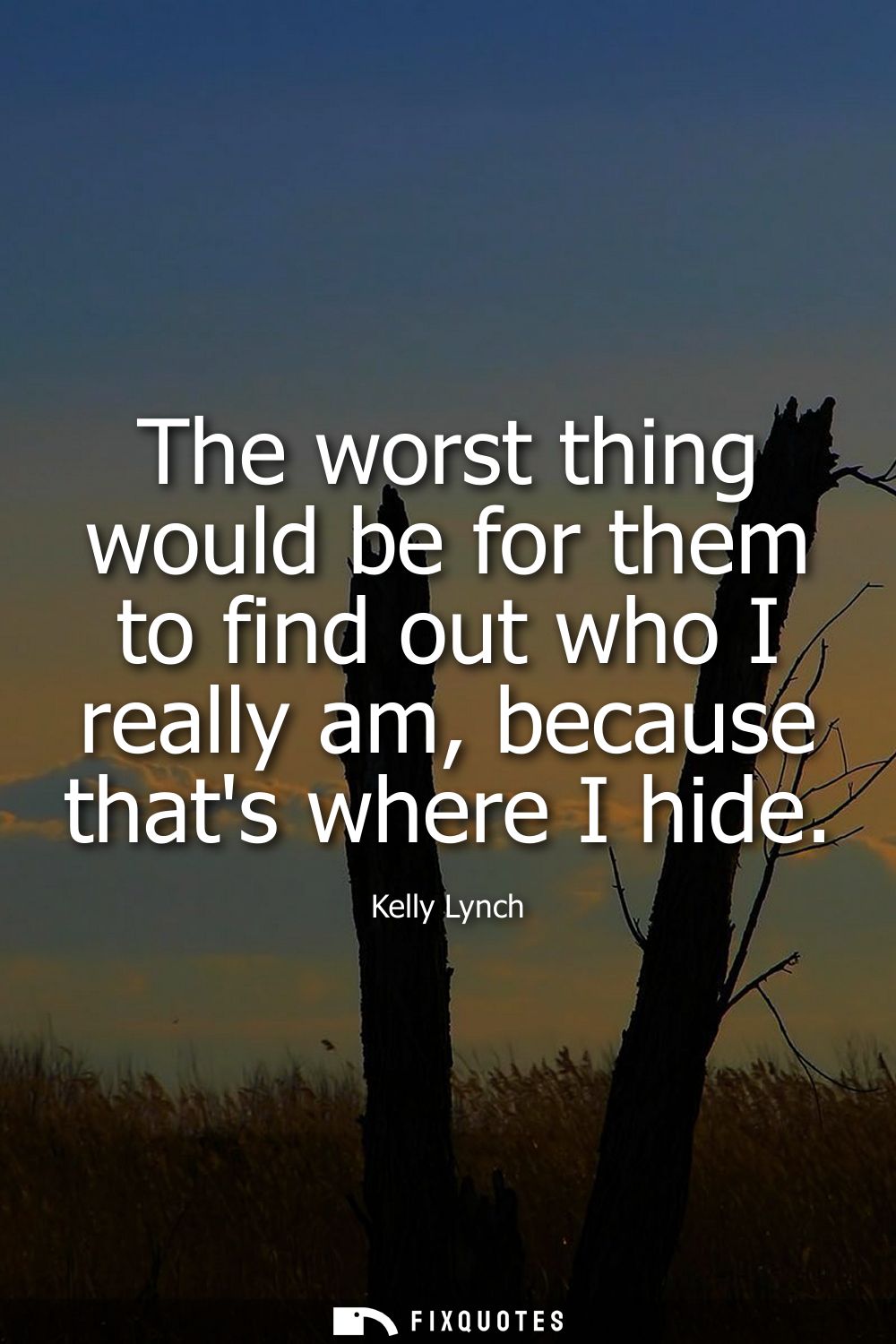
"The worst thing would be for them to find out who I really am, because that's where I hide"
About this Quote
The intent feels less like coy mystery and more like self-defense. For an actress, identity is both raw material and commodity; people feel entitled to it. Fans, press, even casting directors want the “real” person as proof the work is honest. Lynch’s subtext pushes back on that hunger. She implies that the most intimate truths are not the ones you show the camera but the ones you keep untouched by interpretation. The mask isn’t only a disguise; it’s also a boundary.
The context of celebrity culture sharpens the paradox. In an industry that sells accessibility and “relatability,” privacy gets recoded as deception. Lynch suggests the opposite: privacy is where the real self can exist without becoming content. Her fear isn’t just judgment; it’s flattening. Once “who I really am” is known, it can be narrated by strangers, reduced to an anecdote, pinned to a brand.
It works because it refuses the usual redemption arc of confession. Instead, it admits something modern and slightly bleak: sometimes the truest part of you survives by staying unclaimed.
Quote Details
| Topic | Fear |
|---|---|
| Source | Help us find the source |
| Cite |
Citation Formats
APA Style (7th ed.)
Lynch, Kelly. (2026, January 16). The worst thing would be for them to find out who I really am, because that's where I hide. FixQuotes. https://fixquotes.com/quotes/the-worst-thing-would-be-for-them-to-find-out-who-133762/
Chicago Style
Lynch, Kelly. "The worst thing would be for them to find out who I really am, because that's where I hide." FixQuotes. January 16, 2026. https://fixquotes.com/quotes/the-worst-thing-would-be-for-them-to-find-out-who-133762/.
MLA Style (9th ed.)
"The worst thing would be for them to find out who I really am, because that's where I hide." FixQuotes, 16 Jan. 2026, https://fixquotes.com/quotes/the-worst-thing-would-be-for-them-to-find-out-who-133762/. Accessed 10 Mar. 2026.