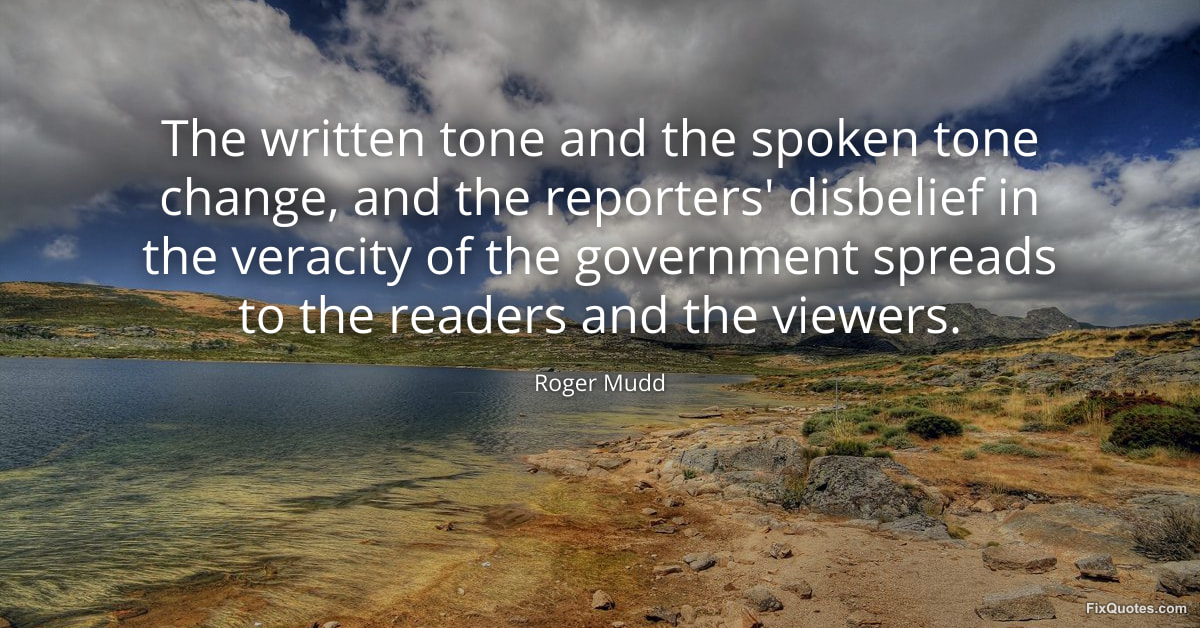
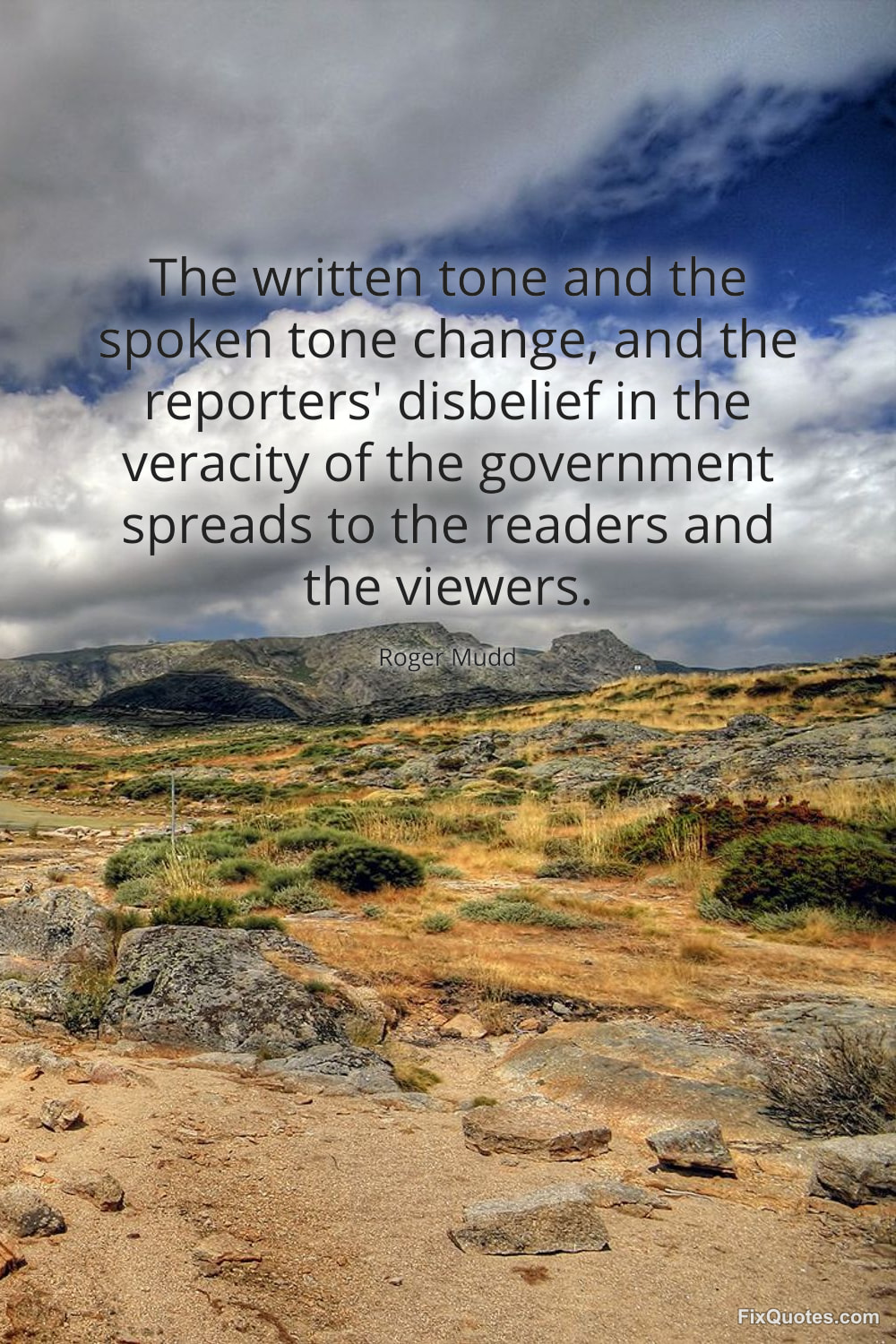
"The written tone and the spoken tone change, and the reporters' disbelief in the veracity of the government spreads to the readers and the viewers"
About this Quote
Mudd’s intent is less to accuse any one administration than to describe a media feedback loop with real consequences. “Disbelief…spreads” is the key verb. It suggests that credibility isn’t lost only through a single lie, but through repetition and performance: press briefings that feel like theater, evasions that become predictable, the widening gap between what people experience and what officials insist is true. In that context, reporters’ tone hardens not out of cynicism for its own sake, but out of self-protection; credibility becomes their last scarce resource.
The subtext is almost elegiac: once disbelief becomes the default setting, government loses the benefit of the doubt even when it’s right. The press, meanwhile, risks becoming addicted to suspicion as a posture. Mudd captures the paradox of modern political communication: the more aggressively power manages narrative, the more it trains everyone else to stop believing the story.
Quote Details
| Topic | Truth |
|---|---|
| Source | Help us find the source |
| Cite |
Citation Formats
APA Style (7th ed.)
Mudd, Roger. (2026, February 16). The written tone and the spoken tone change, and the reporters' disbelief in the veracity of the government spreads to the readers and the viewers. FixQuotes. https://fixquotes.com/quotes/the-written-tone-and-the-spoken-tone-change-and-94983/
Chicago Style
Mudd, Roger. "The written tone and the spoken tone change, and the reporters' disbelief in the veracity of the government spreads to the readers and the viewers." FixQuotes. February 16, 2026. https://fixquotes.com/quotes/the-written-tone-and-the-spoken-tone-change-and-94983/.
MLA Style (9th ed.)
"The written tone and the spoken tone change, and the reporters' disbelief in the veracity of the government spreads to the readers and the viewers." FixQuotes, 16 Feb. 2026, https://fixquotes.com/quotes/the-written-tone-and-the-spoken-tone-change-and-94983/. Accessed 30 Mar. 2026.