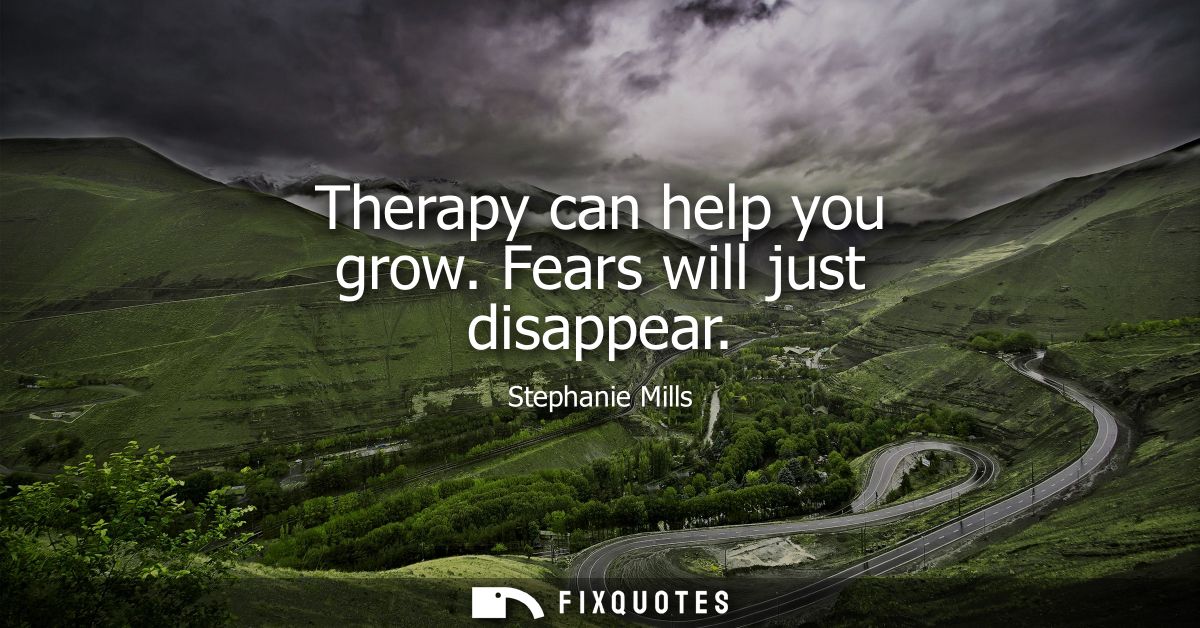
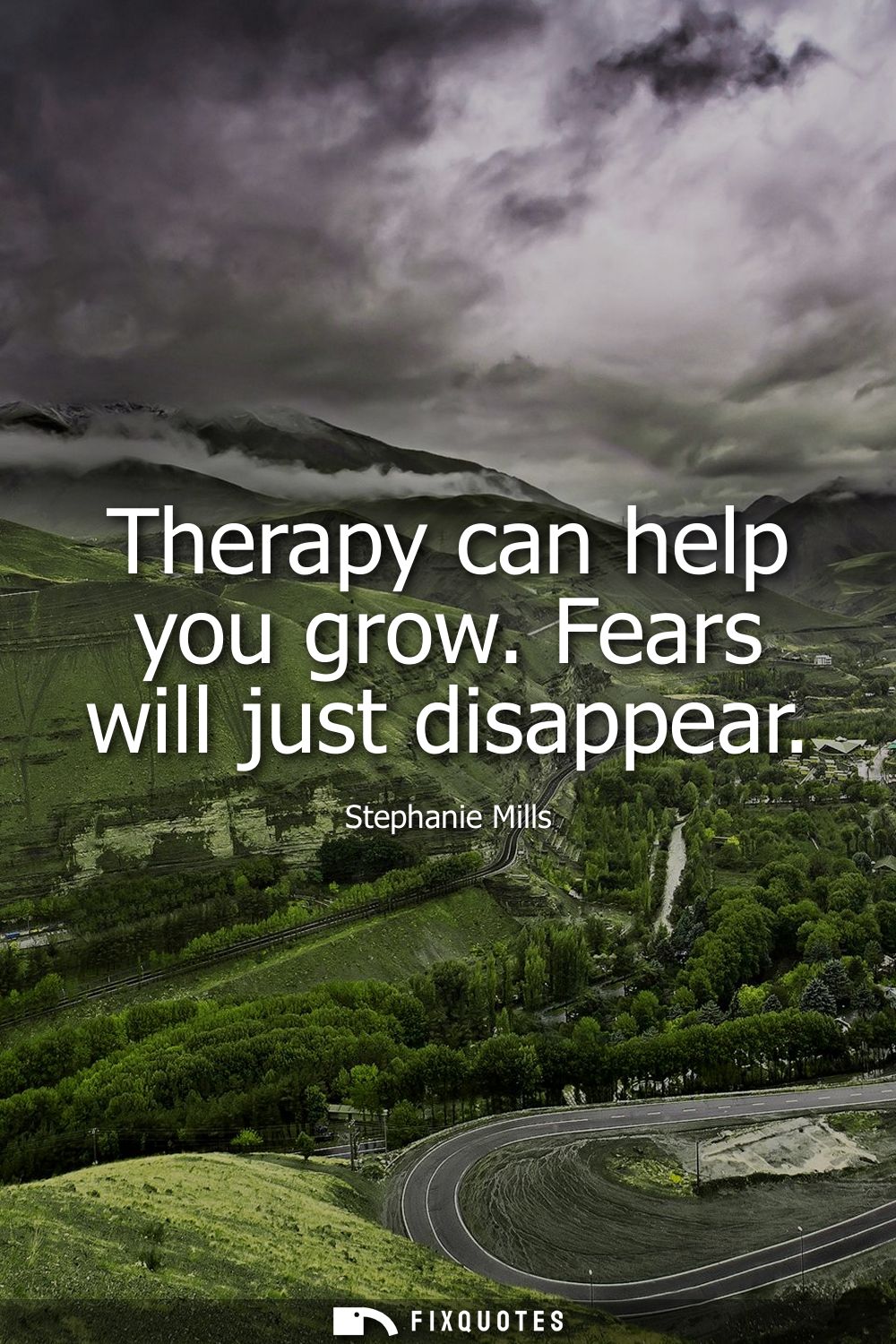
"Therapy can help you grow. Fears will just disappear"
About this Quote
There is a pop-song economy to Stephanie Mills's line: it compresses a whole self-help arc into two clean, singable promises. Coming from a musician whose career has lived in the emotional high stakes of soul and disco, it reads less like a clinical claim and more like stage wisdom - the kind you earn by surviving public highs and private lows. "Therapy can help you grow" offers the modern, socially legible route: intentional, guided, slow. "Fears will just disappear" flips the tempo. "Just" is the tell - a word that sells relief the way a chorus sells catharsis, smoothing over the messy middle where most people actually live.
The subtext is a negotiation between work and miracle. Therapy is framed as cultivation, something you do; fear is framed as evaporation, something that happens to you. That split mirrors how pop culture often wants healing to function: disciplined enough to feel earned, effortless enough to feel inspiring. It's also a savvy repositioning of vulnerability as aspiration. "Grow" is self-improvement language, less stigmatized than "heal" or "recover", and it aligns therapy with ambition rather than damage.
Context matters: Mills came up in an industry that historically treated mental strain as collateral and expected performers to be "on" regardless. In that light, the quote doubles as permission and marketing - normalizing help while preserving optimism. It's not medical accuracy; it's emotional messaging: you can seek support without losing your shine, and the dread that clings to you now doesn't have to be your permanent brand.
The subtext is a negotiation between work and miracle. Therapy is framed as cultivation, something you do; fear is framed as evaporation, something that happens to you. That split mirrors how pop culture often wants healing to function: disciplined enough to feel earned, effortless enough to feel inspiring. It's also a savvy repositioning of vulnerability as aspiration. "Grow" is self-improvement language, less stigmatized than "heal" or "recover", and it aligns therapy with ambition rather than damage.
Context matters: Mills came up in an industry that historically treated mental strain as collateral and expected performers to be "on" regardless. In that light, the quote doubles as permission and marketing - normalizing help while preserving optimism. It's not medical accuracy; it's emotional messaging: you can seek support without losing your shine, and the dread that clings to you now doesn't have to be your permanent brand.
Quote Details
| Topic | Mental Health |
|---|---|
| Source | Help us find the source |
| Cite |
Citation Formats
APA Style (7th ed.)
Mills, Stephanie. (2026, January 16). Therapy can help you grow. Fears will just disappear. FixQuotes. https://fixquotes.com/quotes/therapy-can-help-you-grow-fears-will-just-116940/
Chicago Style
Mills, Stephanie. "Therapy can help you grow. Fears will just disappear." FixQuotes. January 16, 2026. https://fixquotes.com/quotes/therapy-can-help-you-grow-fears-will-just-116940/.
MLA Style (9th ed.)
"Therapy can help you grow. Fears will just disappear." FixQuotes, 16 Jan. 2026, https://fixquotes.com/quotes/therapy-can-help-you-grow-fears-will-just-116940/. Accessed 3 Apr. 2026.
More Quotes by Stephanie
Add to List