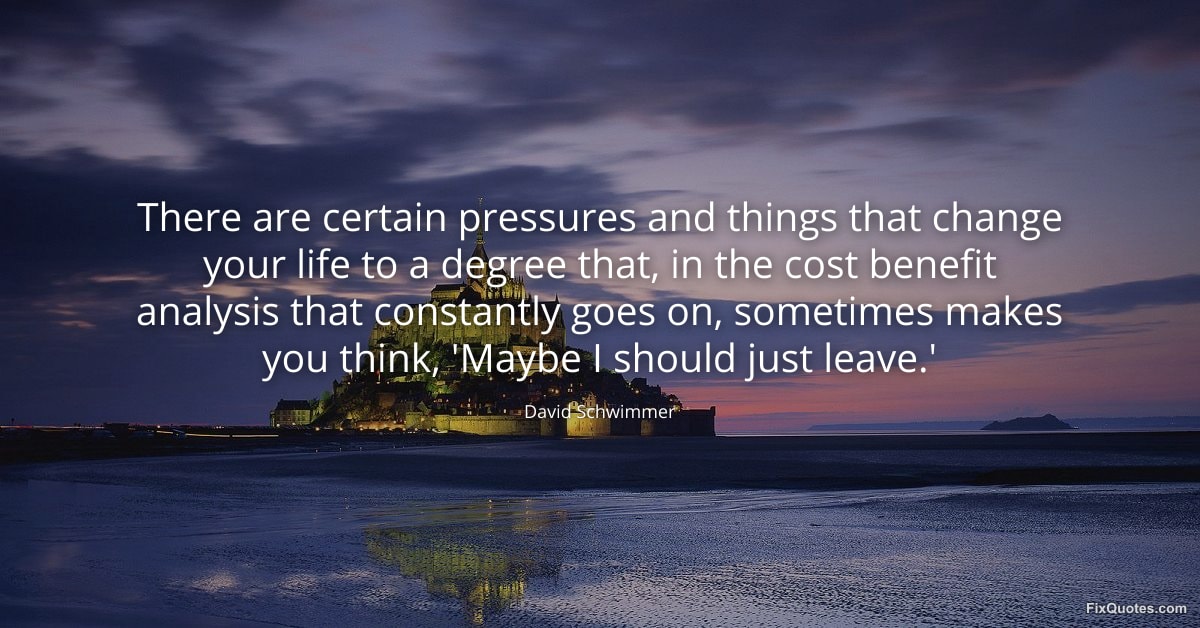
"There are certain pressures and things that change your life to a degree that, in the cost benefit analysis that constantly goes on, sometimes makes you think, 'Maybe I should just leave.'"
About this Quote
Schwimmer’s sentence reads like the kind of thought you don’t announce in a press tour soundbite, but can’t stop replaying at 3 a.m.: the fantasy of exit. What makes it land is the clash between corporate language and private panic. “Cost benefit analysis” is the vocabulary of boardrooms and self-help spreadsheets, smuggled into a confession about identity strain. It suggests a life lived under constant evaluation, as if even the self has become a product manager of its own survival.
The phrase “certain pressures and things” stays deliberately vague, which is its own tell. Celebrities rarely get to name the pressure cleanly without turning it into a headline. So the sentence skirts specifics while still communicating the exhausting totality of being watched, expected, and processed. “Constantly goes on” implies the real burden isn’t one catastrophic event; it’s the ongoing background computation: Am I safe? Am I still myself? Is this worth it?
“Maybe I should just leave” hits because it’s modestly phrased, almost polite, like a reasonable option on a dropdown menu. That understatement is the point: the impulse to disappear isn’t melodramatic; it’s managerial. In the context of an actor whose fame became globally defining, the line gestures at the psychological toll of being permanently associated with a role, a decade, a meme. Schwimmer isn’t selling tragedy. He’s describing the quiet math of endurance, and how even a successful life can start to feel like a bad deal you’re contractually stuck renewing.
The phrase “certain pressures and things” stays deliberately vague, which is its own tell. Celebrities rarely get to name the pressure cleanly without turning it into a headline. So the sentence skirts specifics while still communicating the exhausting totality of being watched, expected, and processed. “Constantly goes on” implies the real burden isn’t one catastrophic event; it’s the ongoing background computation: Am I safe? Am I still myself? Is this worth it?
“Maybe I should just leave” hits because it’s modestly phrased, almost polite, like a reasonable option on a dropdown menu. That understatement is the point: the impulse to disappear isn’t melodramatic; it’s managerial. In the context of an actor whose fame became globally defining, the line gestures at the psychological toll of being permanently associated with a role, a decade, a meme. Schwimmer isn’t selling tragedy. He’s describing the quiet math of endurance, and how even a successful life can start to feel like a bad deal you’re contractually stuck renewing.
Quote Details
| Topic | Moving On |
|---|
More Quotes by David
Add to List