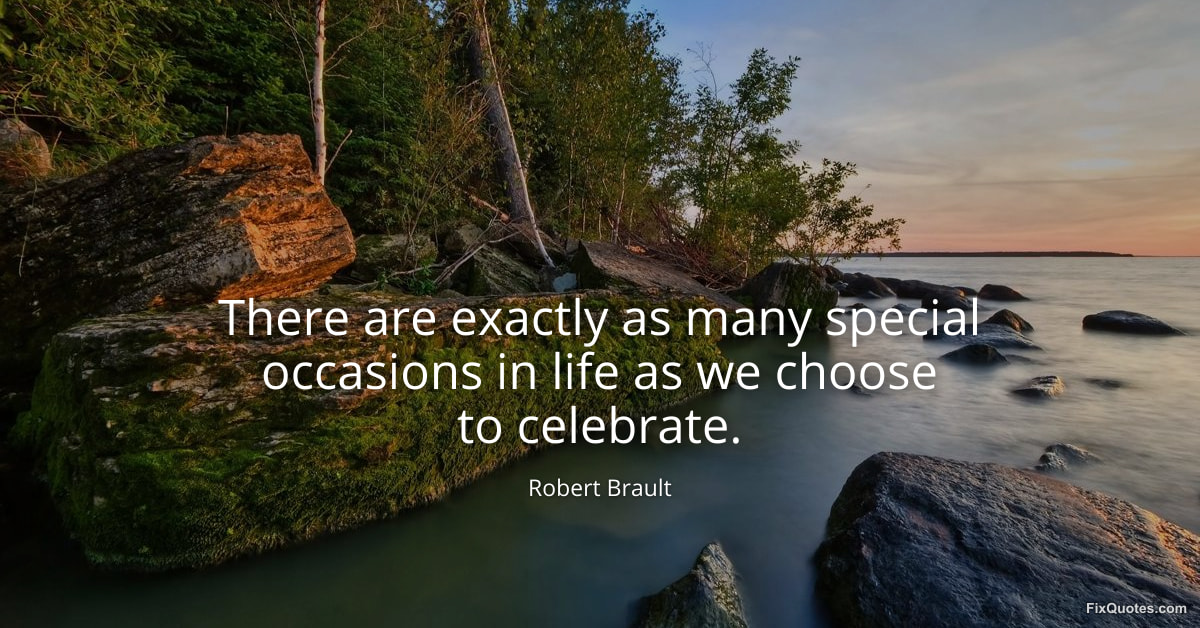
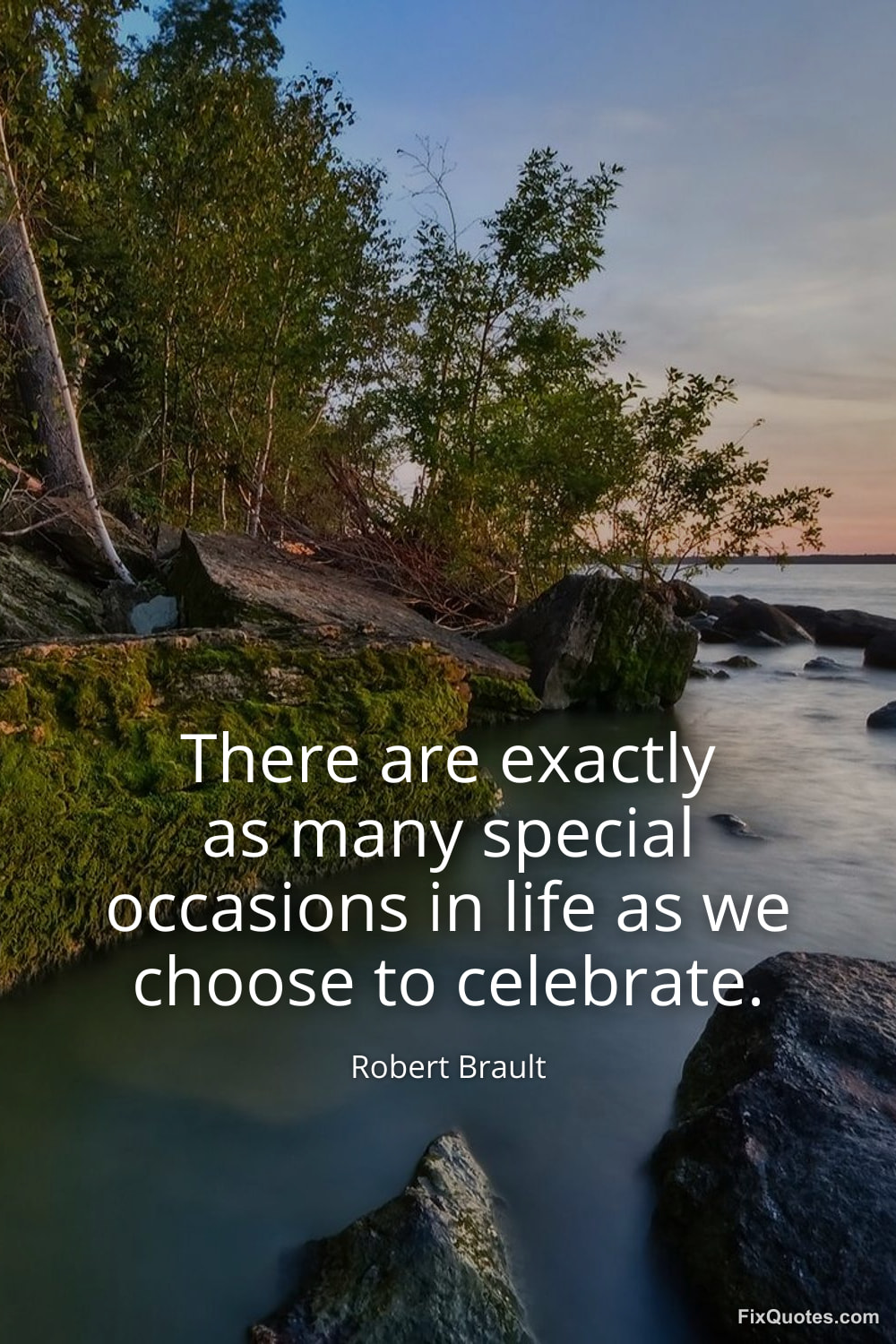
"There are exactly as many special occasions in life as we choose to celebrate"
About this Quote
Brault’s line flatters the reader with an arresting kind of agency: the calendar isn’t destiny, it’s an editable document. The word “exactly” does heavy lifting, borrowing the authority of math to sell a quietly radical idea - that meaning is not discovered so much as assigned. It’s philosophy in the key of the everyday, smuggling existential freedom into the language of party planning.
The intent is motivational, but not in the syrupy “be grateful” register. It’s a pushback against outsourced significance: holidays, milestones, institutional rites of passage. Brault implies that many of our “important” days are important only because someone powerful (religion, the state, the market, the family) told us they were. If you can choose to celebrate, you can also choose to withhold celebration - a subtle invitation to stop performing obligation and start curating attention.
The subtext is a cultural critique of scarcity: the idea that joy must be rationed to sanctioned events, that delight requires permission. Read against a modern backdrop of hustle culture and productivity guilt, the quote becomes a defense of pleasure as practice, not reward. It also brushes up against consumerism. “Special occasion” is a retail category as much as an emotional one; Brault reframes it as a personal decision rather than a purchase prompt.
It works because it’s democratic and slightly defiant: it gives ordinary days a loophole into significance, without pretending that life becomes easy - only that it can become chosen.
The intent is motivational, but not in the syrupy “be grateful” register. It’s a pushback against outsourced significance: holidays, milestones, institutional rites of passage. Brault implies that many of our “important” days are important only because someone powerful (religion, the state, the market, the family) told us they were. If you can choose to celebrate, you can also choose to withhold celebration - a subtle invitation to stop performing obligation and start curating attention.
The subtext is a cultural critique of scarcity: the idea that joy must be rationed to sanctioned events, that delight requires permission. Read against a modern backdrop of hustle culture and productivity guilt, the quote becomes a defense of pleasure as practice, not reward. It also brushes up against consumerism. “Special occasion” is a retail category as much as an emotional one; Brault reframes it as a personal decision rather than a purchase prompt.
It works because it’s democratic and slightly defiant: it gives ordinary days a loophole into significance, without pretending that life becomes easy - only that it can become chosen.
Quote Details
| Topic | Life |
|---|
More Quotes by Robert
Add to List