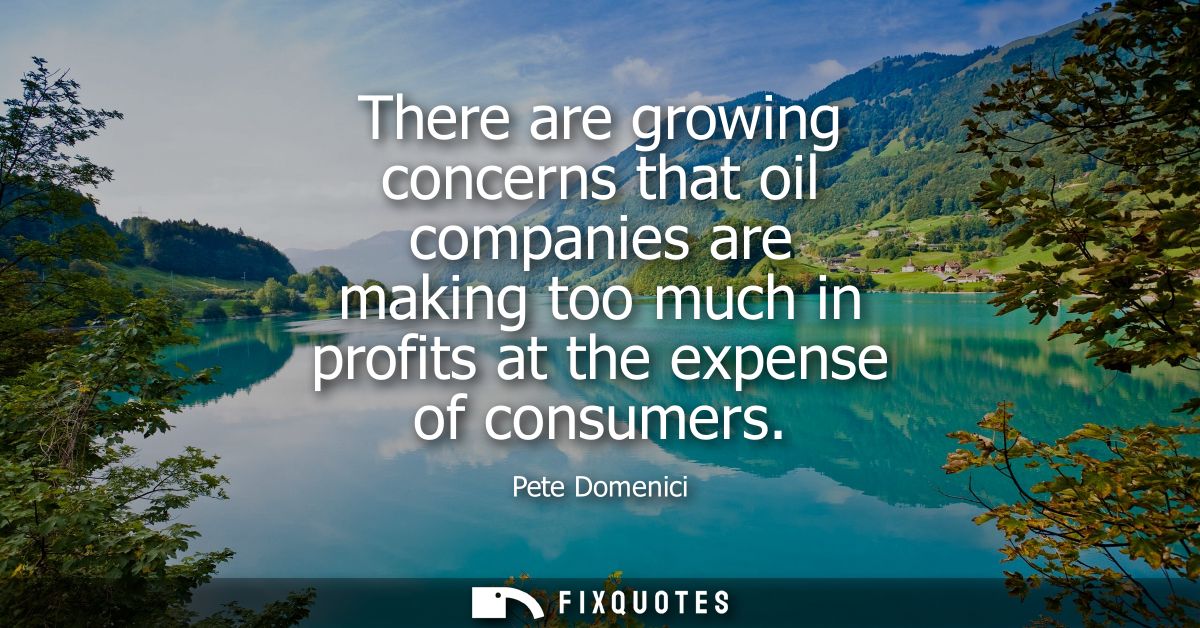
"There are growing concerns that oil companies are making too much in profits at the expense of consumers"
About this Quote
The phrase “making too much in profits” is deliberately blunt, almost folksy, and it taps into a basic American suspicion of windfalls that look unearned. It also sidesteps harder questions about how oil markets work, what counts as “too much,” and whether high prices are driven by corporate behavior, global supply shocks, or policy constraints. By choosing moral language (“at the expense of consumers”) over technical language, Domenici turns price pain into a story with villains and victims, which is politically useful when voters want accountability now, not a seminar on commodities.
Context matters: this kind of line typically surfaces when gas prices spike and incumbents need to look responsive without committing to policies that could disrupt domestic production or alienate donors. The subtext is a warning shot: behave, or we’ll talk regulation, windfall taxes, investigations. It’s politics as thermostat - not changing the weather, just trying to keep the room from boiling.
Quote Details
| Topic | Justice |
|---|---|
| Source | Help us find the source |
| Cite |
Citation Formats
APA Style (7th ed.)
Domenici, Pete. (2026, January 15). There are growing concerns that oil companies are making too much in profits at the expense of consumers. FixQuotes. https://fixquotes.com/quotes/there-are-growing-concerns-that-oil-companies-are-151158/
Chicago Style
Domenici, Pete. "There are growing concerns that oil companies are making too much in profits at the expense of consumers." FixQuotes. January 15, 2026. https://fixquotes.com/quotes/there-are-growing-concerns-that-oil-companies-are-151158/.
MLA Style (9th ed.)
"There are growing concerns that oil companies are making too much in profits at the expense of consumers." FixQuotes, 15 Jan. 2026, https://fixquotes.com/quotes/there-are-growing-concerns-that-oil-companies-are-151158/. Accessed 3 Apr. 2026.