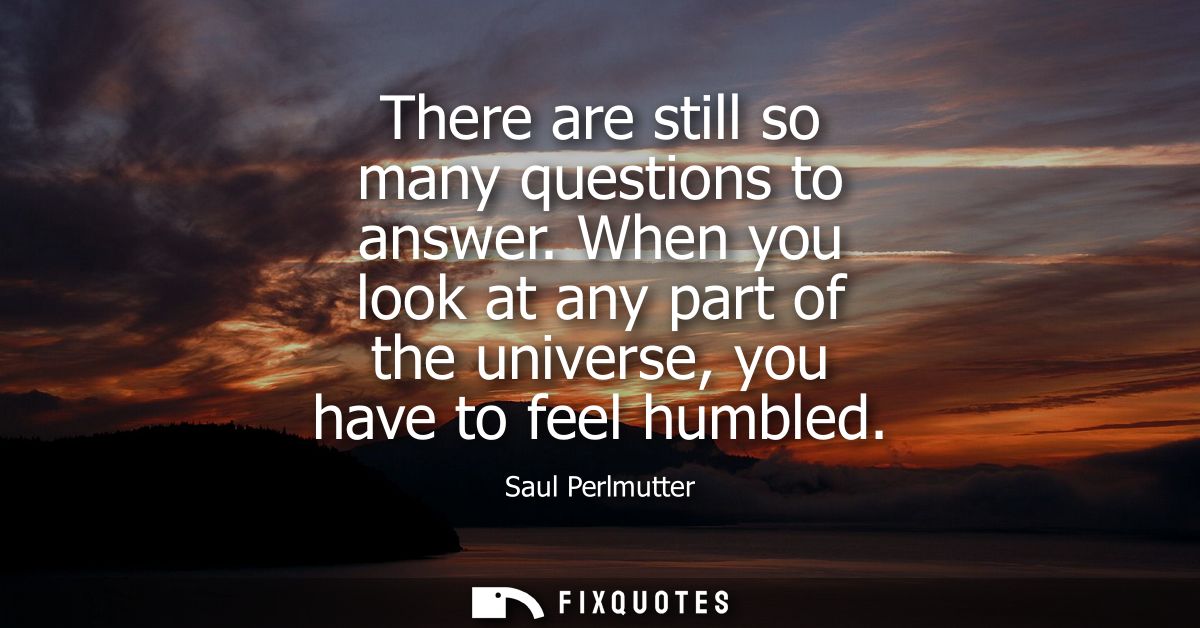
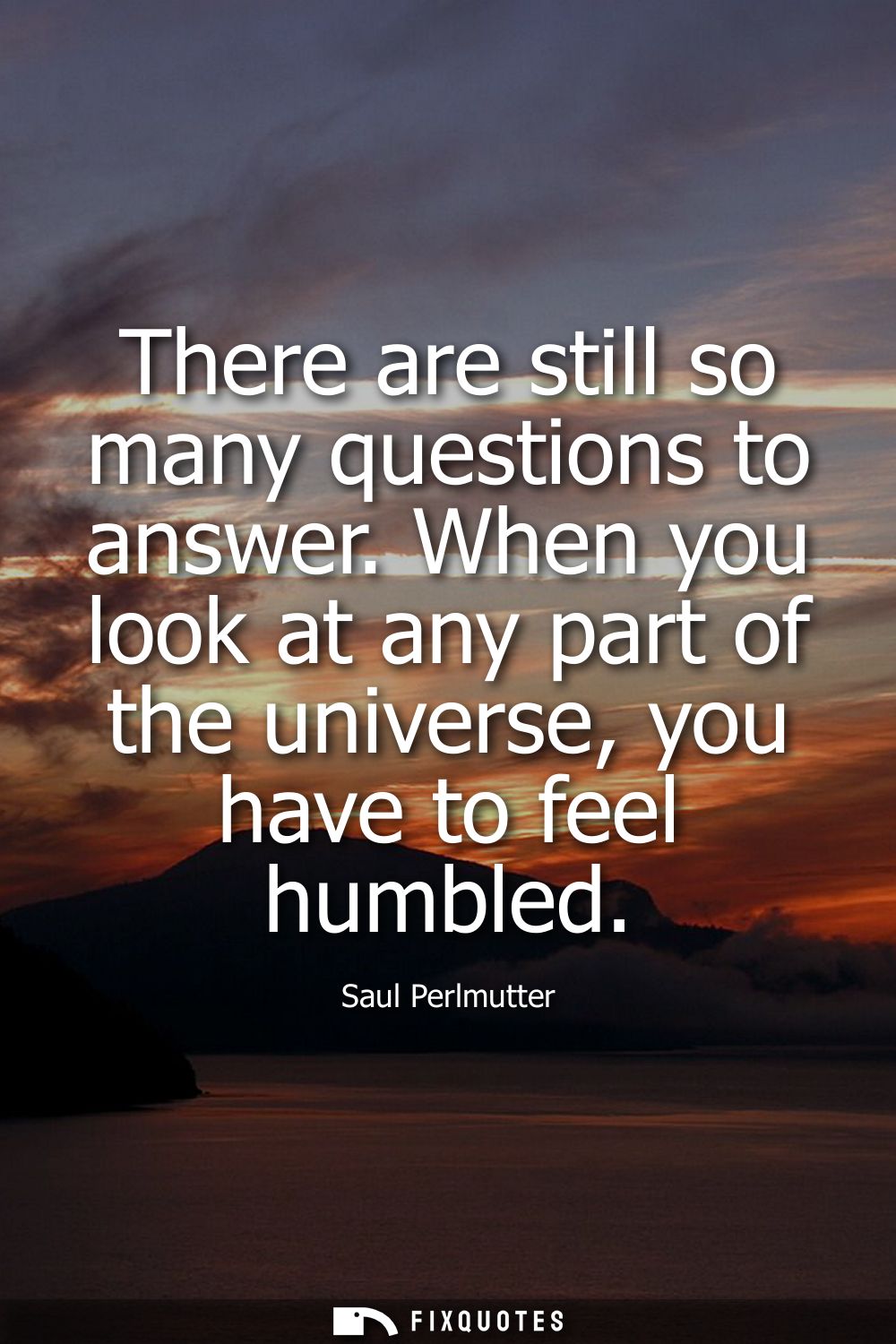
"There are still so many questions to answer. When you look at any part of the universe, you have to feel humbled"
About this Quote
The first sentence, “There are still so many questions to answer,” sounds almost administrative, but it’s doing rhetorical work: it resists the cultural script that science is a machine for final answers. In a media environment that prizes confident takes and clean narratives, Perlmutter instead foregrounds incompleteness as the real engine of progress. The subtext is a quiet rebuke to both scientific triumphalism and popular cynicism: we’re not done, but we’re not lost either.
Then he pivots from epistemology to emotion. “When you look at any part of the universe, you have to feel humbled” frames humility as a kind of intellectual hygiene, not a personality trait. The “have to” matters: awe isn’t optional when your subject dwarfs you in scale, age, and indifference. It’s also an ethic. If the cosmos can surprise us with dark energy, it can surprise us anywhere else - which means certainty should be provisional, and curiosity should be permanent.
In an era of hot takes, Perlmutter offers a colder, braver comfort: the unknown isn’t a failure state. It’s the point.
Quote Details
| Topic | Science |
|---|---|
| Source | Help us find the source |
| Cite |
Citation Formats
APA Style (7th ed.)
Perlmutter, Saul. (2026, January 15). There are still so many questions to answer. When you look at any part of the universe, you have to feel humbled. FixQuotes. https://fixquotes.com/quotes/there-are-still-so-many-questions-to-answer-when-150016/
Chicago Style
Perlmutter, Saul. "There are still so many questions to answer. When you look at any part of the universe, you have to feel humbled." FixQuotes. January 15, 2026. https://fixquotes.com/quotes/there-are-still-so-many-questions-to-answer-when-150016/.
MLA Style (9th ed.)
"There are still so many questions to answer. When you look at any part of the universe, you have to feel humbled." FixQuotes, 15 Jan. 2026, https://fixquotes.com/quotes/there-are-still-so-many-questions-to-answer-when-150016/. Accessed 7 Apr. 2026.