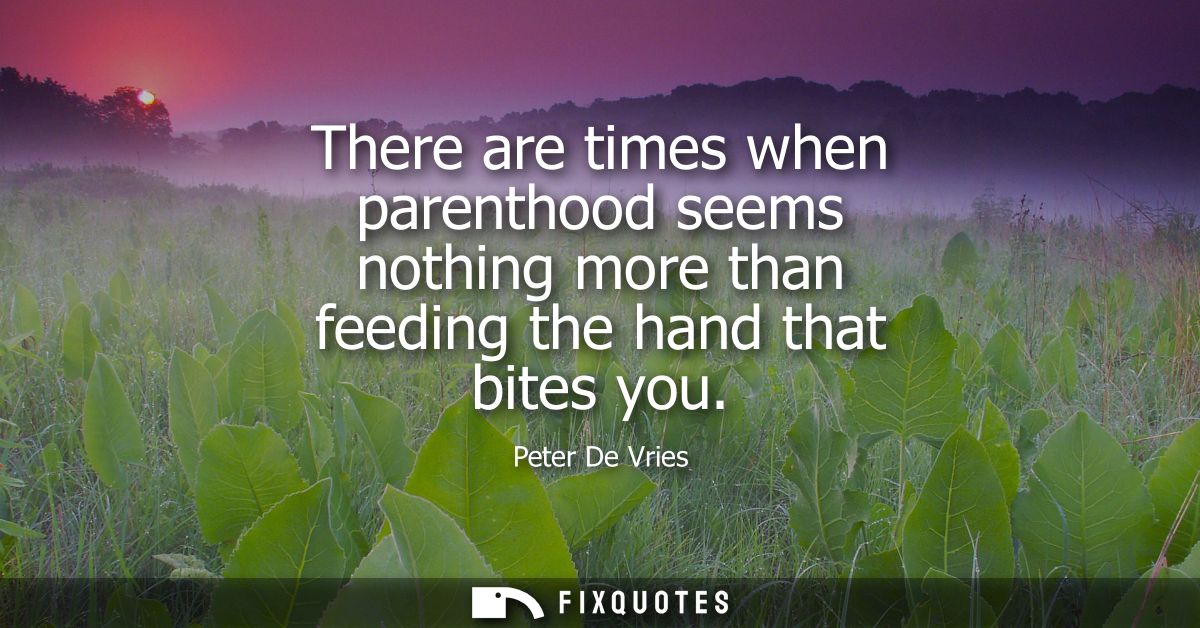
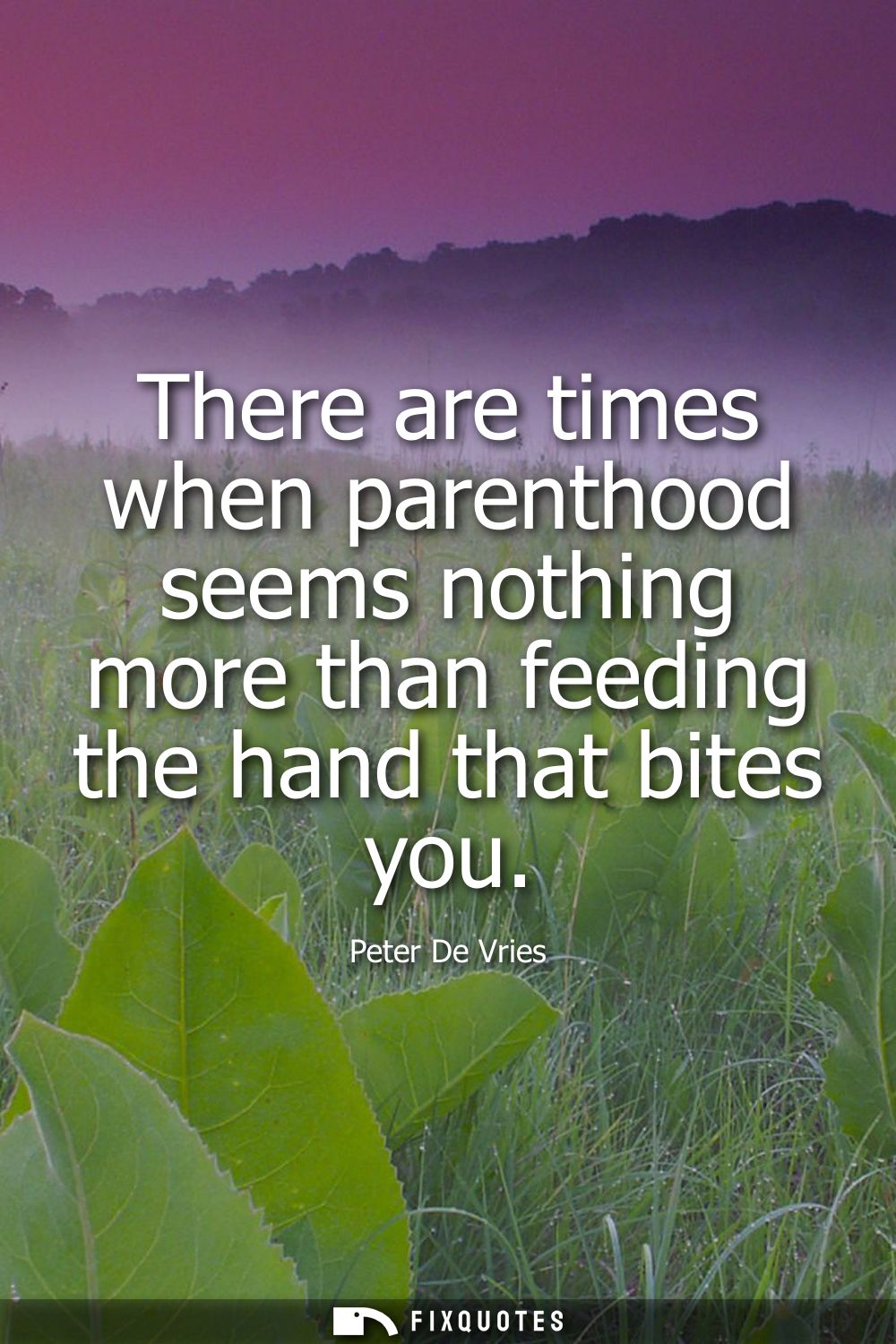
"There are times when parenthood seems nothing more than feeding the hand that bites you"
About this Quote
De Vries, a novelist with a satirist's ear, aims his joke at the sentimental culture that treats parenting as pure fulfillment. The metaphor implies a child not as cherub but as creature: impulsive, entitled, intermittently feral. Yet the real target isn't the kid; it's the parent's expectation that nurture should be repaid with gratitude. The bite is the tantrum, the ingratitude, the adolescent contempt, the casual cruelty children deploy when they're safe enough to be awful. That safety is the point: the parent is the one person a child can attack without losing the relationship. The line's cynicism is also an indictment of unconditional love as a social script, a mandate to keep pouring resources into someone who may respond with rejection.
Context matters: mid-century American domestic ideology sold the family as stability and salvation. De Vries punctures that marketing with a single, barbed image. It's funny because it feels like a confession you're not supposed to make, and true because parenting often involves investing in a future person who, in the present, has no incentive to be nice about it.
Quote Details
| Topic | Parenting |
|---|---|
| Source | Help us find the source |
| Cite |
Citation Formats
APA Style (7th ed.)
Vries, Peter De. (2026, January 15). There are times when parenthood seems nothing more than feeding the hand that bites you. FixQuotes. https://fixquotes.com/quotes/there-are-times-when-parenthood-seems-nothing-152993/
Chicago Style
Vries, Peter De. "There are times when parenthood seems nothing more than feeding the hand that bites you." FixQuotes. January 15, 2026. https://fixquotes.com/quotes/there-are-times-when-parenthood-seems-nothing-152993/.
MLA Style (9th ed.)
"There are times when parenthood seems nothing more than feeding the hand that bites you." FixQuotes, 15 Jan. 2026, https://fixquotes.com/quotes/there-are-times-when-parenthood-seems-nothing-152993/. Accessed 28 Mar. 2026.