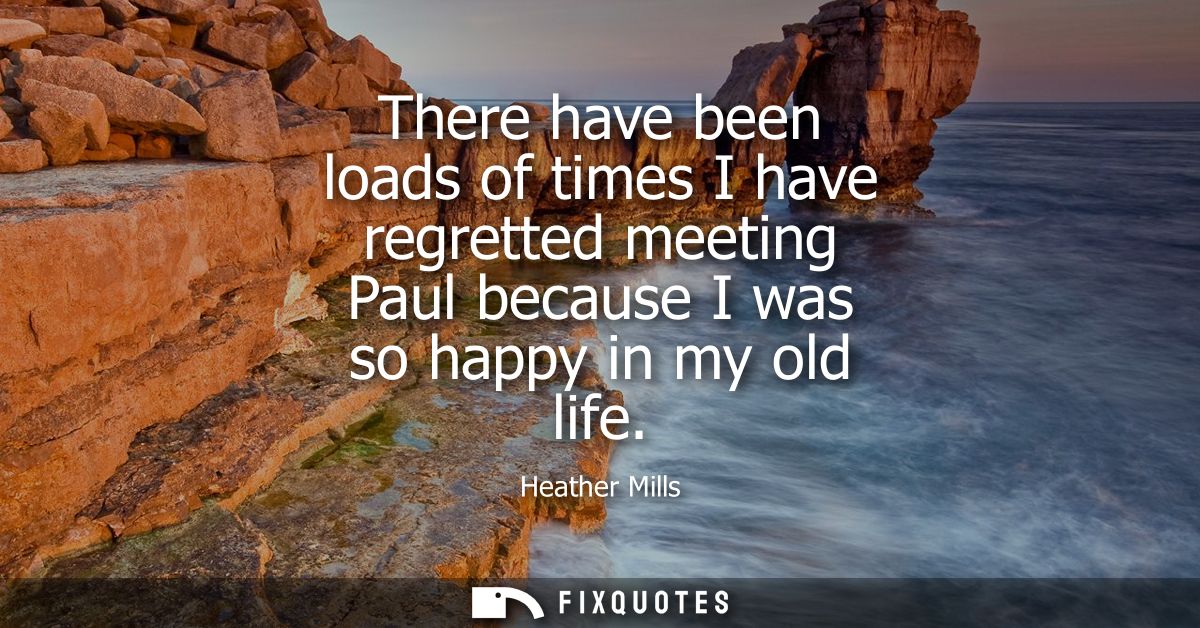
"There have been loads of times I have regretted meeting Paul because I was so happy in my old life"
About this Quote
The intent reads as damage control and self-reclamation. By anchoring her happiness in “my old life,” Mills flips the typical celebrity romance narrative: the famous partner isn’t a prize, he’s a catalyst for scrutiny, litigation, and caricature. “Regretted meeting” is also a tactical verb. It’s strong enough to feel honest, but slippery enough to avoid saying she regrets the entire relationship; she’s regretting the door it opened.
Subtextually, it’s an argument about asymmetry. Paul remains “Paul” - first-name iconic, culturally buffered. She becomes the contested figure, the one whose motives get interrogated. In the post-divorce media ecosystem that shadowed Mills, the line functions like a protest against being cast as a villain in someone else’s legend. It’s not romantic nostalgia; it’s a complaint about what fame does to consent, privacy, and the ability to have an “old life” at all.
Quote Details
| Topic | Heartbreak |
|---|---|
| Source | Help us find the source |
| Cite |
Citation Formats
APA Style (7th ed.)
Mills, Heather. (2026, January 16). There have been loads of times I have regretted meeting Paul because I was so happy in my old life. FixQuotes. https://fixquotes.com/quotes/there-have-been-loads-of-times-i-have-regretted-121593/
Chicago Style
Mills, Heather. "There have been loads of times I have regretted meeting Paul because I was so happy in my old life." FixQuotes. January 16, 2026. https://fixquotes.com/quotes/there-have-been-loads-of-times-i-have-regretted-121593/.
MLA Style (9th ed.)
"There have been loads of times I have regretted meeting Paul because I was so happy in my old life." FixQuotes, 16 Jan. 2026, https://fixquotes.com/quotes/there-have-been-loads-of-times-i-have-regretted-121593/. Accessed 31 Mar. 2026.