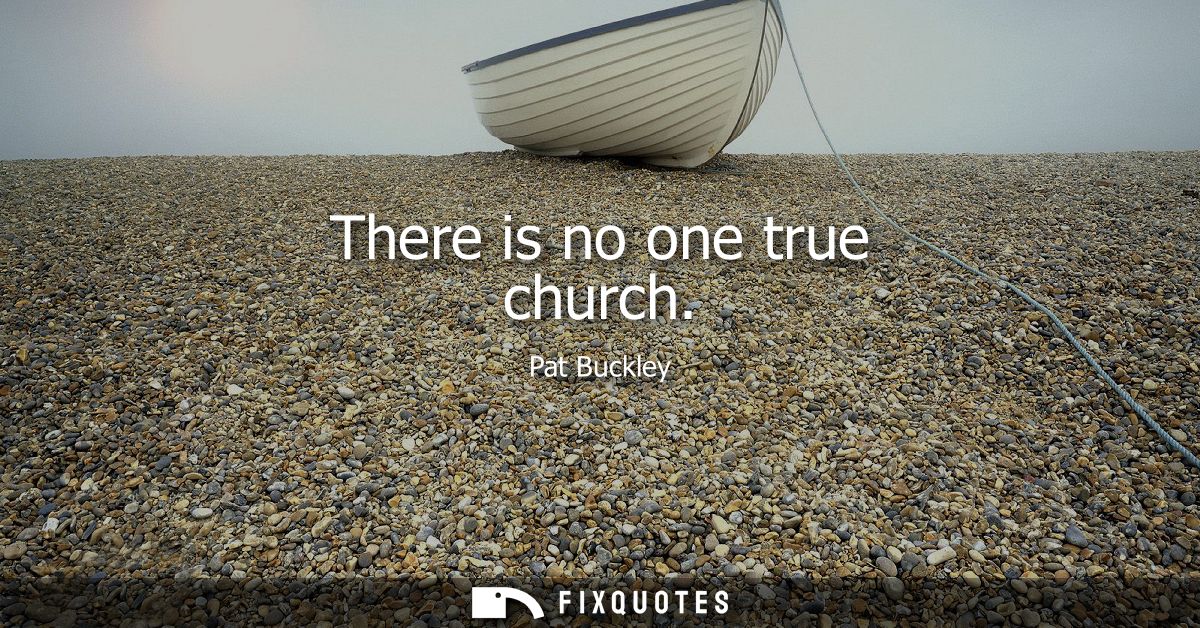
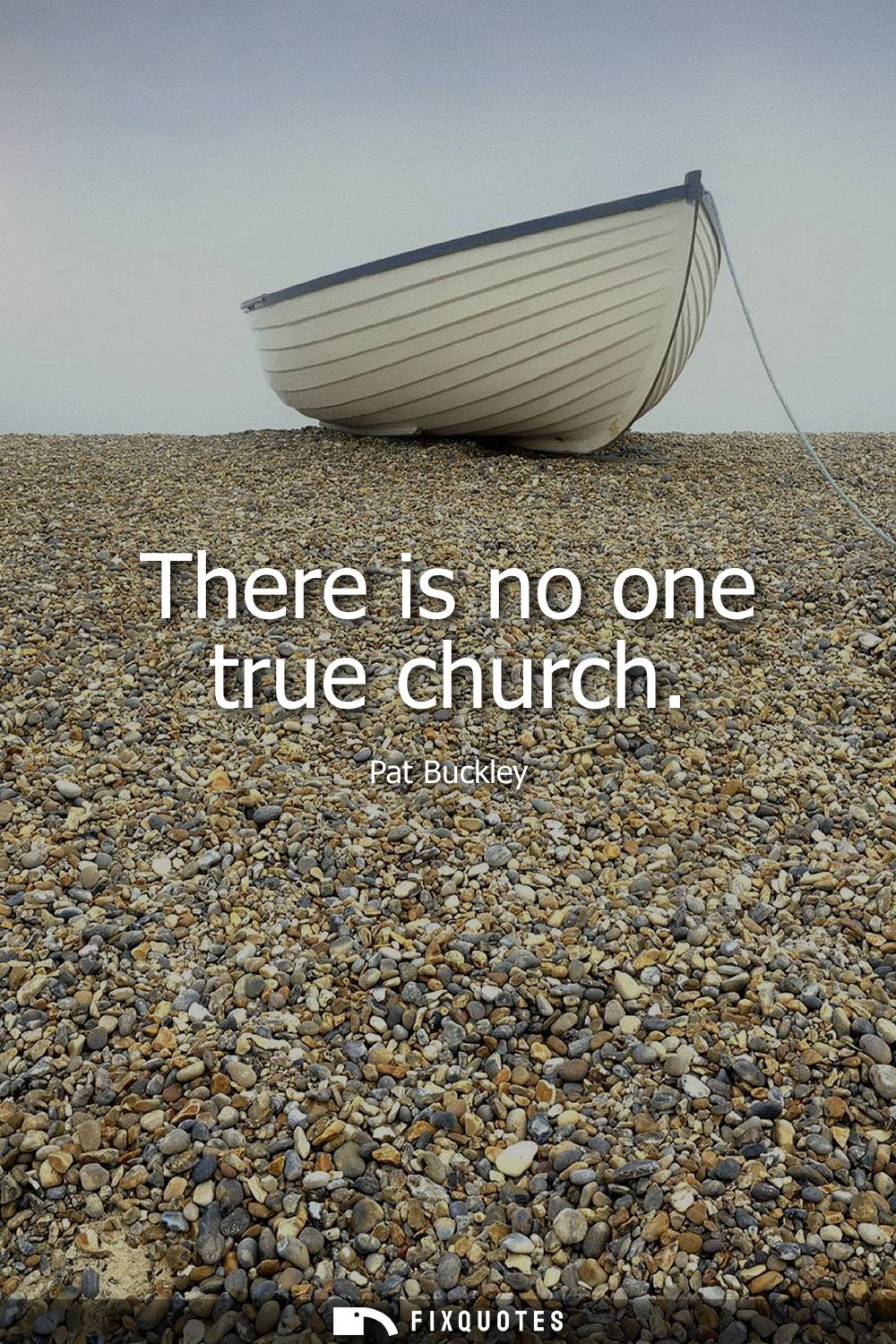
"There is no one true church"
About this Quote
In seven plain words, Pat Buckley detonates a spiritual landmine and then walks away like it is common sense. Coming from a clergyman, "There is no one true church" isn’t just liberal ecumenism; it’s a direct challenge to the institutional reflex that turns faith into brand loyalty. The line’s power comes from its refusal to argue on the church’s usual battlefield - doctrine, apostolic succession, who has the "valid" sacraments. Instead, it shifts the premise: if God is bigger than any one structure, then the claim of exclusive access starts to look less like conviction and more like control.
The intent reads pastoral and political at once. Pastoral, because it offers an exit ramp for people bruised by sectarian gatekeeping: you can keep your spiritual life without submitting to a monopoly. Political, because it undermines the leverage that "one true church" rhetoric has historically carried - the ability to discipline dissent, police identity, and justify hierarchy with metaphysical certainty.
The subtext is also an insider’s critique. Buckley isn’t an atheist heckling from the street; he’s pointing out a structural temptation within clergy culture: confuse the survival of the institution with the health of the soul. In places shaped by denominational conflict - Ireland is an obvious backdrop for a Buckley - the sentence functions like a ceasefire proposal. It rejects the old score-settling logic of "our people" versus "their church" and replaces it with a less theatrical but more radical idea: truth might be shared, partial, and lived, not owned.
The intent reads pastoral and political at once. Pastoral, because it offers an exit ramp for people bruised by sectarian gatekeeping: you can keep your spiritual life without submitting to a monopoly. Political, because it undermines the leverage that "one true church" rhetoric has historically carried - the ability to discipline dissent, police identity, and justify hierarchy with metaphysical certainty.
The subtext is also an insider’s critique. Buckley isn’t an atheist heckling from the street; he’s pointing out a structural temptation within clergy culture: confuse the survival of the institution with the health of the soul. In places shaped by denominational conflict - Ireland is an obvious backdrop for a Buckley - the sentence functions like a ceasefire proposal. It rejects the old score-settling logic of "our people" versus "their church" and replaces it with a less theatrical but more radical idea: truth might be shared, partial, and lived, not owned.
Quote Details
| Topic | Faith |
|---|---|
| Source | Help us find the source |
| Cite |
Citation Formats
APA Style (7th ed.)
Buckley, Pat. (2026, January 16). There is no one true church. FixQuotes. https://fixquotes.com/quotes/there-is-no-one-true-church-109062/
Chicago Style
Buckley, Pat. "There is no one true church." FixQuotes. January 16, 2026. https://fixquotes.com/quotes/there-is-no-one-true-church-109062/.
MLA Style (9th ed.)
"There is no one true church." FixQuotes, 16 Jan. 2026, https://fixquotes.com/quotes/there-is-no-one-true-church-109062/. Accessed 29 Mar. 2026.
More Quotes by Pat
Add to List