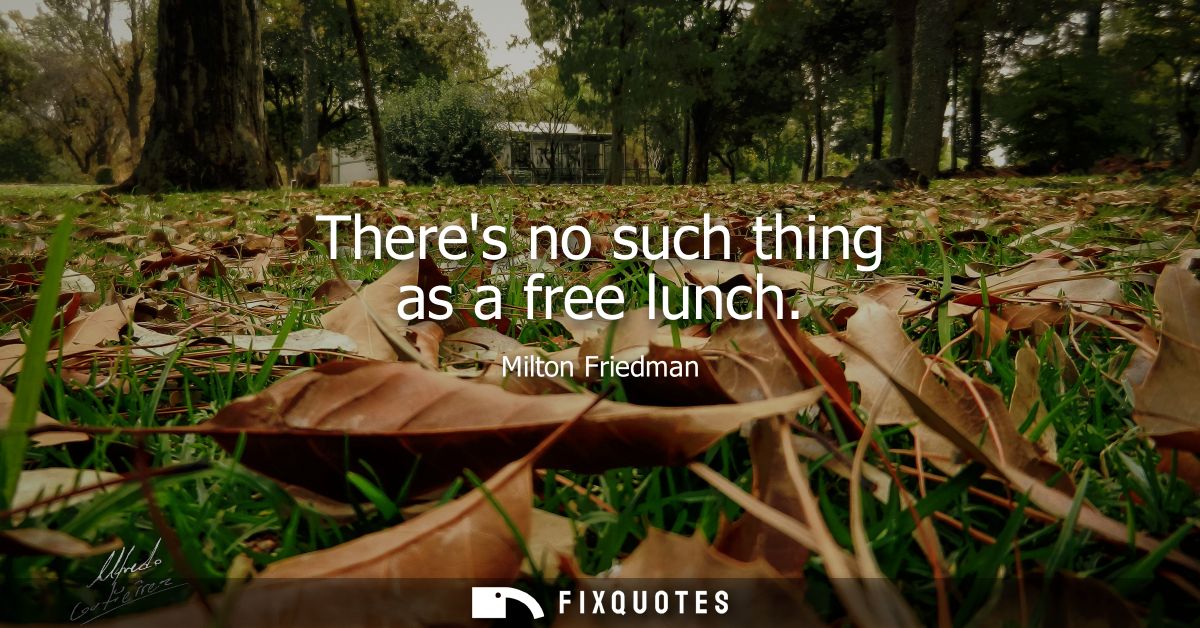
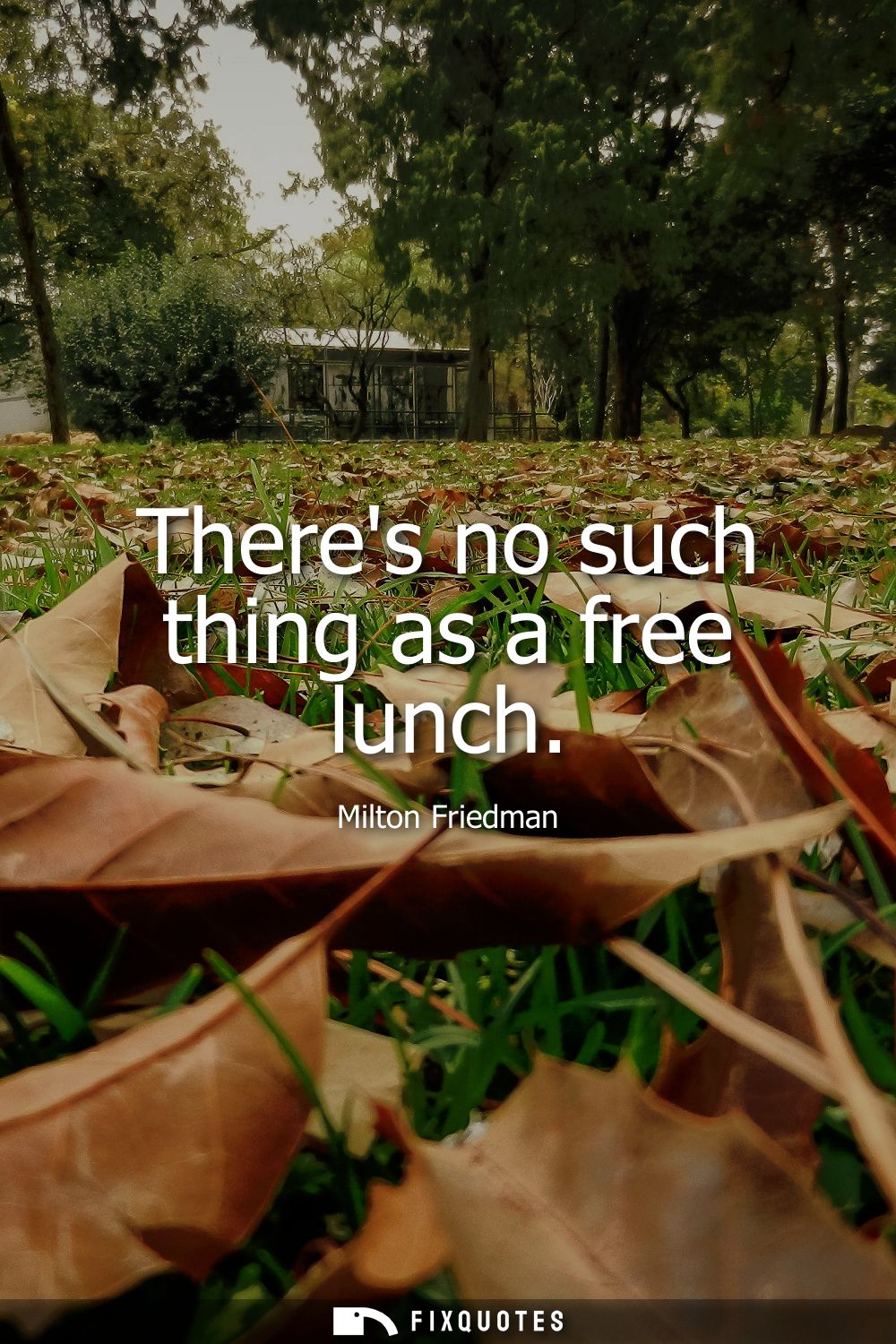
"There's no such thing as a free lunch"
About this Quote
The genius of "There's no such thing as a free lunch" is how it smuggles a whole worldview into a cheery, cafeteria-sized idiom. Friedman, the patron saint of market clarity, takes a folksy line and turns it into a moral scalpel: costs exist, someone pays, and pretending otherwise is the first step toward bad policy and worse politics. Its staying power comes from its faux-innocence. "Free lunch" sounds small, even silly. That’s the point. By shrinking the debate to something tactile, Friedman makes government promises and corporate giveaways feel like the same kind of con: pleasant upfront, expensive later.
The intent is pedagogical but also prosecutorial. He’s not just warning students about opportunity cost; he’s accusing policymakers of laundering trade-offs through language. Subsidies, price controls, expansive welfare programs, deficit spending: they can be sold as gifts, but the bill shows up as inflation, taxes, distortions, or foregone alternatives. The line invites a reflexive suspicion of "free" as a rhetorical trick - not because generosity is impossible, but because economics is bookkeeping whether you admit it or not.
Context matters. Friedman rose to prominence fighting Keynesian consensus and arguing for limited government during the Cold War, when "planning" carried ideological baggage. The phrase doubles as anti-utopianism: any system promising painless abundance is either hiding its coercion or outsourcing its pain to someone less visible. It’s not cynicism for sport; it’s a demand that society stop purchasing comfort with euphemism.
The intent is pedagogical but also prosecutorial. He’s not just warning students about opportunity cost; he’s accusing policymakers of laundering trade-offs through language. Subsidies, price controls, expansive welfare programs, deficit spending: they can be sold as gifts, but the bill shows up as inflation, taxes, distortions, or foregone alternatives. The line invites a reflexive suspicion of "free" as a rhetorical trick - not because generosity is impossible, but because economics is bookkeeping whether you admit it or not.
Context matters. Friedman rose to prominence fighting Keynesian consensus and arguing for limited government during the Cold War, when "planning" carried ideological baggage. The phrase doubles as anti-utopianism: any system promising painless abundance is either hiding its coercion or outsourcing its pain to someone less visible. It’s not cynicism for sport; it’s a demand that society stop purchasing comfort with euphemism.
Quote Details
| Topic | Money |
|---|---|
| Source | Help us find the source |
| Cite |
Citation Formats
APA Style (7th ed.)
Friedman, Milton. (2026, January 15). There's no such thing as a free lunch. FixQuotes. https://fixquotes.com/quotes/theres-no-such-thing-as-a-free-lunch-32568/
Chicago Style
Friedman, Milton. "There's no such thing as a free lunch." FixQuotes. January 15, 2026. https://fixquotes.com/quotes/theres-no-such-thing-as-a-free-lunch-32568/.
MLA Style (9th ed.)
"There's no such thing as a free lunch." FixQuotes, 15 Jan. 2026, https://fixquotes.com/quotes/theres-no-such-thing-as-a-free-lunch-32568/. Accessed 7 Apr. 2026.
More Quotes by Milton
Add to List