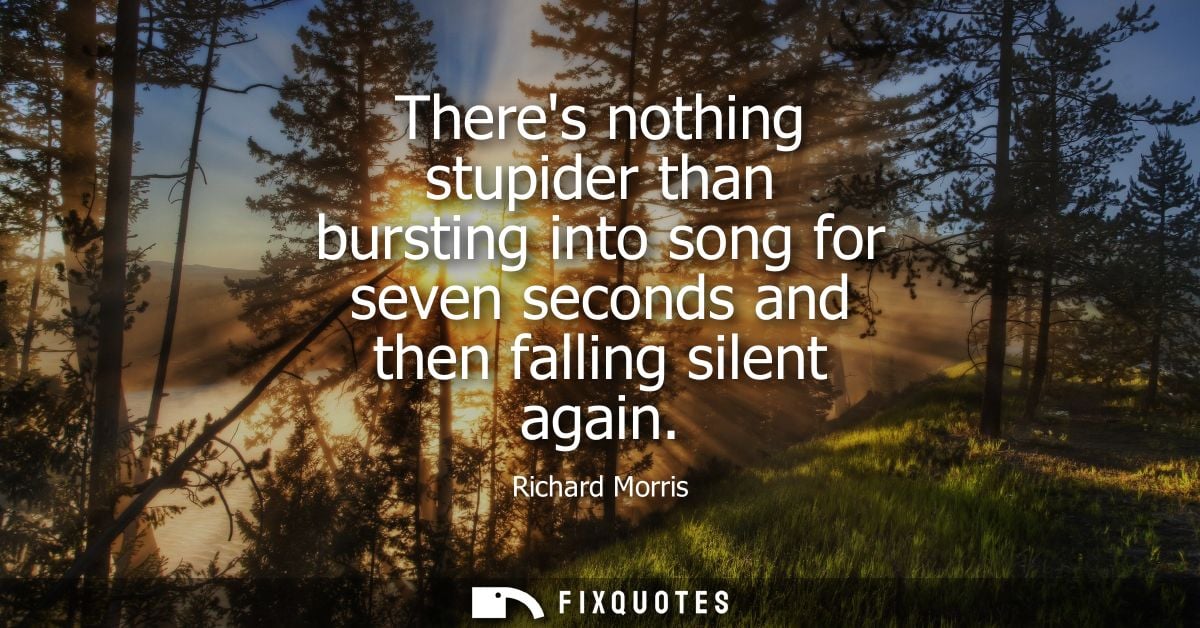
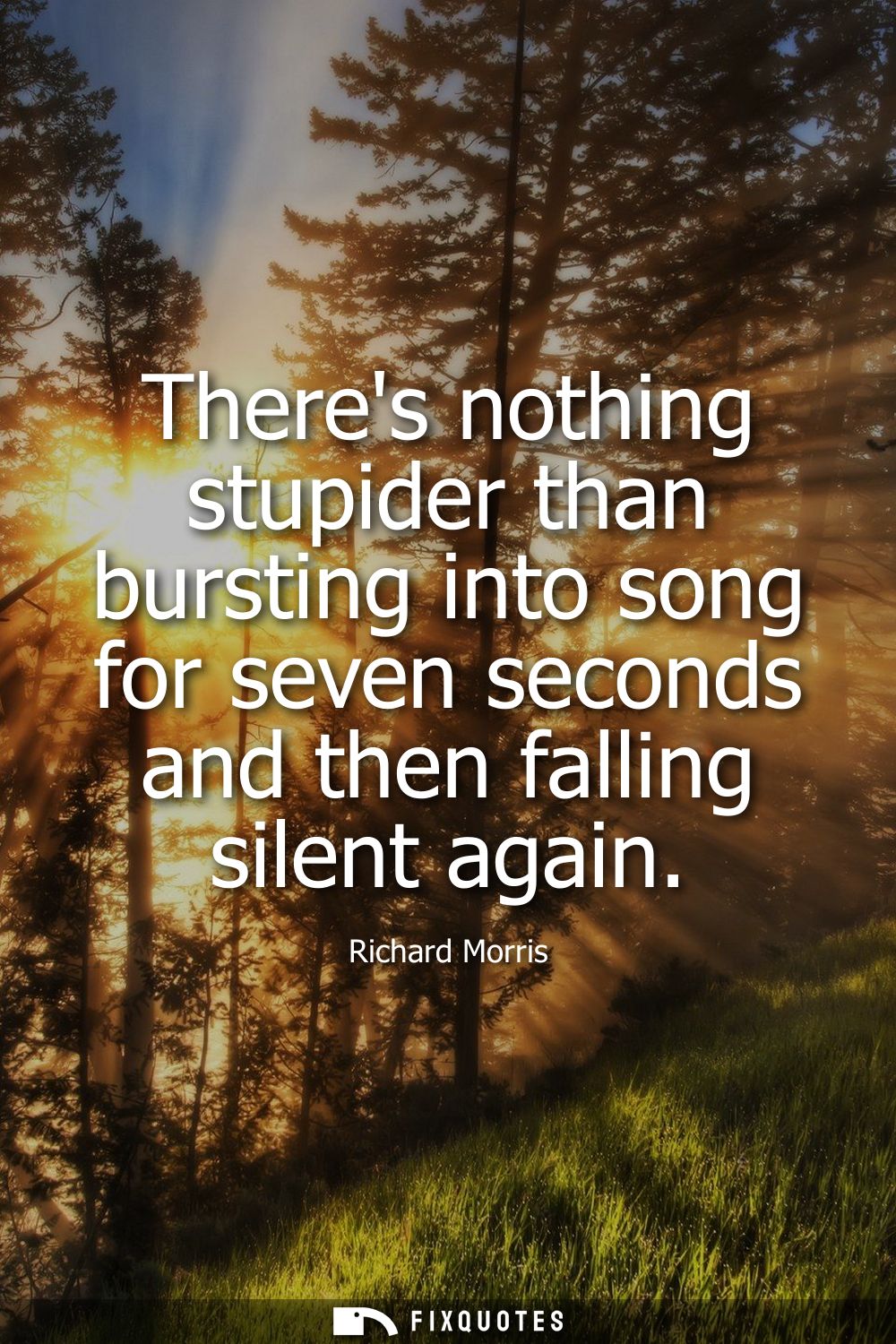
"There's nothing stupider than bursting into song for seven seconds and then falling silent again"
About this Quote
The subtext is a critique of display without commitment, emotion without consequence. It’s also, quietly, a warning about taste: don’t indulge your private enthusiasms in public unless you’re prepared to carry them somewhere. A clergyman in the 19th century would have lived inside tightly managed rituals of voice and silence - hymns, responses, sermons - where sound means something because it’s structured, communal, and sustained. Against that backdrop, the seven-second serenade reads like modern attention economy behavior before its time: a micro-performance designed to register, not to endure.
Morris’s intent feels double-edged: he’s policing decorum, yes, but he’s also puncturing a certain sentimental spontaneity. The line works because it treats a small social misfire as a moral category, then exaggerates it just enough to make the scolding funny. The laughter is the discipline.
Quote Details
| Topic | Witty One-Liners |
|---|---|
| Source | Help us find the source |
| Cite |
Citation Formats
APA Style (7th ed.)
Morris, Richard. (2026, January 18). There's nothing stupider than bursting into song for seven seconds and then falling silent again. FixQuotes. https://fixquotes.com/quotes/theres-nothing-stupider-than-bursting-into-song-13271/
Chicago Style
Morris, Richard. "There's nothing stupider than bursting into song for seven seconds and then falling silent again." FixQuotes. January 18, 2026. https://fixquotes.com/quotes/theres-nothing-stupider-than-bursting-into-song-13271/.
MLA Style (9th ed.)
"There's nothing stupider than bursting into song for seven seconds and then falling silent again." FixQuotes, 18 Jan. 2026, https://fixquotes.com/quotes/theres-nothing-stupider-than-bursting-into-song-13271/. Accessed 22 Mar. 2026.