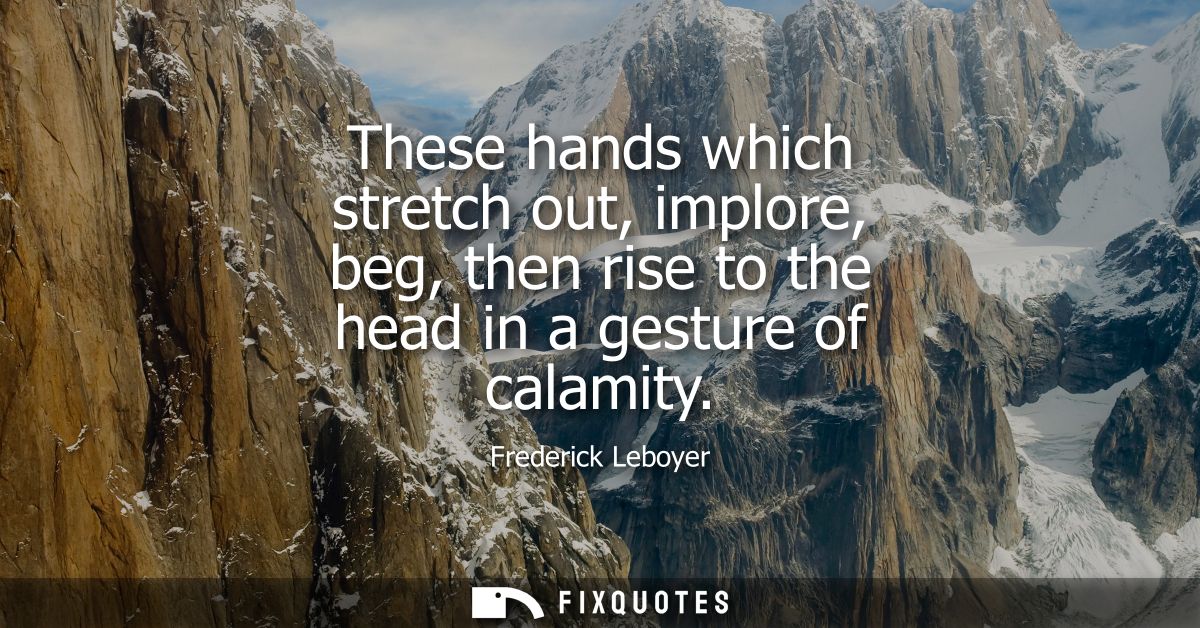
"These hands which stretch out, implore, beg, then rise to the head in a gesture of calamity"
About this Quote
The line reads like a close-up shot, the camera refusing the comfort of distance. Leboyer, associated with a 1970s wave of rethinking birth (notably around gentler, less clinical practices), often argued that the body remembers what institutions prefer to treat as routine. In that context, these hands could be a laboring mother’s, a newborn’s, or anyone caught in a medical system where vulnerability is processed like paperwork. The subtext is a critique of how quickly we pathologize distress without witnessing it.
The intent feels less poetic than ethical: pay attention to the body’s petition. The calamity isn’t abstract; it’s the moment a person runs out of words and the hands have to speak for them.
Quote Details
| Topic | Sadness |
|---|---|
| Source | Help us find the source |
| Cite |
Citation Formats
APA Style (7th ed.)
Leboyer, Frederick. (2026, January 16). These hands which stretch out, implore, beg, then rise to the head in a gesture of calamity. FixQuotes. https://fixquotes.com/quotes/these-hands-which-stretch-out-implore-beg-then-125335/
Chicago Style
Leboyer, Frederick. "These hands which stretch out, implore, beg, then rise to the head in a gesture of calamity." FixQuotes. January 16, 2026. https://fixquotes.com/quotes/these-hands-which-stretch-out-implore-beg-then-125335/.
MLA Style (9th ed.)
"These hands which stretch out, implore, beg, then rise to the head in a gesture of calamity." FixQuotes, 16 Jan. 2026, https://fixquotes.com/quotes/these-hands-which-stretch-out-implore-beg-then-125335/. Accessed 21 Mar. 2026.