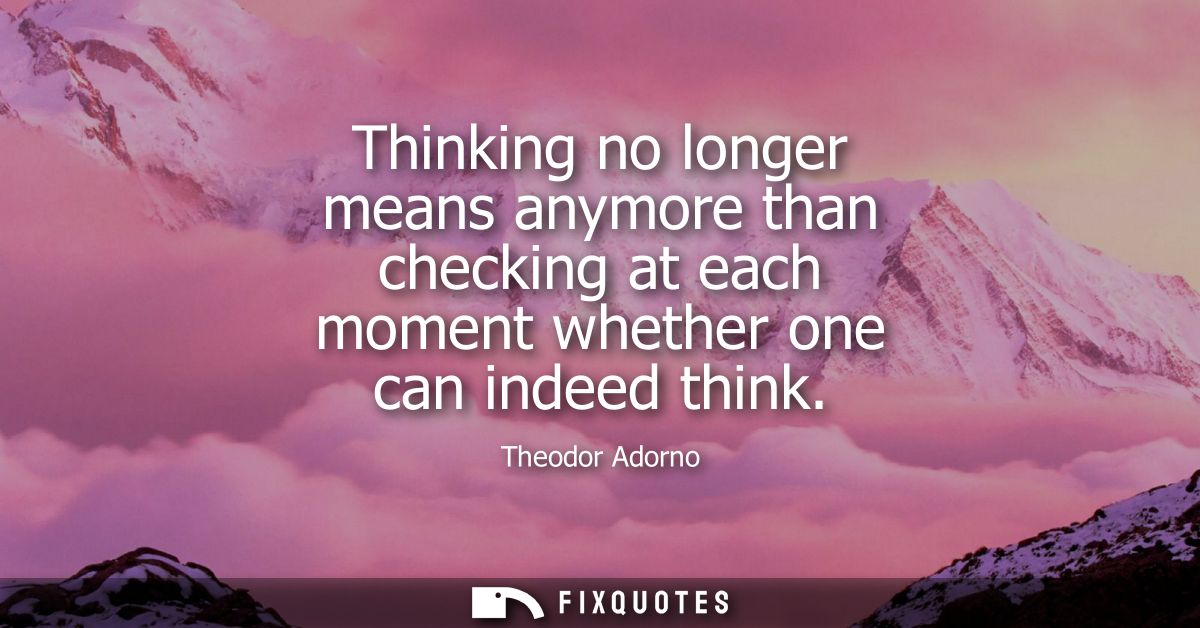
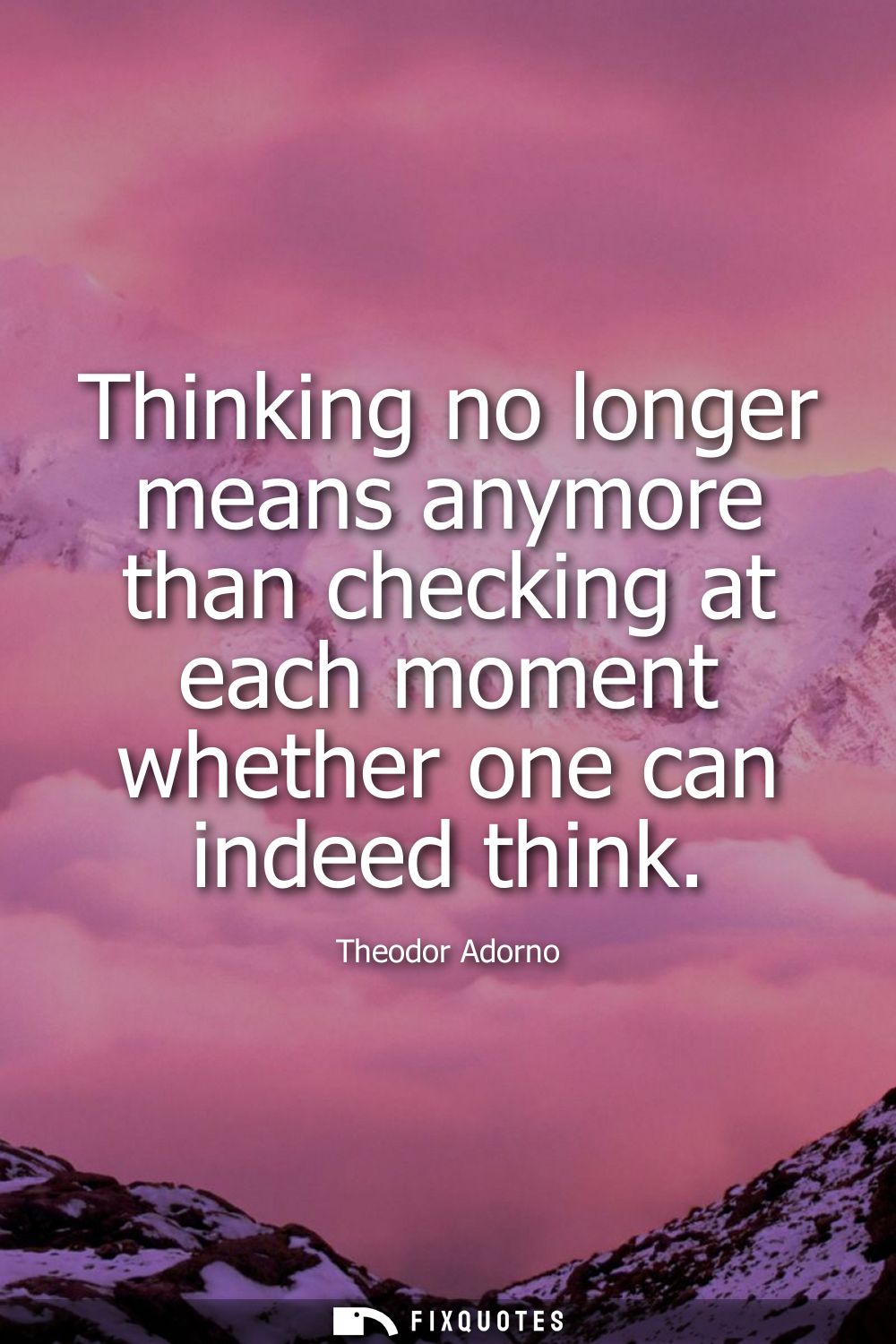
"Thinking no longer means anymore than checking at each moment whether one can indeed think"
About this Quote
Adorno turns a verb into a compliance check. "Thinking" here isn’t the confident activity liberal culture flatters itself with; it’s a stressed, moment-to-moment audit: am I still capable of thought, or am I only rehearsing what’s been pre-approved? The line bites because it treats cognition less like illumination than like a system status indicator blinking on a dashboard.
The subtext is Adorno’s postwar diagnosis of modern life: mass culture, bureaucratic reason, and the commodity form don’t merely distract you from thinking; they remodel the very conditions under which thought can happen. If your inner life is colonized by slogans, schedules, and ready-made opinions, the mind starts to behave like an employee logging hours. You can “think” all day and still never leave the narrow corridor of what the culture industry and institutional life have rendered sayable.
It’s also a jab at philosophy’s own crisis. Adorno doesn’t offer a heroic image of the thinker; he offers fragility. The humiliation is deliberate: modernity has made genuine reflection so difficult that the most honest intellectual task is vigilance, a continual self-suspicion about whether one’s concepts are alive or merely inherited.
The line’s power comes from its taut circularity: thinking reduced to verifying thinking. It’s a philosophical Mobius strip that mirrors a society where autonomy has become a performance metric. In Adorno’s hands, that anxiety isn’t neurosis; it’s evidence. If you don’t have to keep checking, you probably aren’t thinking at all.
The subtext is Adorno’s postwar diagnosis of modern life: mass culture, bureaucratic reason, and the commodity form don’t merely distract you from thinking; they remodel the very conditions under which thought can happen. If your inner life is colonized by slogans, schedules, and ready-made opinions, the mind starts to behave like an employee logging hours. You can “think” all day and still never leave the narrow corridor of what the culture industry and institutional life have rendered sayable.
It’s also a jab at philosophy’s own crisis. Adorno doesn’t offer a heroic image of the thinker; he offers fragility. The humiliation is deliberate: modernity has made genuine reflection so difficult that the most honest intellectual task is vigilance, a continual self-suspicion about whether one’s concepts are alive or merely inherited.
The line’s power comes from its taut circularity: thinking reduced to verifying thinking. It’s a philosophical Mobius strip that mirrors a society where autonomy has become a performance metric. In Adorno’s hands, that anxiety isn’t neurosis; it’s evidence. If you don’t have to keep checking, you probably aren’t thinking at all.
Quote Details
| Topic | Reason & Logic |
|---|
More Quotes by Theodor
Add to List