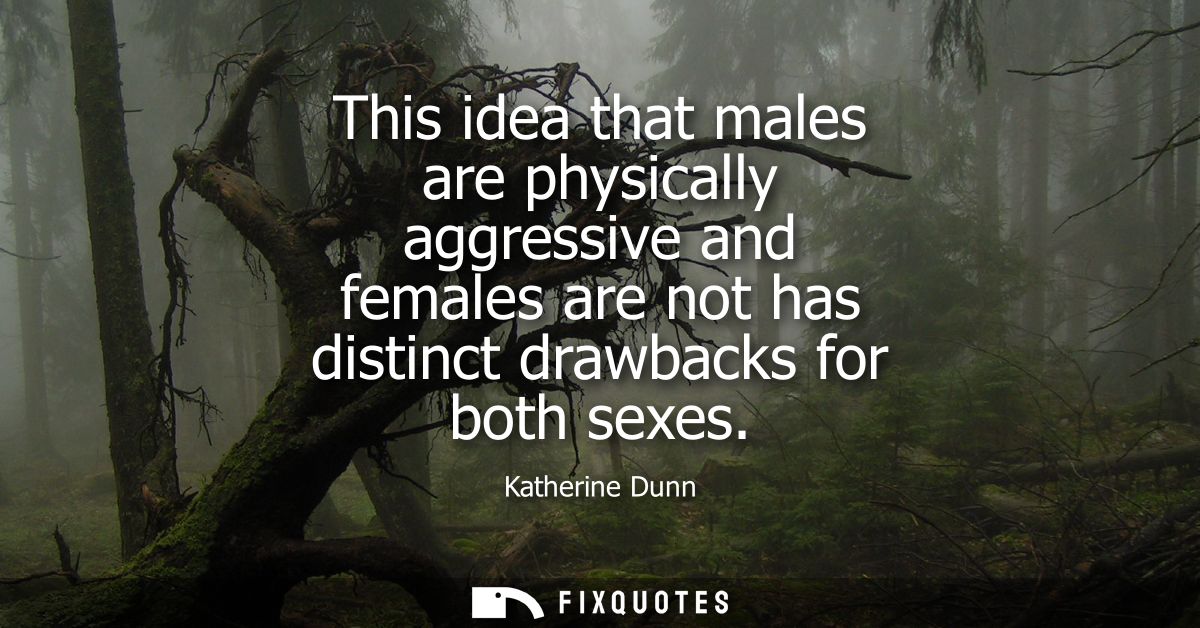
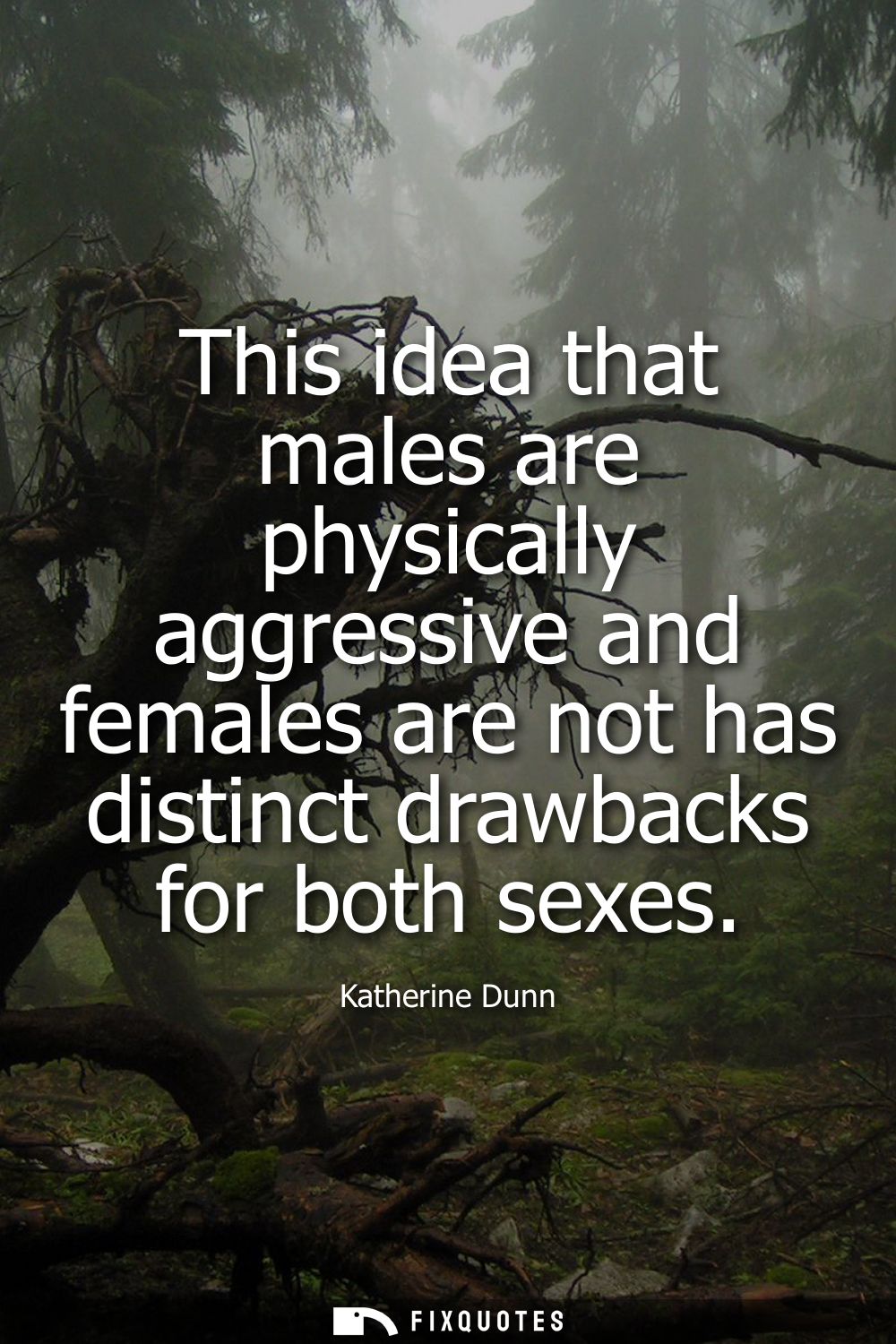
"This idea that males are physically aggressive and females are not has distinct drawbacks for both sexes"
About this Quote
The subtext is double-edged. For men, the “physically aggressive” script becomes permission and sentence: permission to escalate, sentence to be read as dangerous even when vulnerable. It narrows the emotional palette, but Dunn picks “physically” for a reason: bodies become the proving ground where worth is measured, conflict is solved, and tenderness is policed. For women, the “females are not” myth doesn’t just deny rage; it denies capacity. It casts self-defense, ambition, and even loudness as unnatural, then punishes women for the consequences of being perceived as nonthreatening.
Context matters: Dunn wrote in an era when feminist debates about biology versus social conditioning were public, thorny, and often distorted into caricature. Her sentence refuses the trap of choosing sides. She points at the cost-accounting. Gender myths don’t merely misdescribe reality; they manufacture it, then call the manufactured result “common sense.”
Quote Details
| Topic | Equality |
|---|---|
| Source | Help us find the source |
| Cite |
Citation Formats
APA Style (7th ed.)
Dunn, Katherine. (2026, January 15). This idea that males are physically aggressive and females are not has distinct drawbacks for both sexes. FixQuotes. https://fixquotes.com/quotes/this-idea-that-males-are-physically-aggressive-157348/
Chicago Style
Dunn, Katherine. "This idea that males are physically aggressive and females are not has distinct drawbacks for both sexes." FixQuotes. January 15, 2026. https://fixquotes.com/quotes/this-idea-that-males-are-physically-aggressive-157348/.
MLA Style (9th ed.)
"This idea that males are physically aggressive and females are not has distinct drawbacks for both sexes." FixQuotes, 15 Jan. 2026, https://fixquotes.com/quotes/this-idea-that-males-are-physically-aggressive-157348/. Accessed 12 Feb. 2026.