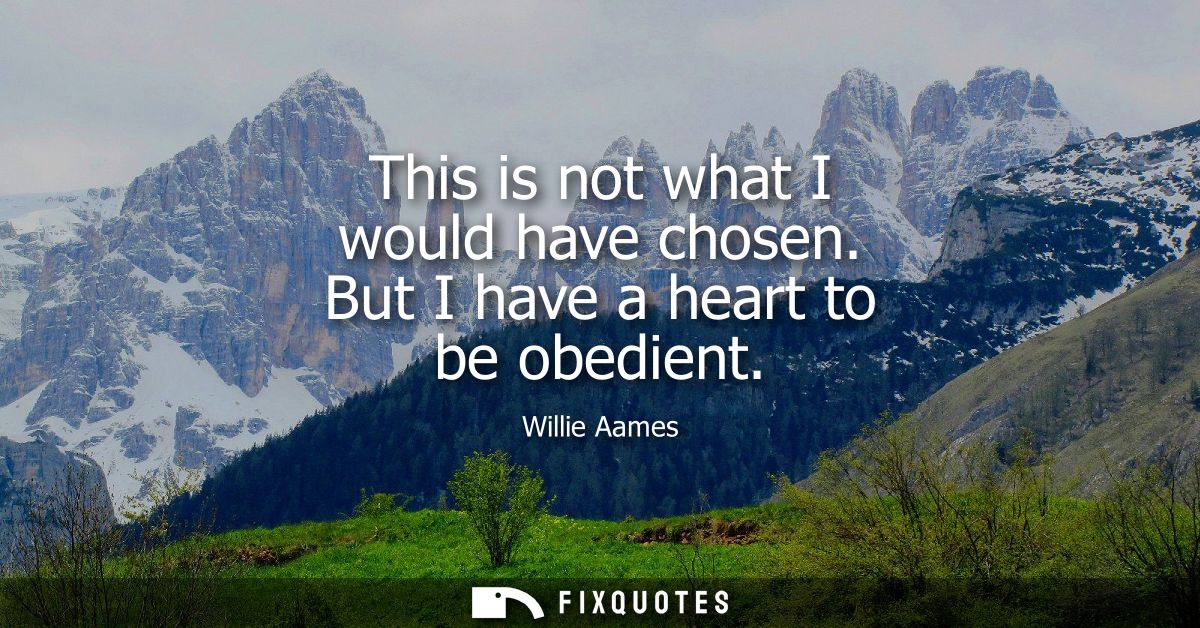
"This is not what I would have chosen. But I have a heart to be obedient"
About this Quote
Aames’s context matters. As a pop-culture figure who moved from teen-idol visibility into public struggles and a later faith-forward reinvention, he’s speaking from a world where “choice” is both currency and trap. Actors are trained to sell agency; celebrity narratives reward self-authorship. This line deliberately rejects that modern gospel. The subtext is: I’m giving up control because control has failed me, and I need a framework that makes surrender feel like strength.
The most telling word is “obedient,” which carries religious overtones without naming God. That coyness is strategic: it lets the sentiment travel beyond doctrine into a broader cultural mood of burnout, recovery, and recalibration. It’s the language of someone who has been humbled by consequences, trying to turn constraint into character. Not triumphal, not self-pitying: a disciplined kind of acceptance that still keeps the self in the room.
Quote Details
| Topic | Faith |
|---|---|
| Source | Help us find the source |
| Cite |
Citation Formats
APA Style (7th ed.)
Aames, Willie. (2026, January 18). This is not what I would have chosen. But I have a heart to be obedient. FixQuotes. https://fixquotes.com/quotes/this-is-not-what-i-would-have-chosen-but-i-have-a-11215/
Chicago Style
Aames, Willie. "This is not what I would have chosen. But I have a heart to be obedient." FixQuotes. January 18, 2026. https://fixquotes.com/quotes/this-is-not-what-i-would-have-chosen-but-i-have-a-11215/.
MLA Style (9th ed.)
"This is not what I would have chosen. But I have a heart to be obedient." FixQuotes, 18 Jan. 2026, https://fixquotes.com/quotes/this-is-not-what-i-would-have-chosen-but-i-have-a-11215/. Accessed 3 Apr. 2026.