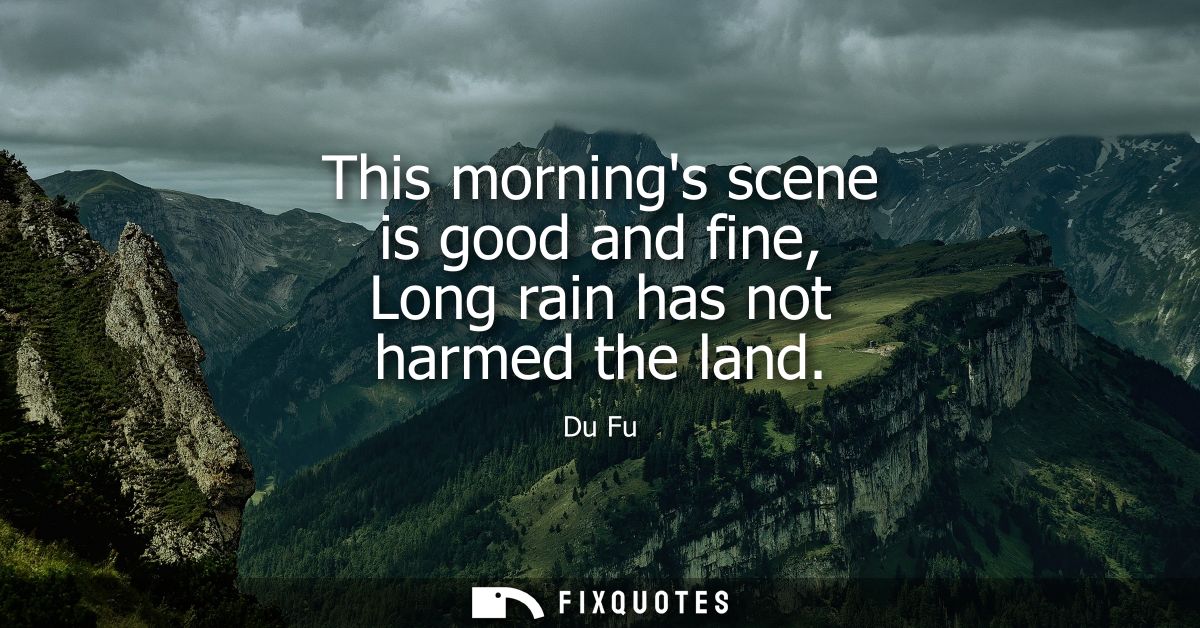
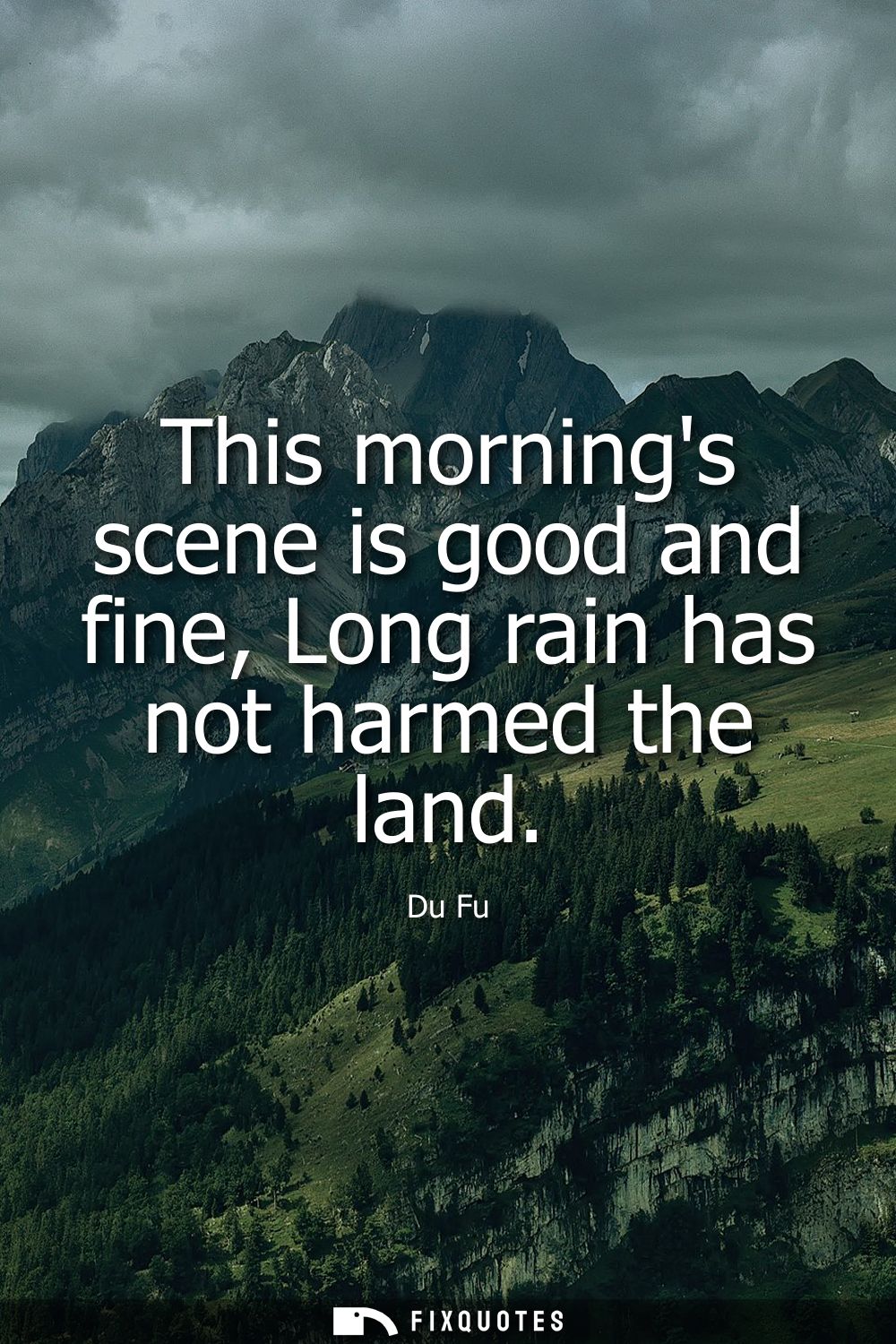
"This morning's scene is good and fine, Long rain has not harmed the land"
About this Quote
The line opens like a quiet exhale after anxiety: a morning that is "good and fine" because the long rain, feared as disaster, has turned out to be survivable. Du Fu doesn’t celebrate weather; he tests reality against dread. The phrasing is almost plain to the point of suspicion, as if he’s tamping down the instinct to over-rejoice. In a world where fortunes flip quickly, understatement is a form of self-defense.
Du Fu wrote through the Tang dynasty’s most shattering convulsions, especially the An Lushan Rebellion, when hunger, displacement, and state collapse weren’t abstractions but daily arithmetic. Against that backdrop, "rain" stops being pastoral decoration and becomes a proxy for political disorder and economic precarity. Too much rain ruins crops, inflates prices, tightens the noose around the poor first. To say it "has not harmed the land" is to report a small victory in a larger war against randomness and misrule.
The subtext is gratitude tempered by vigilance. "The land" is doing double duty: literal soil that can still yield, and a moral landscape that hasn’t fully given way. Du Fu’s genius is that he makes relief feel provisional. The morning is "good and fine" because it could have been otherwise, because the speaker knows how thin the margin is between ordinary beauty and catastrophe. The poem turns survival into an aesthetic: a modest sentence carrying the weight of history, insisting that stability is not a given but an event.
Du Fu wrote through the Tang dynasty’s most shattering convulsions, especially the An Lushan Rebellion, when hunger, displacement, and state collapse weren’t abstractions but daily arithmetic. Against that backdrop, "rain" stops being pastoral decoration and becomes a proxy for political disorder and economic precarity. Too much rain ruins crops, inflates prices, tightens the noose around the poor first. To say it "has not harmed the land" is to report a small victory in a larger war against randomness and misrule.
The subtext is gratitude tempered by vigilance. "The land" is doing double duty: literal soil that can still yield, and a moral landscape that hasn’t fully given way. Du Fu’s genius is that he makes relief feel provisional. The morning is "good and fine" because it could have been otherwise, because the speaker knows how thin the margin is between ordinary beauty and catastrophe. The poem turns survival into an aesthetic: a modest sentence carrying the weight of history, insisting that stability is not a given but an event.
Quote Details
| Topic | Nature |
|---|
More Quotes by Du
Add to List