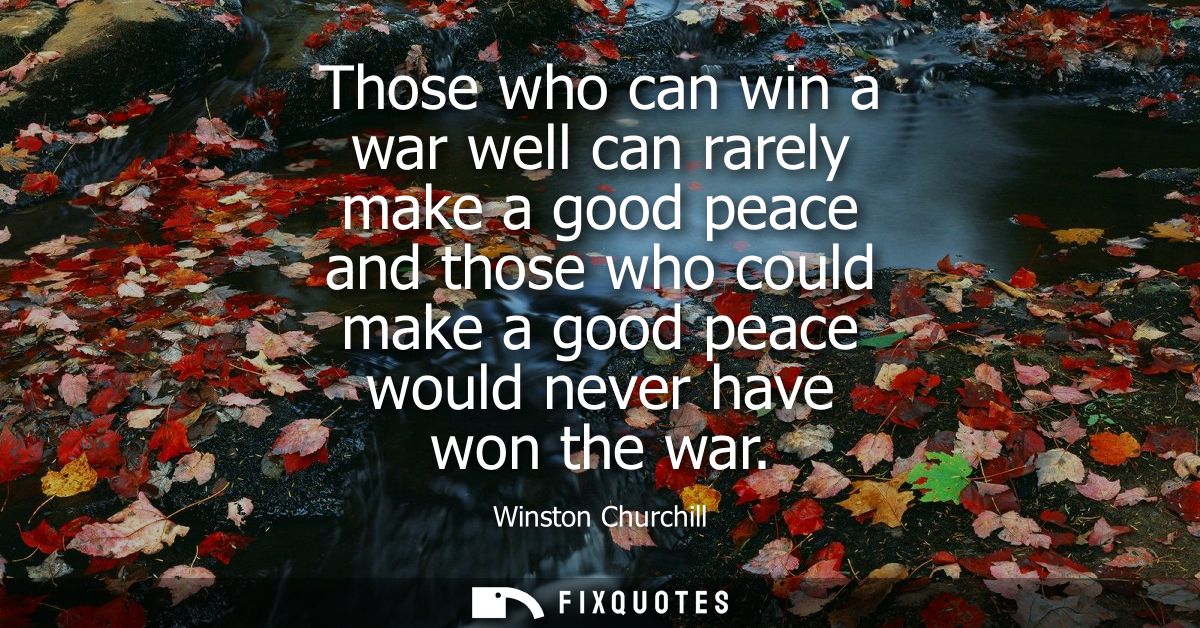
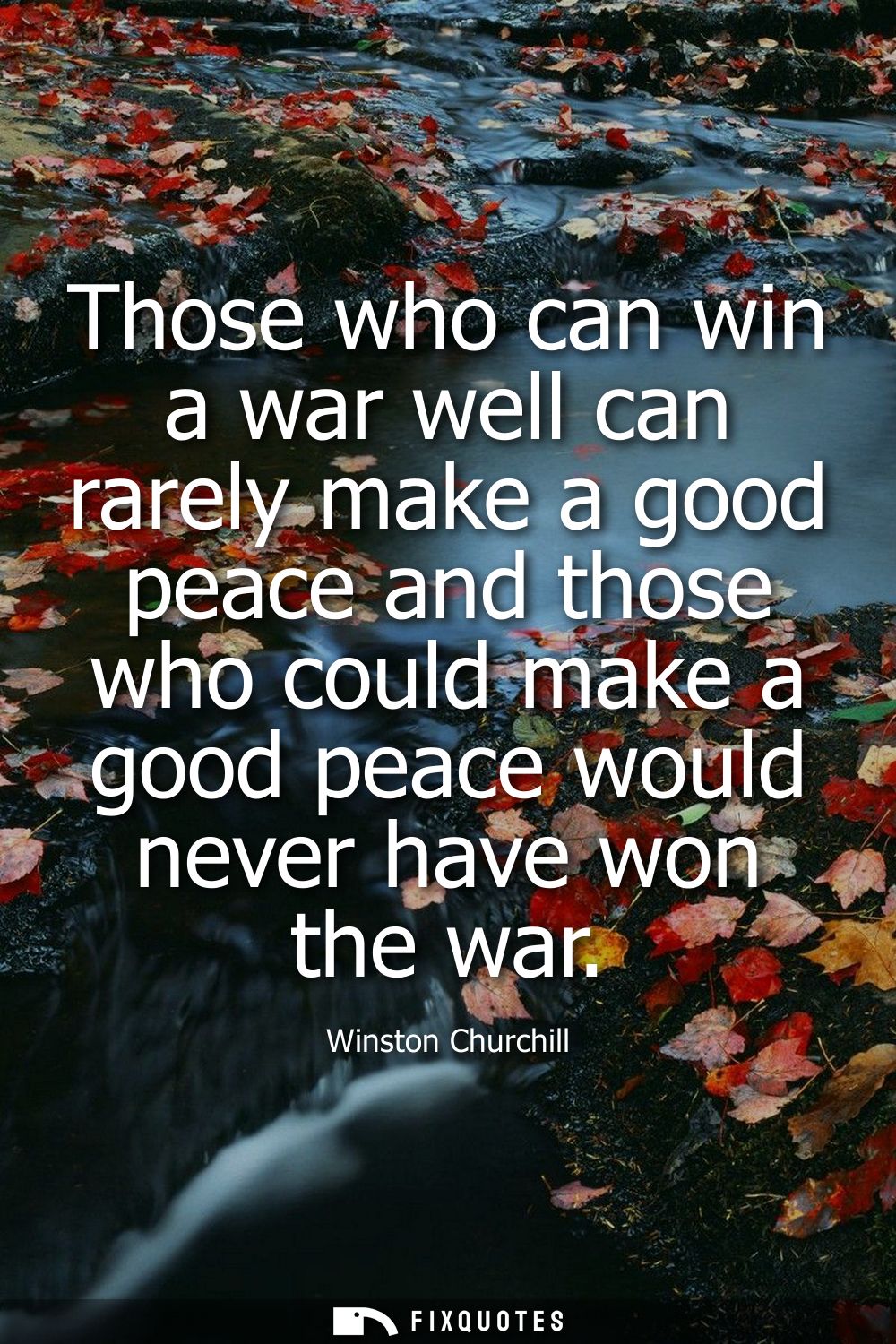
"Those who can win a war well can rarely make a good peace and those who could make a good peace would never have won the war"
About this Quote
The subtext is almost confessional. Churchill was the avatar of wartime resolve, a master of rhetoric that turned endurance into destiny. He also knew that the postwar world would punish the very instincts that made him indispensable in 1940: suspicion, maximalism, the tendency to frame geopolitics as existential struggle. The quote hints at a paradox of democratic leadership: societies elevate “fighters” in emergencies, then need “accountants” and “therapists” to rebuild, yet keep expecting the fighter to keep winning forever.
Placed in Churchill’s era, the line glances at the failures of both sides of the 20th century: the vindictive peace after World War I that helped incubate fascism, and the uneasy necessity of bargaining with former enemies after World War II amid the onset of the Cold War. It’s not an argument against war; it’s an argument against the fantasy that the qualities that save a nation can also seamlessly reconcile it.
Quote Details
| Topic | War |
|---|---|
| Source | Help us find the source |
| Cite | Cite this Quote |
Citation Formats
APA Style (7th ed.)
Churchill, Winston. (2026, January 15). Those who can win a war well can rarely make a good peace and those who could make a good peace would never have won the war. FixQuotes. https://fixquotes.com/quotes/those-who-can-win-a-war-well-can-rarely-make-a-33517/
Chicago Style
Churchill, Winston. "Those who can win a war well can rarely make a good peace and those who could make a good peace would never have won the war." FixQuotes. January 15, 2026. https://fixquotes.com/quotes/those-who-can-win-a-war-well-can-rarely-make-a-33517/.
MLA Style (9th ed.)
"Those who can win a war well can rarely make a good peace and those who could make a good peace would never have won the war." FixQuotes, 15 Jan. 2026, https://fixquotes.com/quotes/those-who-can-win-a-war-well-can-rarely-make-a-33517/. Accessed 4 Feb. 2026.