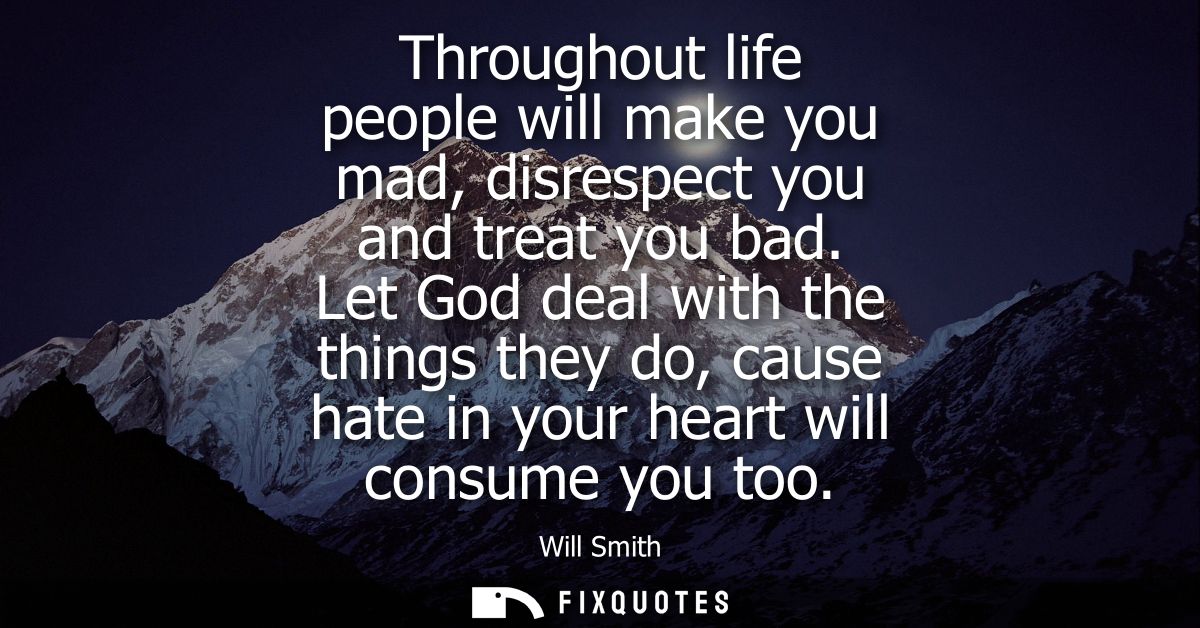
"Throughout life people will make you mad, disrespect you and treat you bad. Let God deal with the things they do, cause hate in your heart will consume you too"
About this Quote
Will Smith’s warning lands because it’s less sermon than survival tip, delivered in the plainspoken cadence of someone who’s watched a public image get poked, prodded, and occasionally detonated. The line sets up a familiar trap: other people’s behavior feels like an open invitation to respond in kind. “Make you mad” and “treat you bad” aren’t poetic flourishes; they’re the everyday provocations of work, family, fame, and social media. The language is blunt because the temptation is blunt.
The pivot - “Let God deal with the things they do” - isn’t really about outsourcing justice; it’s about refusing the emotional labor of carrying other people’s mess. God functions here as a boundary. Whether you’re religious or not, the subtext is: stop appointing yourself judge, jury, and executioner, because that role corrodes you first. The clever move is the reframe of hate as self-harm. The offender becomes almost secondary; the real antagonist is the bitterness you cultivate in response.
In Smith’s cultural context, the quote reads like brand maintenance and genuine self-coaching at once. An actor whose career has long traded on likability and resilience is articulating the cost of retaliatory anger: it doesn’t just look ugly, it eats your attention, your relationships, your sense of self. The sentence offers a clean ethic for an era that rewards clapbacks: you can win the moment and still lose yourself.
The pivot - “Let God deal with the things they do” - isn’t really about outsourcing justice; it’s about refusing the emotional labor of carrying other people’s mess. God functions here as a boundary. Whether you’re religious or not, the subtext is: stop appointing yourself judge, jury, and executioner, because that role corrodes you first. The clever move is the reframe of hate as self-harm. The offender becomes almost secondary; the real antagonist is the bitterness you cultivate in response.
In Smith’s cultural context, the quote reads like brand maintenance and genuine self-coaching at once. An actor whose career has long traded on likability and resilience is articulating the cost of retaliatory anger: it doesn’t just look ugly, it eats your attention, your relationships, your sense of self. The sentence offers a clean ethic for an era that rewards clapbacks: you can win the moment and still lose yourself.
Quote Details
| Topic | Forgiveness |
|---|
More Quotes by Will
Add to List