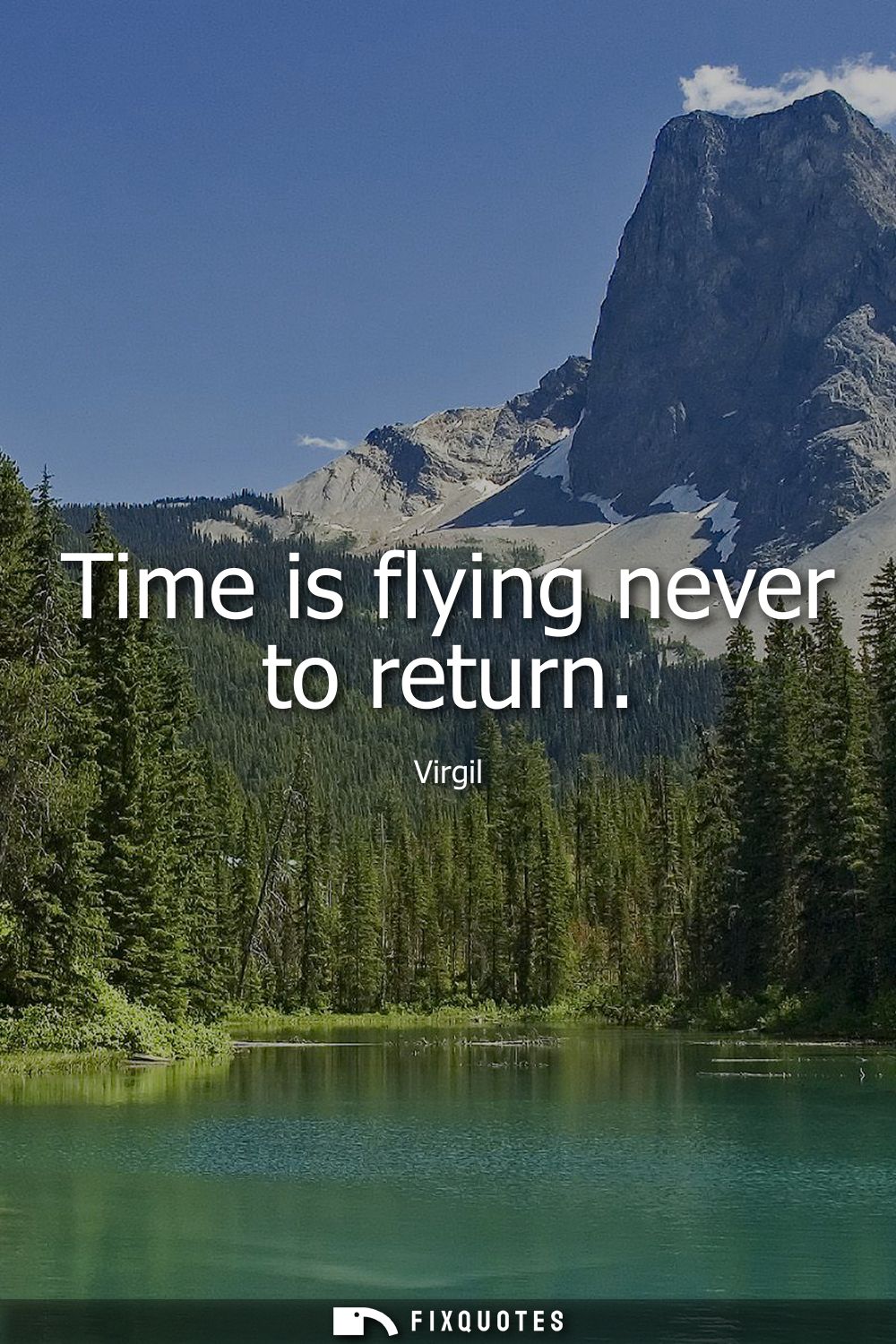
"Time is flying never to return"
About this Quote
Virgil captures a stark truth about human life and endeavor: time moves on with a speed that feels like flight, and once gone it cannot be reclaimed. The metaphor of flying suggests both swiftness and a kind of graceful indifference. Time does not pause to be noticed; it slips past even as we try to hold it. The finality embedded in never to return cuts through comforting illusions about later chances. Memory can revisit moments, but experience cannot be rewound. That recognition sharpens attention, urging a shift from vague intention to deliberate action, from passive drifting to purposeful work and presence.
The line comes from the Georgics, Virgil’s didactic poem on agriculture, where he pauses amid meticulous instructions on breeding and tending animals to remark, Sed fugit interea, fugit inreparabile tempus. The context matters. He is not indulging in abstract melancholy; he is reminding farmers that seasons will not wait while they linger over details. Spring will not be rescheduled. Crops demand timely labor, and nature exacts penalties for delay. Roman ethics infuse the sentiment: discipline, duty, and alignment with the rhythms of the cosmos. Time’s irreparability is not a cause for despair but the ground of urgency. It calls for intelligent timing, the patient courage to do what must be done now, and the humility to accept limits. The idea rhymes with Horace’s impulse to seize the day, yet Virgil’s tone is steadier, more practical. He teaches that life’s goods are seasonal and opportunity is perishable.
Read today, the line resists both procrastination and frantic busyness. It asks for choices guided by what truly matters, since every yes is a no to something else. The flight of time is not an enemy to be fought but a condition to be honored. By admitting that it never returns, we learn to return ourselves more fully to the present.
The line comes from the Georgics, Virgil’s didactic poem on agriculture, where he pauses amid meticulous instructions on breeding and tending animals to remark, Sed fugit interea, fugit inreparabile tempus. The context matters. He is not indulging in abstract melancholy; he is reminding farmers that seasons will not wait while they linger over details. Spring will not be rescheduled. Crops demand timely labor, and nature exacts penalties for delay. Roman ethics infuse the sentiment: discipline, duty, and alignment with the rhythms of the cosmos. Time’s irreparability is not a cause for despair but the ground of urgency. It calls for intelligent timing, the patient courage to do what must be done now, and the humility to accept limits. The idea rhymes with Horace’s impulse to seize the day, yet Virgil’s tone is steadier, more practical. He teaches that life’s goods are seasonal and opportunity is perishable.
Read today, the line resists both procrastination and frantic busyness. It asks for choices guided by what truly matters, since every yes is a no to something else. The flight of time is not an enemy to be fought but a condition to be honored. By admitting that it never returns, we learn to return ourselves more fully to the present.
Quote Details
| Topic | Time |
|---|
More Quotes by Virgil
Add to List