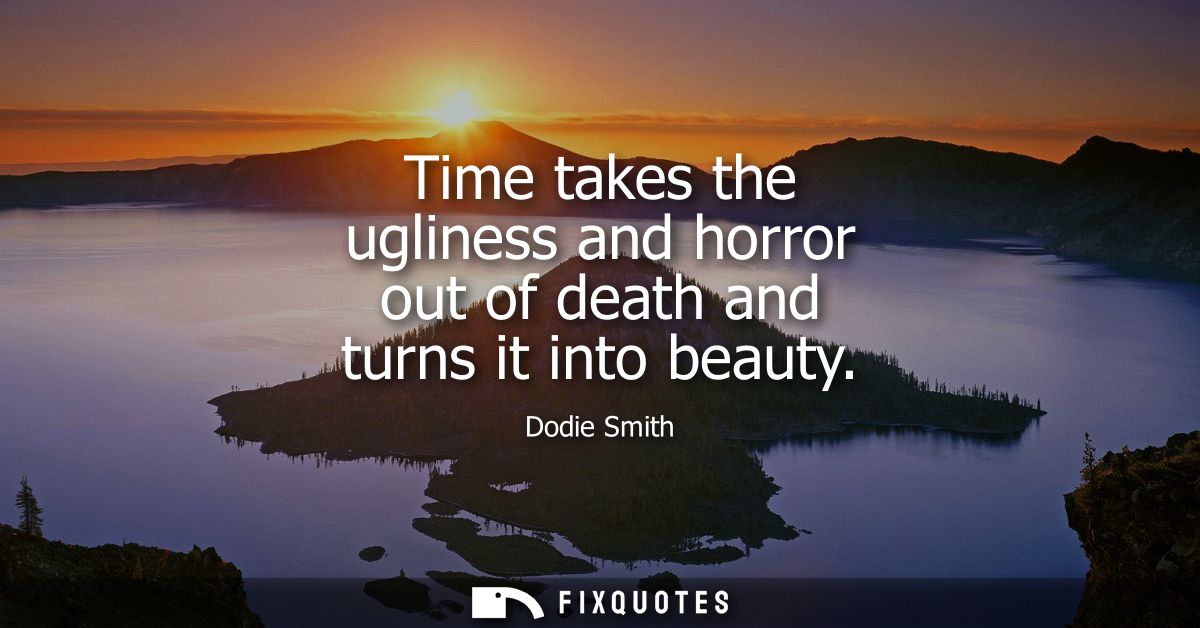
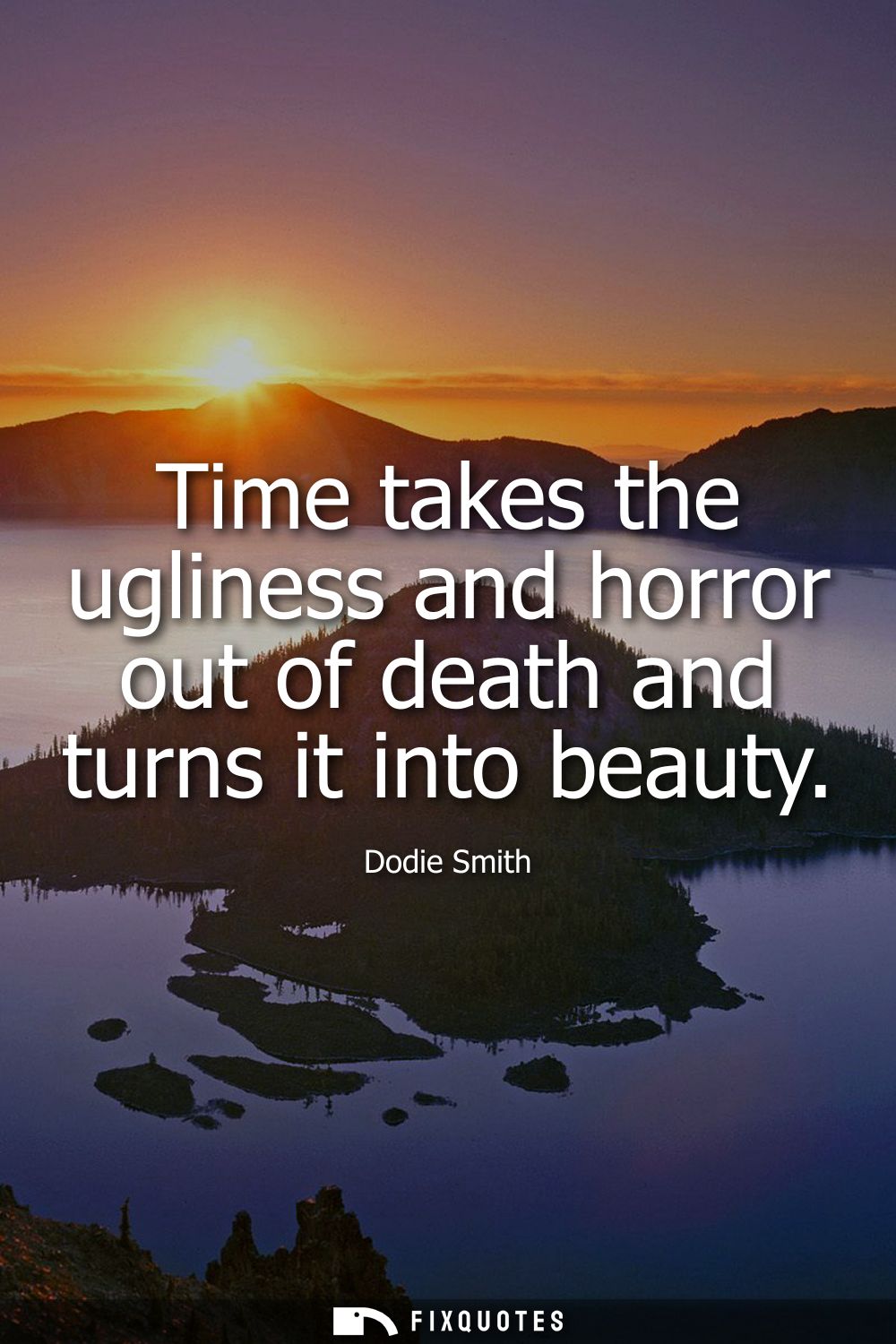
"Time takes the ugliness and horror out of death and turns it into beauty"
About this Quote
The line is doing two things at once. It offers comfort, but it also admits something slightly ruthless about human psychology: we cannot live with constant proximity to the real. To keep going, we metabolize terror into narrative, and narrative into beauty. That beauty can be tenderness, a memorial ritual, a story told at the dinner table; it can also be the seductive polish that turns a complicated life into legend. Smith's phrasing is blunt about the transformation: time "takes" the ugliness out. Not resolves, not redeems - removes, like a stagehand clearing props after the tragedy so the audience can applaud.
As a dramatist writing in an era bookended by world wars and mass death, Smith understands how societies survive their own catastrophes: by making monuments, art, and anniversaries that soften the blow. The subtext is a warning and a mercy. Beauty is how we bear loss. It can also be how we forget what death really costs.
Quote Details
| Topic | Mortality |
|---|---|
| Source | Help us find the source |
| Cite |
Citation Formats
APA Style (7th ed.)
Smith, Dodie. (2026, January 15). Time takes the ugliness and horror out of death and turns it into beauty. FixQuotes. https://fixquotes.com/quotes/time-takes-the-ugliness-and-horror-out-of-death-140832/
Chicago Style
Smith, Dodie. "Time takes the ugliness and horror out of death and turns it into beauty." FixQuotes. January 15, 2026. https://fixquotes.com/quotes/time-takes-the-ugliness-and-horror-out-of-death-140832/.
MLA Style (9th ed.)
"Time takes the ugliness and horror out of death and turns it into beauty." FixQuotes, 15 Jan. 2026, https://fixquotes.com/quotes/time-takes-the-ugliness-and-horror-out-of-death-140832/. Accessed 24 Mar. 2026.