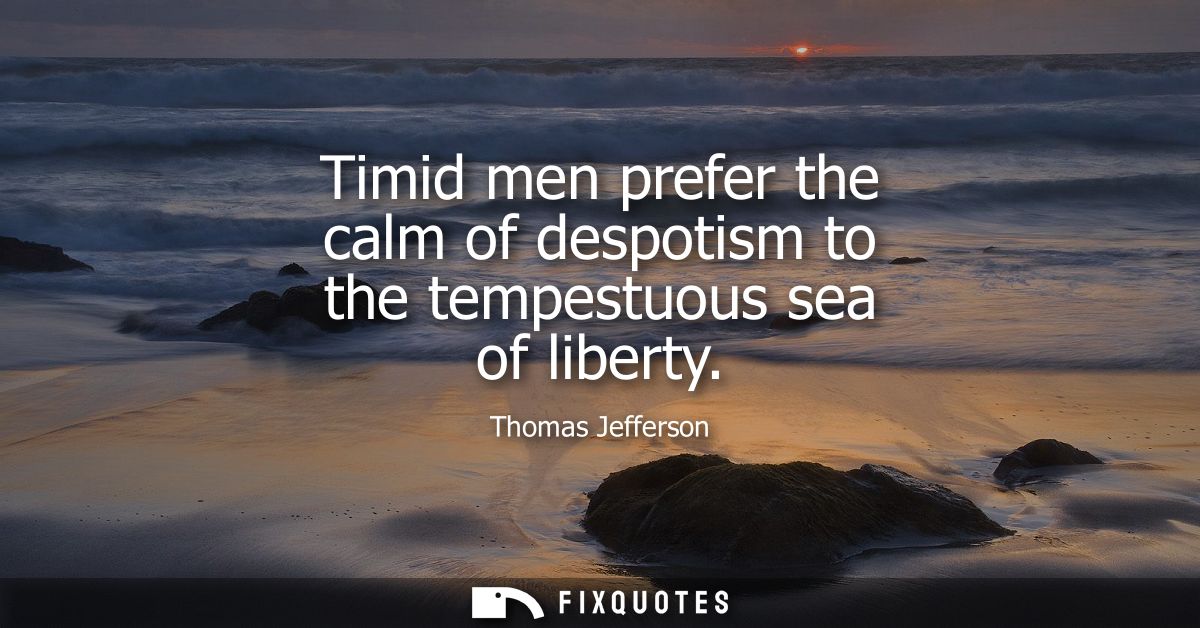
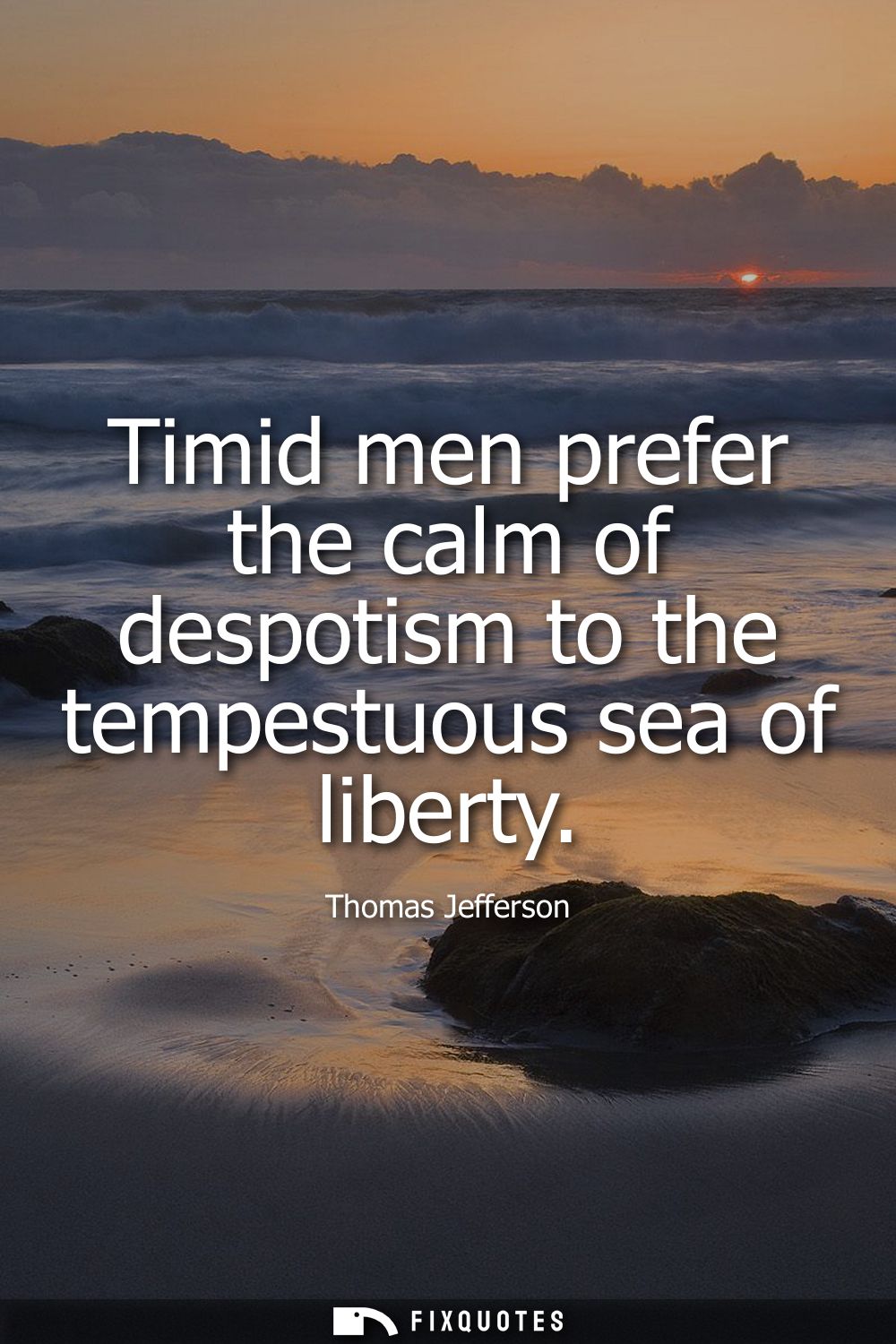
"Timid men prefer the calm of despotism to the tempestuous sea of liberty"
About this Quote
The intent is political triage. In a young republic still haunted by monarchy and internal faction, the easiest counterrevolution is emotional: people get tired, scared, and start treating stability as a virtue in itself. Jefferson anticipates that drift and tries to shame it out of existence. The subtext: authoritarianism rarely arrives wearing horns; it arrives offering relief. It promises fewer arguments, fewer messy elections, fewer consequences. “Prefer” is key - despotism isn’t always imposed. It can be chosen, welcomed, even requested, when freedom feels like chaos.
As a leader, Jefferson is also protecting the legitimacy of dissent. If liberty is a sea, then storms are not a system failure; they are weather. The line reframes turbulence - protest, dispute, institutional friction - as evidence of life, not decay. It’s a warning that the real threat to a republic isn’t conflict. It’s a citizenry that mistakes quiet for peace.
Quote Details
| Topic | Freedom |
|---|---|
| Source | Help us find the source |
| Cite |
Citation Formats
APA Style (7th ed.)
Jefferson, Thomas. (2026, January 15). Timid men prefer the calm of despotism to the tempestuous sea of liberty. FixQuotes. https://fixquotes.com/quotes/timid-men-prefer-the-calm-of-despotism-to-the-27378/
Chicago Style
Jefferson, Thomas. "Timid men prefer the calm of despotism to the tempestuous sea of liberty." FixQuotes. January 15, 2026. https://fixquotes.com/quotes/timid-men-prefer-the-calm-of-despotism-to-the-27378/.
MLA Style (9th ed.)
"Timid men prefer the calm of despotism to the tempestuous sea of liberty." FixQuotes, 15 Jan. 2026, https://fixquotes.com/quotes/timid-men-prefer-the-calm-of-despotism-to-the-27378/. Accessed 10 Mar. 2026.