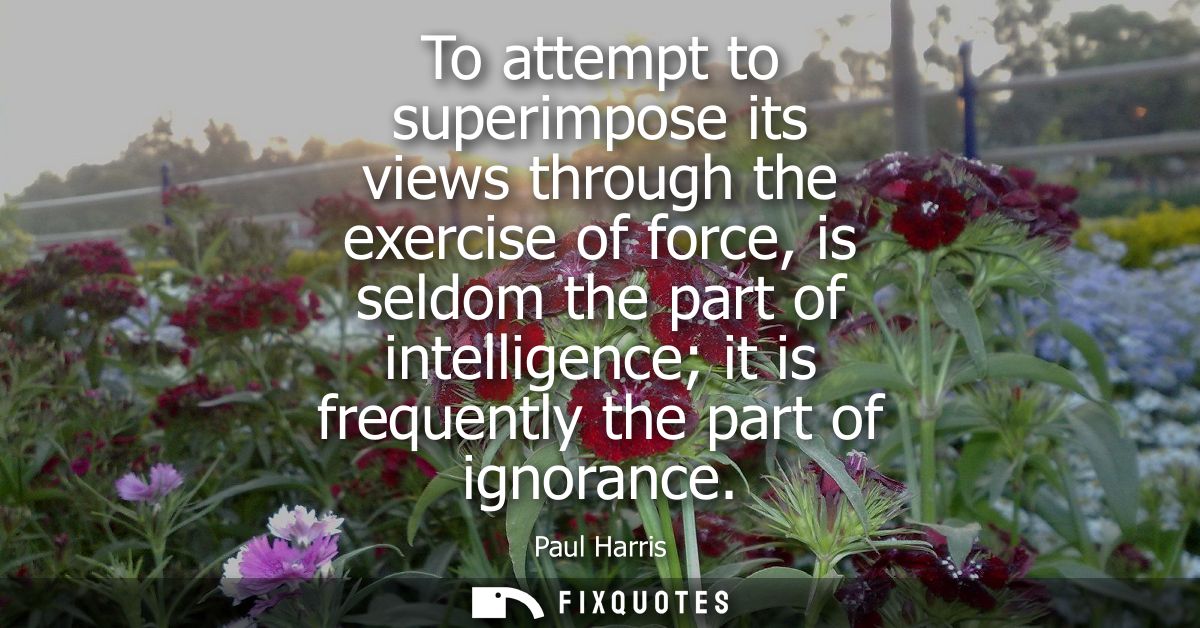
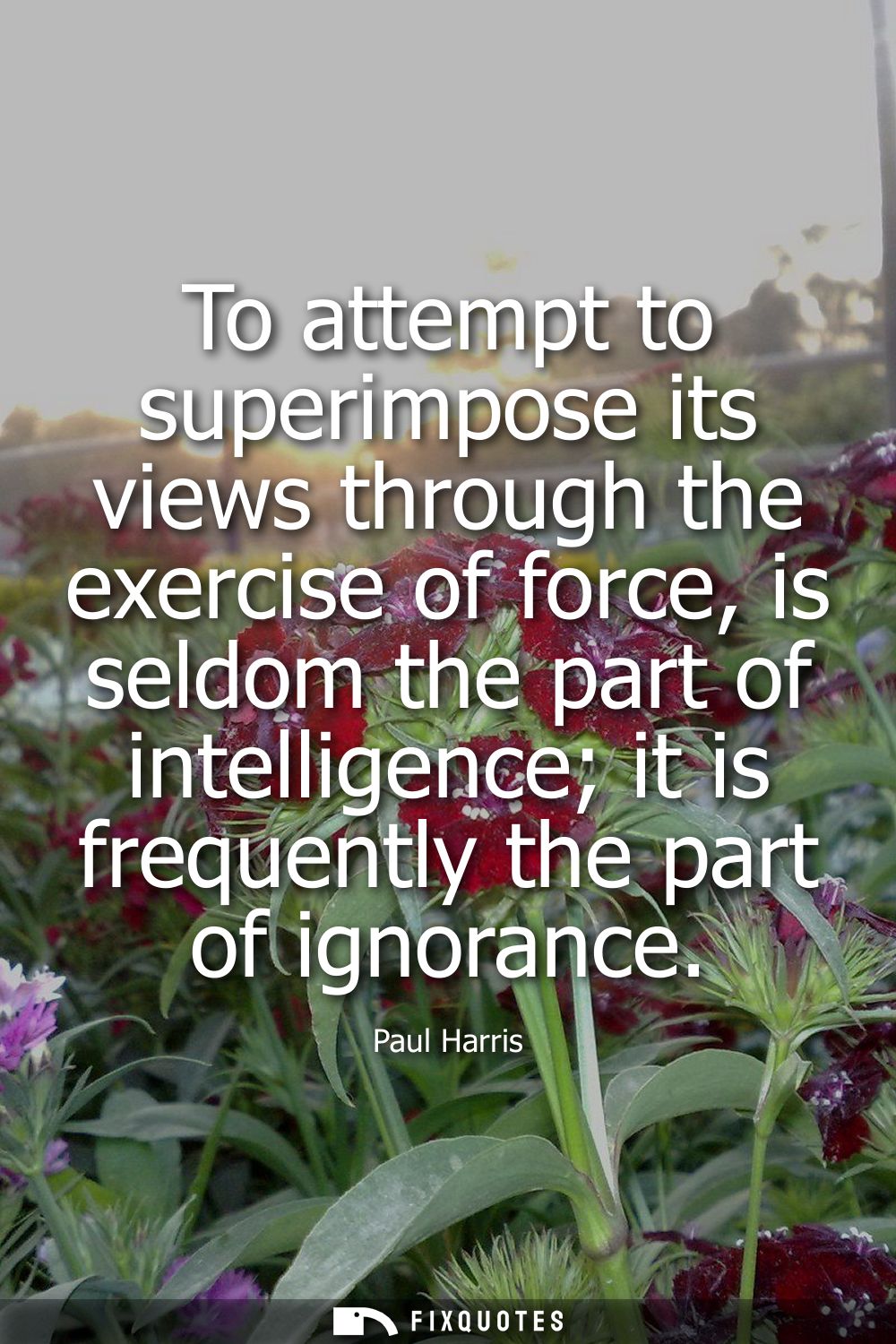
"To attempt to superimpose its views through the exercise of force, is seldom the part of intelligence; it is frequently the part of ignorance"
About this Quote
The subtext is also a warning about moral laziness. “Superimpose” suggests an external layer plastered over someone else’s reality, not a shared conclusion reached through mutual recognition. Harris is suspicious of certainty that needs a cudgel. That suspicion tracks with the early 20th century’s churn - nationalism, labor conflict, colonial policing, and the era’s recurring fantasy that social problems can be solved by cracking down. Against that backdrop, his line reads like civic self-defense: intelligence isn’t just IQ, it’s restraint, patience, and the willingness to accept that disagreement is part of plural life.
He leaves a loophole with “seldom,” acknowledging that force sometimes enters the frame. But even that concession sharpens the point: when coercion becomes your default method, you’re not leading; you’re compensating.
Quote Details
| Topic | Wisdom |
|---|---|
| Source | Help us find the source |
| Cite |
Citation Formats
APA Style (7th ed.)
Harris, Paul. (2026, January 15). To attempt to superimpose its views through the exercise of force, is seldom the part of intelligence; it is frequently the part of ignorance. FixQuotes. https://fixquotes.com/quotes/to-attempt-to-superimpose-its-views-through-the-151946/
Chicago Style
Harris, Paul. "To attempt to superimpose its views through the exercise of force, is seldom the part of intelligence; it is frequently the part of ignorance." FixQuotes. January 15, 2026. https://fixquotes.com/quotes/to-attempt-to-superimpose-its-views-through-the-151946/.
MLA Style (9th ed.)
"To attempt to superimpose its views through the exercise of force, is seldom the part of intelligence; it is frequently the part of ignorance." FixQuotes, 15 Jan. 2026, https://fixquotes.com/quotes/to-attempt-to-superimpose-its-views-through-the-151946/. Accessed 12 Feb. 2026.