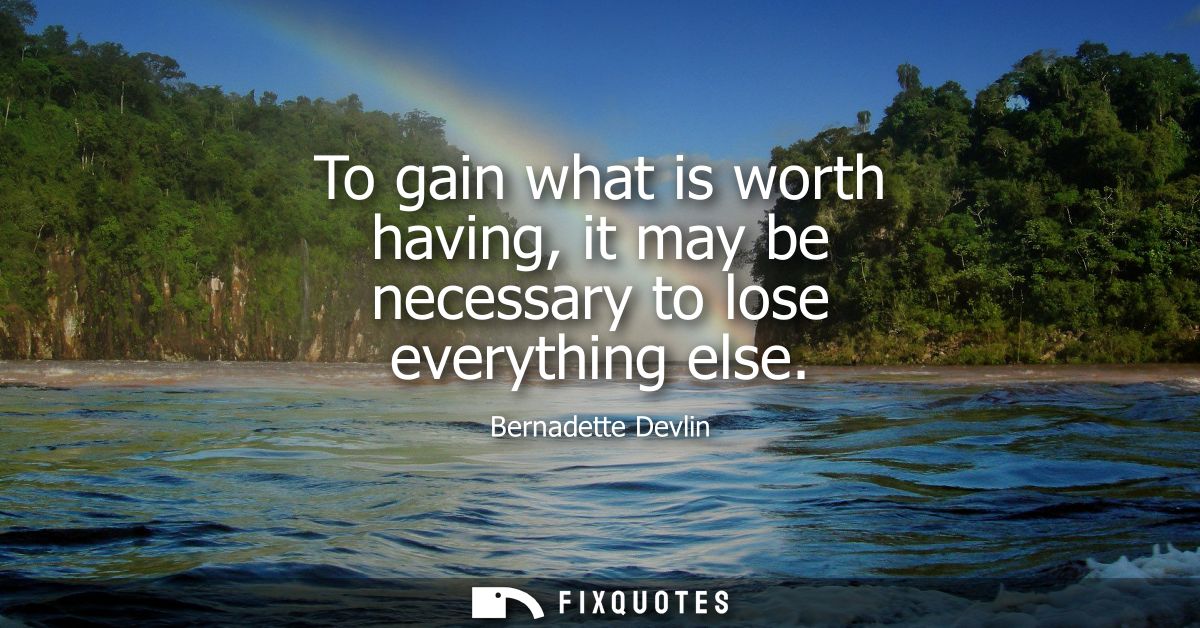
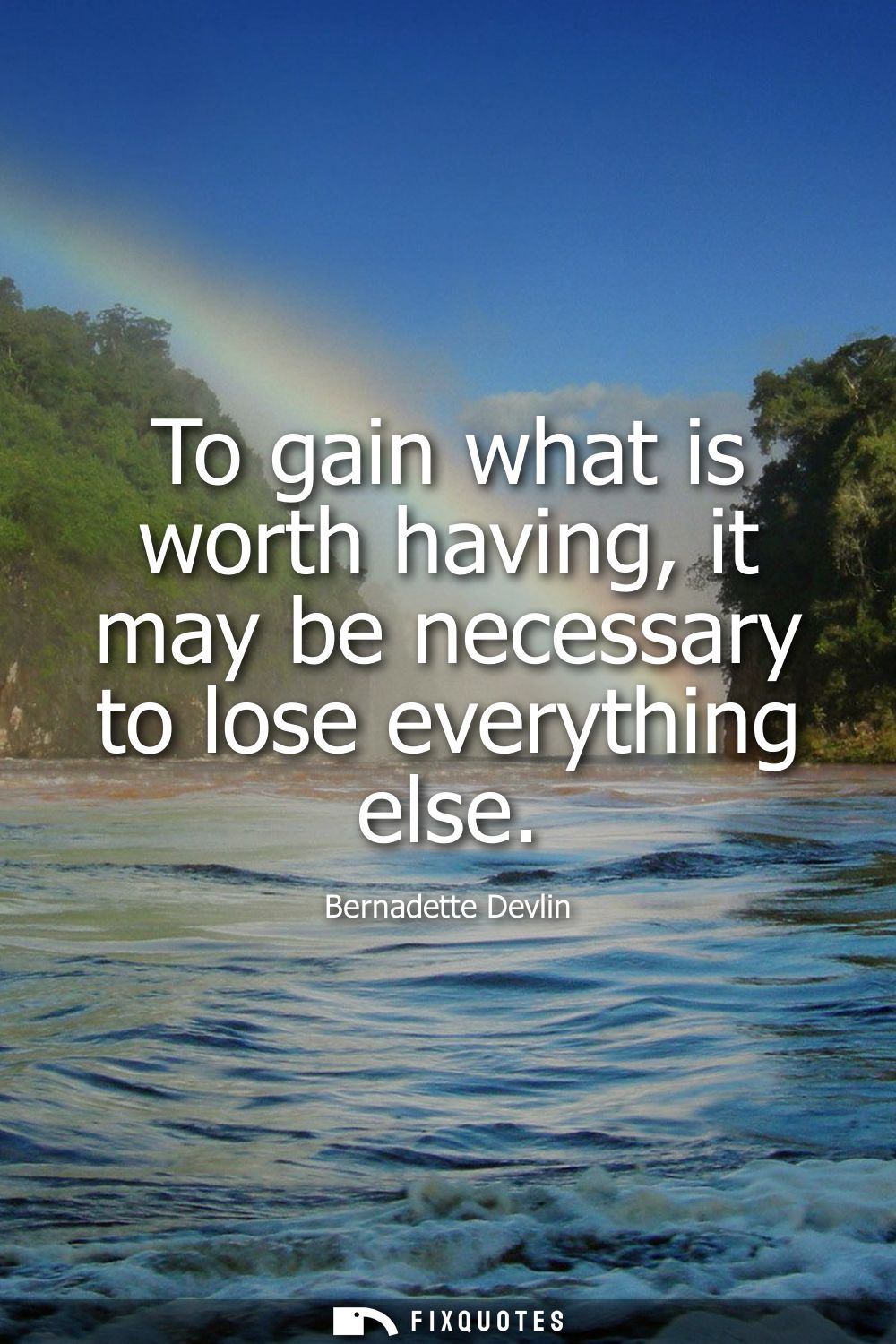
"To gain what is worth having, it may be necessary to lose everything else"
About this Quote
The sentence is built on a quiet provocation. “What is worth having” is left deliberately undefined, which lets it function as a moral Rorschach test. Justice? Freedom? Equality? Self-respect? Devlin’s politics made those words expensive, and the quote dares you to price them honestly. If you’re not prepared to lose, you might not actually want the thing you claim to want.
Its subtext is also a rebuke to incrementalism and respectable dissent. It suggests that certain goals can’t be negotiated into existence without threatening the structures that keep you comfortable. That’s why it’s phrased as necessity, not virtue: sacrifice isn’t cleansing, it’s strategic, sometimes coerced by the reality of power.
Devlin’s intent feels simultaneously bracing and cautionary. It’s a warning against soft commitments, and a reminder that movements don’t just ask for your vote; they can demand your life’s scaffolding. The line doesn’t promise triumph. It promises cost.
Quote Details
| Topic | Letting Go |
|---|---|
| Source | Help us find the source |
| Cite | Cite this Quote |
Citation Formats
APA Style (7th ed.)
Devlin, Bernadette. (2026, January 16). To gain what is worth having, it may be necessary to lose everything else. FixQuotes. https://fixquotes.com/quotes/to-gain-what-is-worth-having-it-may-be-necessary-101032/
Chicago Style
Devlin, Bernadette. "To gain what is worth having, it may be necessary to lose everything else." FixQuotes. January 16, 2026. https://fixquotes.com/quotes/to-gain-what-is-worth-having-it-may-be-necessary-101032/.
MLA Style (9th ed.)
"To gain what is worth having, it may be necessary to lose everything else." FixQuotes, 16 Jan. 2026, https://fixquotes.com/quotes/to-gain-what-is-worth-having-it-may-be-necessary-101032/. Accessed 4 Feb. 2026.