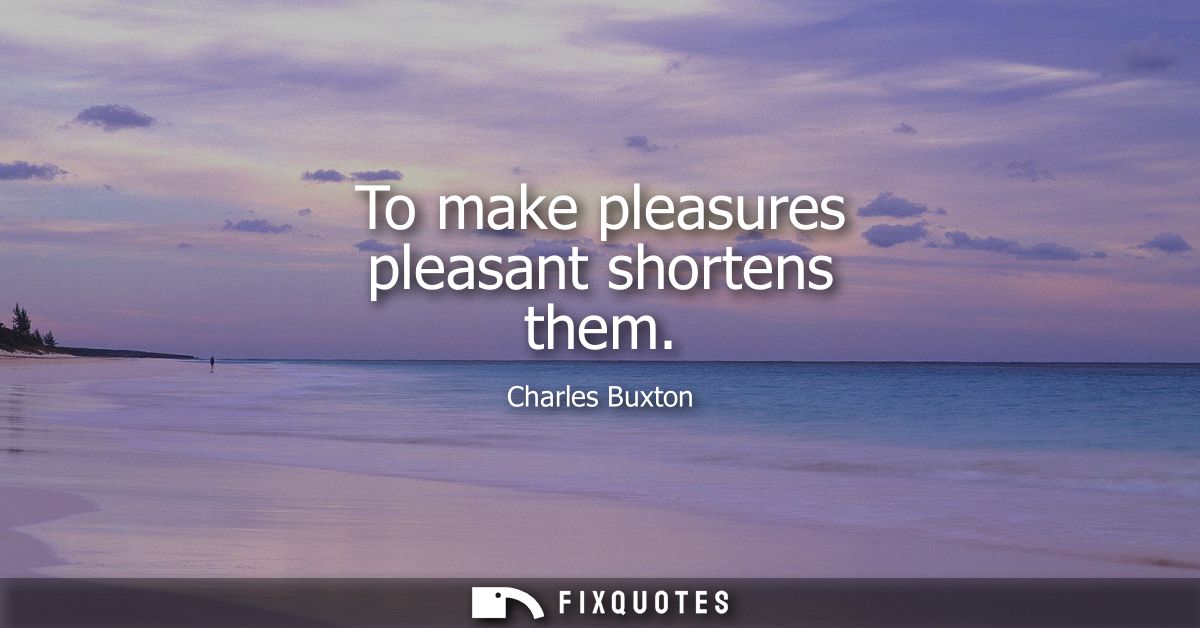
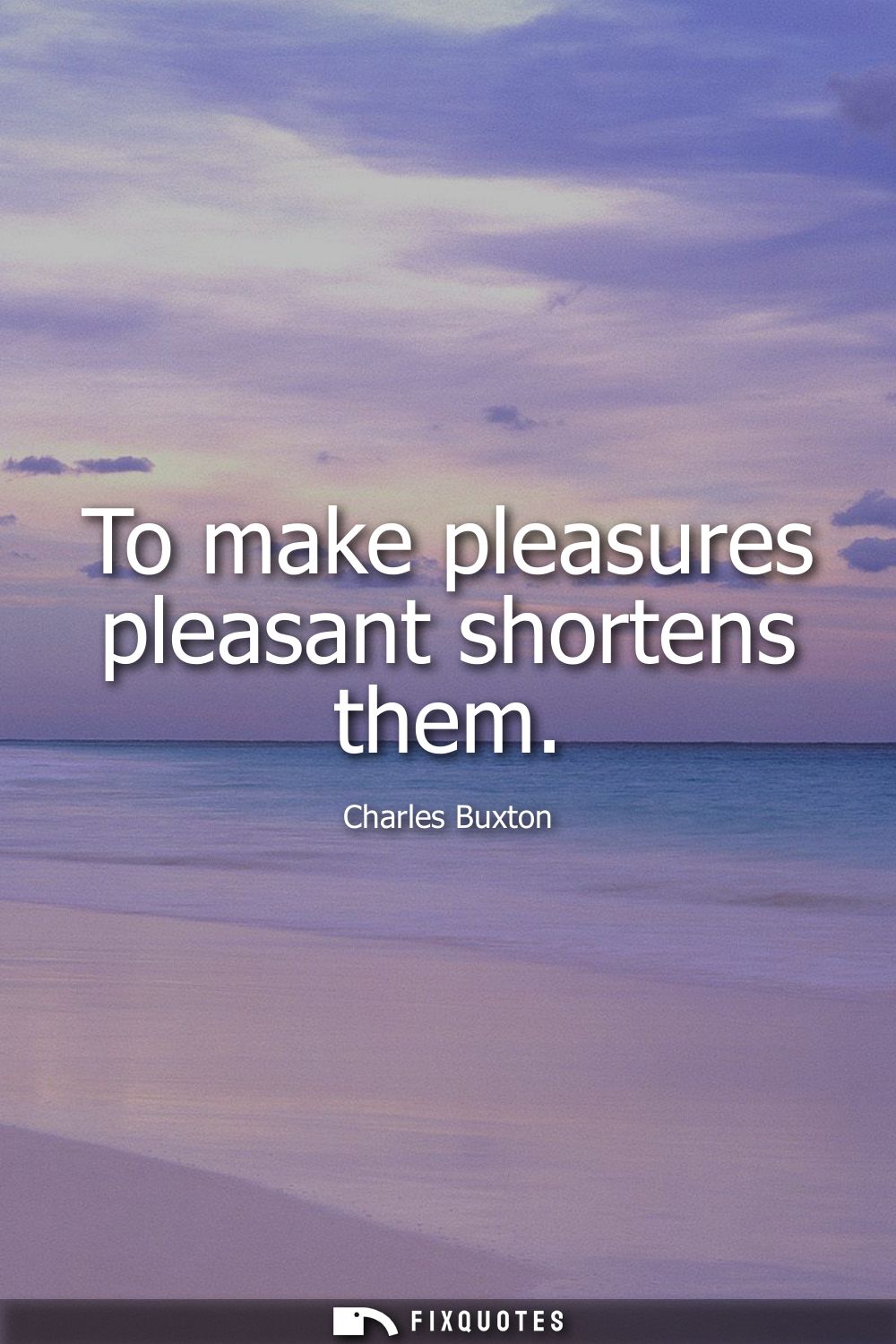
"To make pleasures pleasant shortens them"
About this Quote
Pleasure, Buxton suggests, is at its most perverse when we try to optimize it. The line turns on a neat little booby trap: the moment you set out to "make pleasures pleasant", you imply they aren't quite doing the job on their own. That tiny admission invites management, scheduling, and self-consciousness - the very habits that drain sensual experience of its charge. What should be immediate becomes supervised. What should be lived becomes monitored. And once pleasure is being audited, it's already halfway over.
The aphorism works because it flips a commonsense assumption: that pleasure is a simple good you can increase with effort. Buxton, a Victorian-era public servant, is speaking from within a culture newly obsessed with self-improvement, restraint, and the moral accounting of leisure. In that world, even enjoyment is vulnerable to bureaucracy: you can plan it, justify it, sanitize it, render it respectable. But respectability is a solvent. It strips pleasure of risk, surprise, and abandon - the elements that make it feel like more than a permitted break.
"Shortens them" also carries a moral echo without preaching. Pleasure doesn't just end sooner; it shrinks in memory, too, reduced to something you arranged rather than something that happened to you. Buxton's subtext is quietly modern: chase the perfect vibe, curate the perfect night, force the perfect relaxation, and you get a thinner reward. The control you exert to guarantee pleasure is the same control that kills it.
The aphorism works because it flips a commonsense assumption: that pleasure is a simple good you can increase with effort. Buxton, a Victorian-era public servant, is speaking from within a culture newly obsessed with self-improvement, restraint, and the moral accounting of leisure. In that world, even enjoyment is vulnerable to bureaucracy: you can plan it, justify it, sanitize it, render it respectable. But respectability is a solvent. It strips pleasure of risk, surprise, and abandon - the elements that make it feel like more than a permitted break.
"Shortens them" also carries a moral echo without preaching. Pleasure doesn't just end sooner; it shrinks in memory, too, reduced to something you arranged rather than something that happened to you. Buxton's subtext is quietly modern: chase the perfect vibe, curate the perfect night, force the perfect relaxation, and you get a thinner reward. The control you exert to guarantee pleasure is the same control that kills it.
Quote Details
| Topic | Wisdom |
|---|---|
| Source | Help us find the source |
| Cite |
Citation Formats
APA Style (7th ed.)
Buxton, Charles. (2026, January 17). To make pleasures pleasant shortens them. FixQuotes. https://fixquotes.com/quotes/to-make-pleasures-pleasant-shortens-them-41160/
Chicago Style
Buxton, Charles. "To make pleasures pleasant shortens them." FixQuotes. January 17, 2026. https://fixquotes.com/quotes/to-make-pleasures-pleasant-shortens-them-41160/.
MLA Style (9th ed.)
"To make pleasures pleasant shortens them." FixQuotes, 17 Jan. 2026, https://fixquotes.com/quotes/to-make-pleasures-pleasant-shortens-them-41160/. Accessed 12 Feb. 2026.
More Quotes by Charles
Add to List