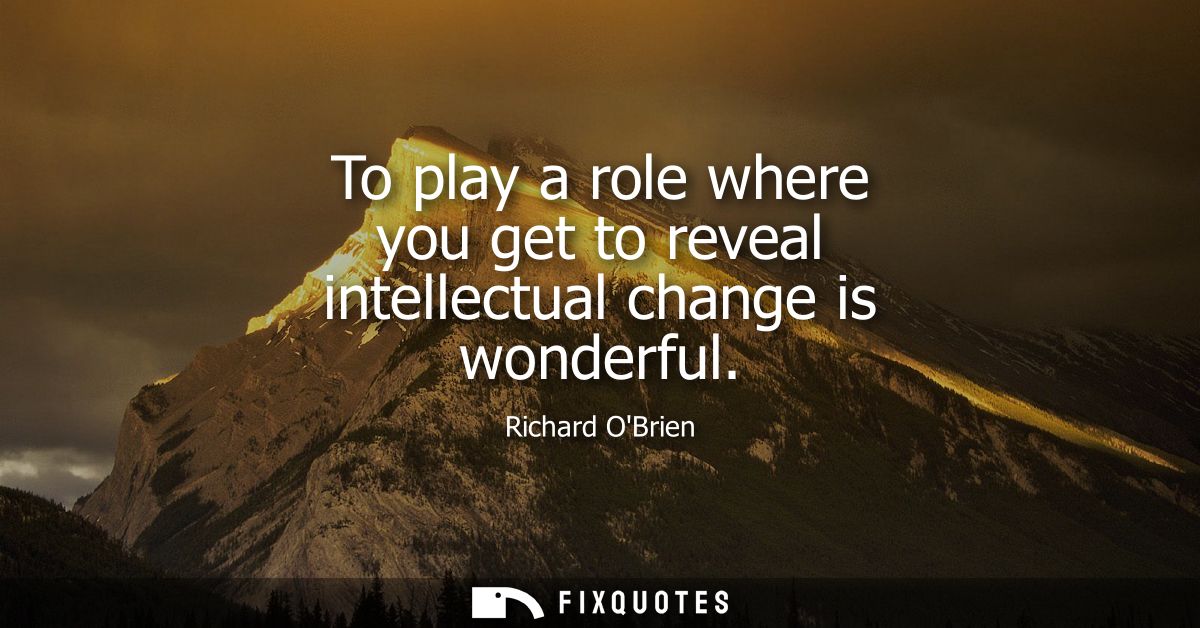
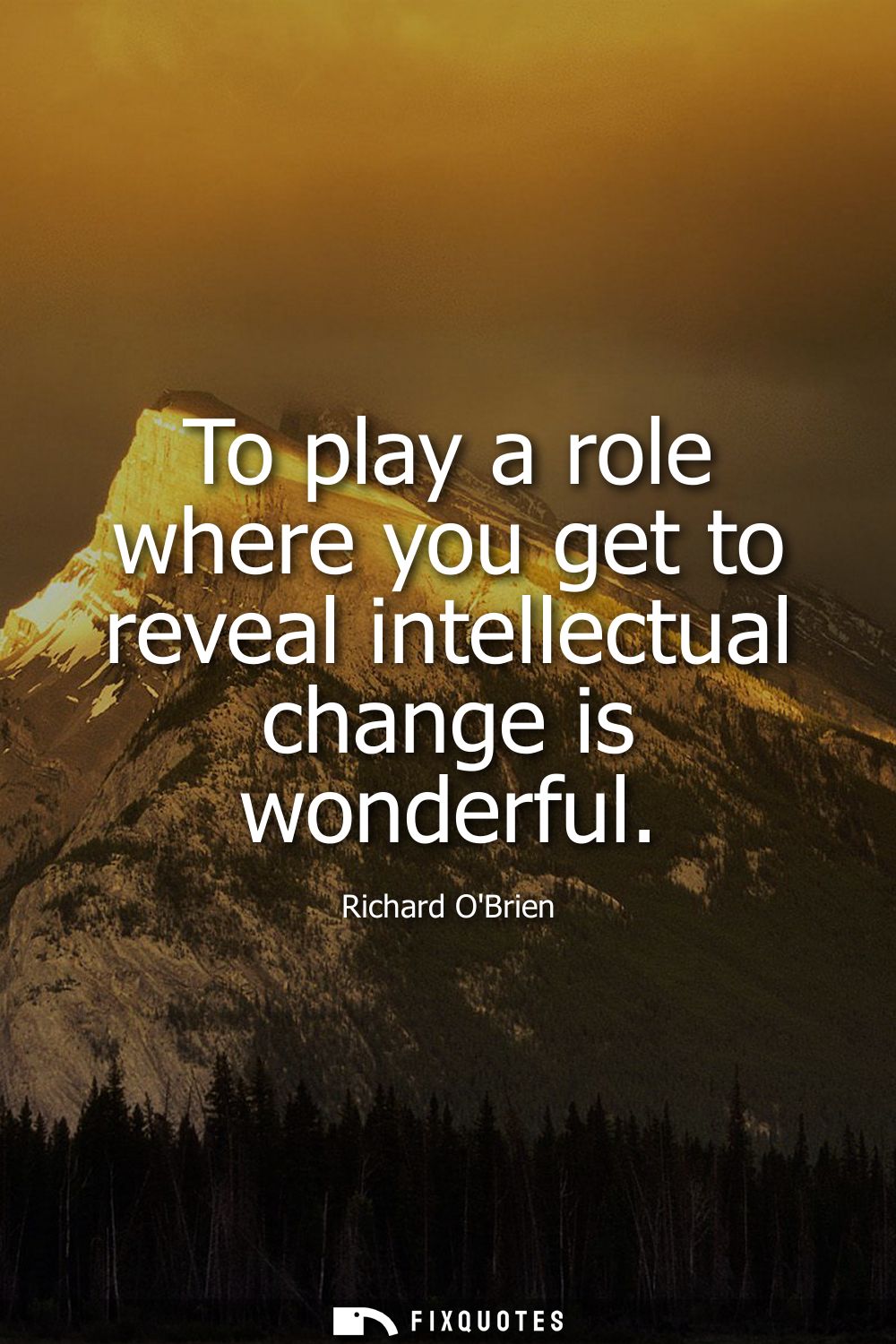
"To play a role where you get to reveal intellectual change is wonderful"
About this Quote
There is a quiet flex in Richard O'Brien calling “intellectual change” the real prize of acting. Not the costume, not the catchphrases, not even the applause - the thrill is getting to dramatize a mind in motion. Coming from the creator-star of The Rocky Horror Show, a cult property often reduced to audience rituals and surface camp, the line doubles as a corrective: beneath the fishnets and callbacks, the most radical thing a character can do is evolve.
The intent feels practical and a little wistful. Actors spend careers being asked to “transform,” but most scripts offer cosmetic shifts: a makeover, a new lover, a twist ending. O'Brien points to a rarer, harder-to-play arc: a person updating their beliefs in real time, absorbing new information, changing their inner narrative. That’s less about mugging for the camera and more about calibrating tiny internal pivots - the way certainty erodes, curiosity breaks through, pride softens.
The subtext is also a defense of performance as thinking. Intellectual change isn’t just “smart people stuff”; it’s emotional risk. To admit you were wrong, to revise your identity, to let the audience watch your ego rearrange itself - that’s vulnerability with stakes. In a culture that rewards hot takes and punishes backtracking, a role that honors genuine reconsideration becomes almost countercultural.
Contextually, O'Brien’s own work lives on the edge of identity, desire, and self-invention. His fascination with characters who slip categories makes “change” not a plot device but a worldview: the mind as a stage where the most interesting action is the rewrite.
The intent feels practical and a little wistful. Actors spend careers being asked to “transform,” but most scripts offer cosmetic shifts: a makeover, a new lover, a twist ending. O'Brien points to a rarer, harder-to-play arc: a person updating their beliefs in real time, absorbing new information, changing their inner narrative. That’s less about mugging for the camera and more about calibrating tiny internal pivots - the way certainty erodes, curiosity breaks through, pride softens.
The subtext is also a defense of performance as thinking. Intellectual change isn’t just “smart people stuff”; it’s emotional risk. To admit you were wrong, to revise your identity, to let the audience watch your ego rearrange itself - that’s vulnerability with stakes. In a culture that rewards hot takes and punishes backtracking, a role that honors genuine reconsideration becomes almost countercultural.
Contextually, O'Brien’s own work lives on the edge of identity, desire, and self-invention. His fascination with characters who slip categories makes “change” not a plot device but a worldview: the mind as a stage where the most interesting action is the rewrite.
Quote Details
| Topic | Movie |
|---|---|
| Source | Help us find the source |
| Cite |
Citation Formats
APA Style (7th ed.)
O'Brien, Richard. (2026, January 16). To play a role where you get to reveal intellectual change is wonderful. FixQuotes. https://fixquotes.com/quotes/to-play-a-role-where-you-get-to-reveal-106551/
Chicago Style
O'Brien, Richard. "To play a role where you get to reveal intellectual change is wonderful." FixQuotes. January 16, 2026. https://fixquotes.com/quotes/to-play-a-role-where-you-get-to-reveal-106551/.
MLA Style (9th ed.)
"To play a role where you get to reveal intellectual change is wonderful." FixQuotes, 16 Jan. 2026, https://fixquotes.com/quotes/to-play-a-role-where-you-get-to-reveal-106551/. Accessed 12 Mar. 2026.
More Quotes by Richard
Add to List