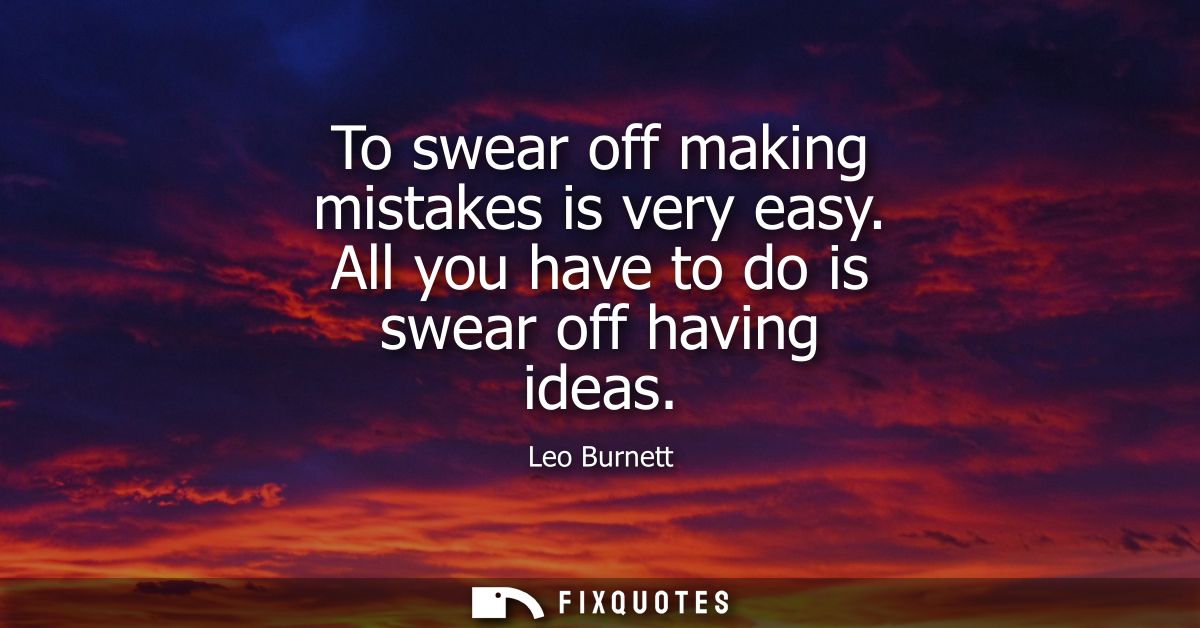
"To swear off making mistakes is very easy. All you have to do is swear off having ideas"
About this Quote
The intent is managerial, but not bloodless. Burnett is arguing for an ecology where creative risk can survive quarterly anxiety. By making “swear off” do double duty, he frames caution as a kind of vow - a performative, self-congratulatory posture. You don’t stumble into timidity; you commit to it. The punchline lands because it exposes how organizations often confuse process compliance with intelligence. If you want spotless records, you can have them. Just don’t innovate.
Context matters: Burnett helped build modern American advertising, an industry that thrives on novelty while being financed by clients who hate surprises. That tension animates the quote. It’s not romantic “fail better” rhetoric; it’s a practical warning from someone who spent a career translating messy imagination into sellable, testable campaigns. The subtext is that mistakes are frequently the receipt you get for originality - and that “no mistakes” cultures quietly select for the most cautious minds in the room.
There’s also a subtle defense of embarrassment. Ideas, unlike plans, come with the risk of looking wrong in public. Burnett’s point is that if you remove that risk, you don’t get excellence; you get silence dressed up as professionalism.
Quote Details
| Topic | Learning from Mistakes |
|---|---|
| Source | Help us find the source |
| Cite |
Citation Formats
APA Style (7th ed.)
Burnett, Leo. (2026, January 17). To swear off making mistakes is very easy. All you have to do is swear off having ideas. FixQuotes. https://fixquotes.com/quotes/to-swear-off-making-mistakes-is-very-easy-all-you-63433/
Chicago Style
Burnett, Leo. "To swear off making mistakes is very easy. All you have to do is swear off having ideas." FixQuotes. January 17, 2026. https://fixquotes.com/quotes/to-swear-off-making-mistakes-is-very-easy-all-you-63433/.
MLA Style (9th ed.)
"To swear off making mistakes is very easy. All you have to do is swear off having ideas." FixQuotes, 17 Jan. 2026, https://fixquotes.com/quotes/to-swear-off-making-mistakes-is-very-easy-all-you-63433/. Accessed 31 Mar. 2026.