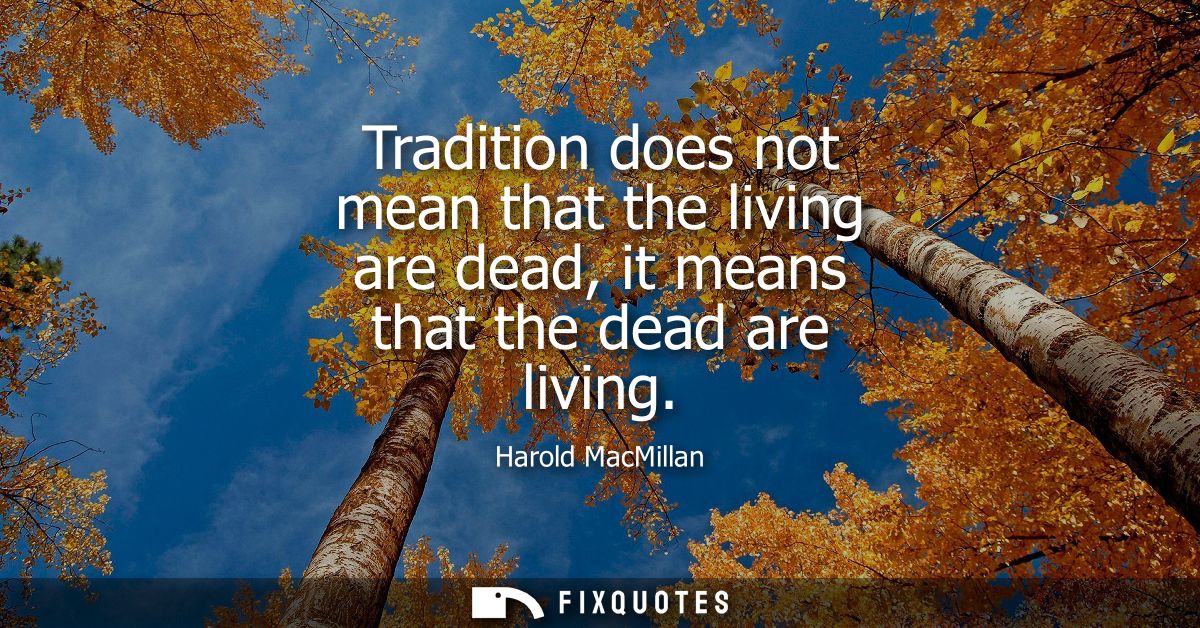
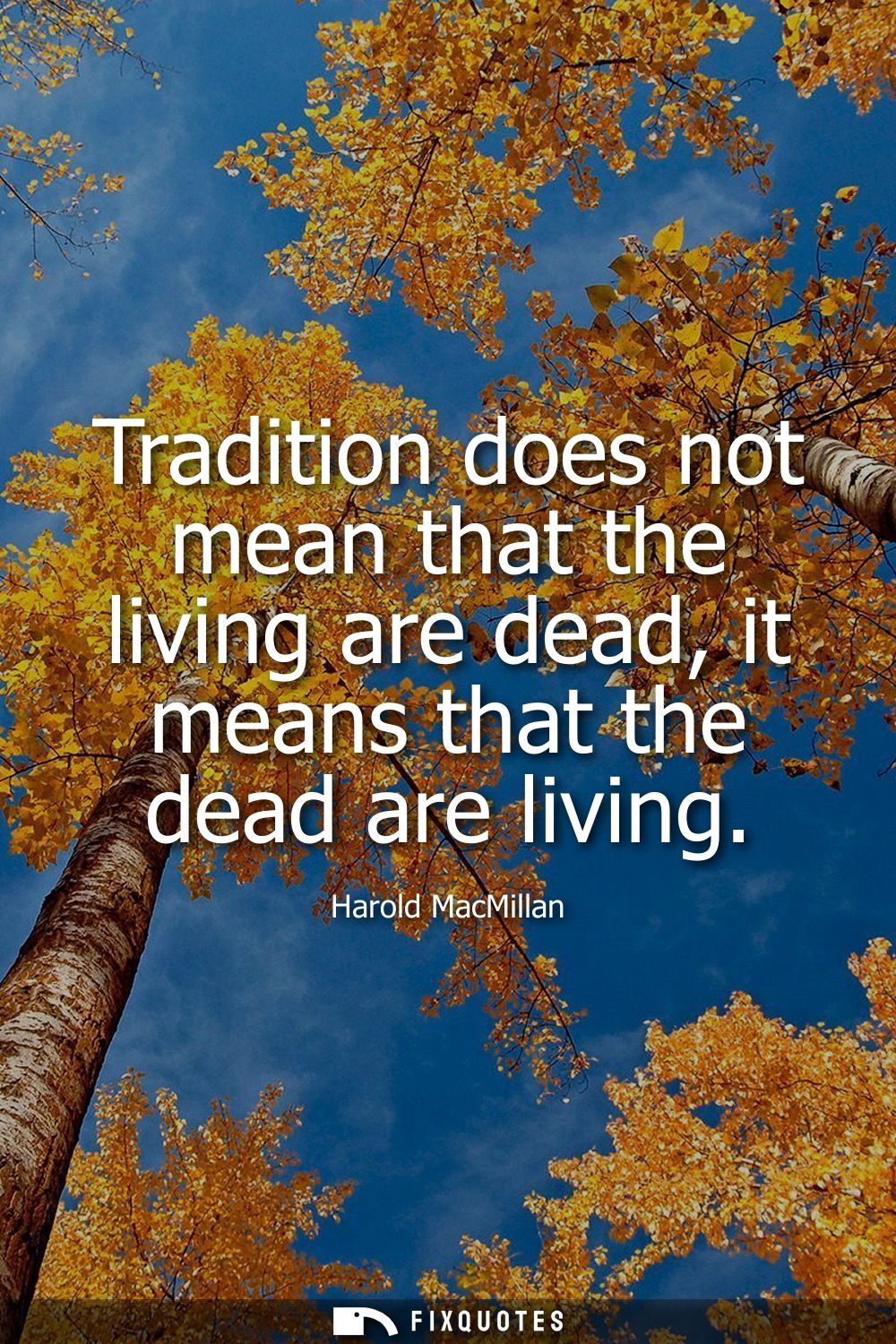
"Tradition does not mean that the living are dead, it means that the dead are living"
About this Quote
The subtext is power. If the “dead are living,” then inherited institutions - monarchy, Parliament, the civil service, the Church, the unwritten rules of English public life - gain a kind of moral animation. They’re not just old; they’re authoritative. That’s a persuasive move for a Conservative statesman trying to justify continuity in a century that kept detonating its own assumptions: two world wars, decolonization, the welfare state, the Cold War’s demand for national cohesion.
Macmillan, a patrician pragmatist, wasn’t selling nostalgia so much as legitimacy. This is tradition as social memory: a way to make change feel less like rupture and more like stewardship. It also carries a warning to reformers: you may draft new laws, but you’re negotiating with ghosts - prior sacrifices, settled expectations, and the accumulated habits of a polity. The brilliance is the emotional trade it offers: accept the dead’s presence, and the living get to feel less alone in history.
Quote Details
| Topic | Legacy & Remembrance |
|---|---|
| Source | Help us find the source |
| Cite |
Citation Formats
APA Style (7th ed.)
Macmillan, Harold. (2026, January 15). Tradition does not mean that the living are dead, it means that the dead are living. FixQuotes. https://fixquotes.com/quotes/tradition-does-not-mean-that-the-living-are-dead-19563/
Chicago Style
Macmillan, Harold. "Tradition does not mean that the living are dead, it means that the dead are living." FixQuotes. January 15, 2026. https://fixquotes.com/quotes/tradition-does-not-mean-that-the-living-are-dead-19563/.
MLA Style (9th ed.)
"Tradition does not mean that the living are dead, it means that the dead are living." FixQuotes, 15 Jan. 2026, https://fixquotes.com/quotes/tradition-does-not-mean-that-the-living-are-dead-19563/. Accessed 4 Mar. 2026.