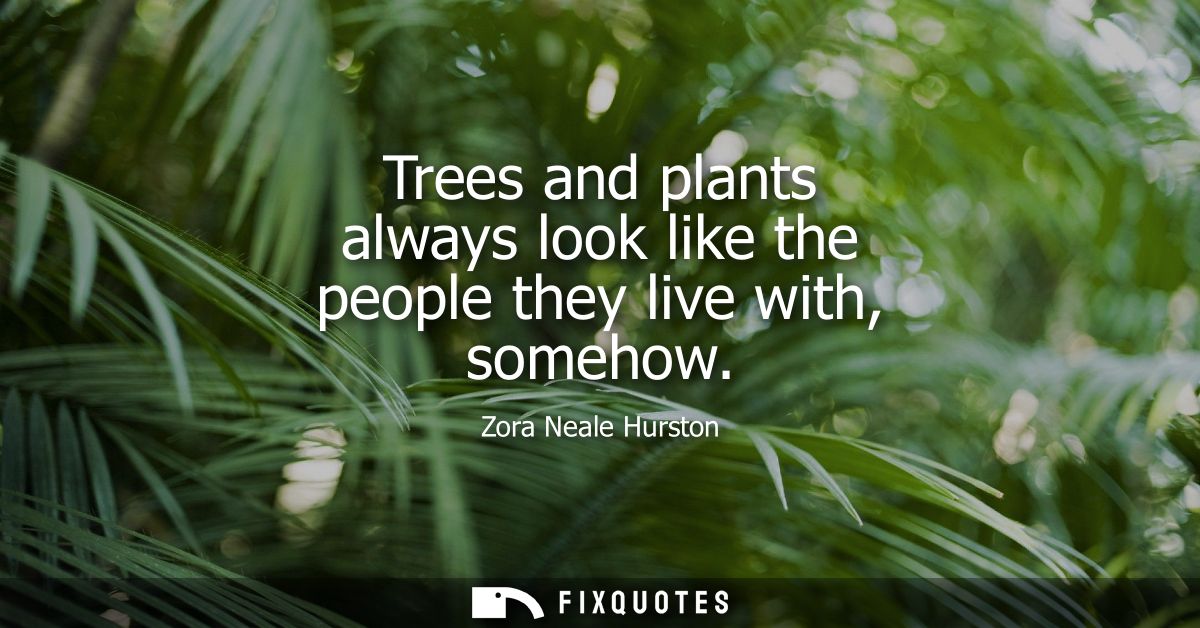
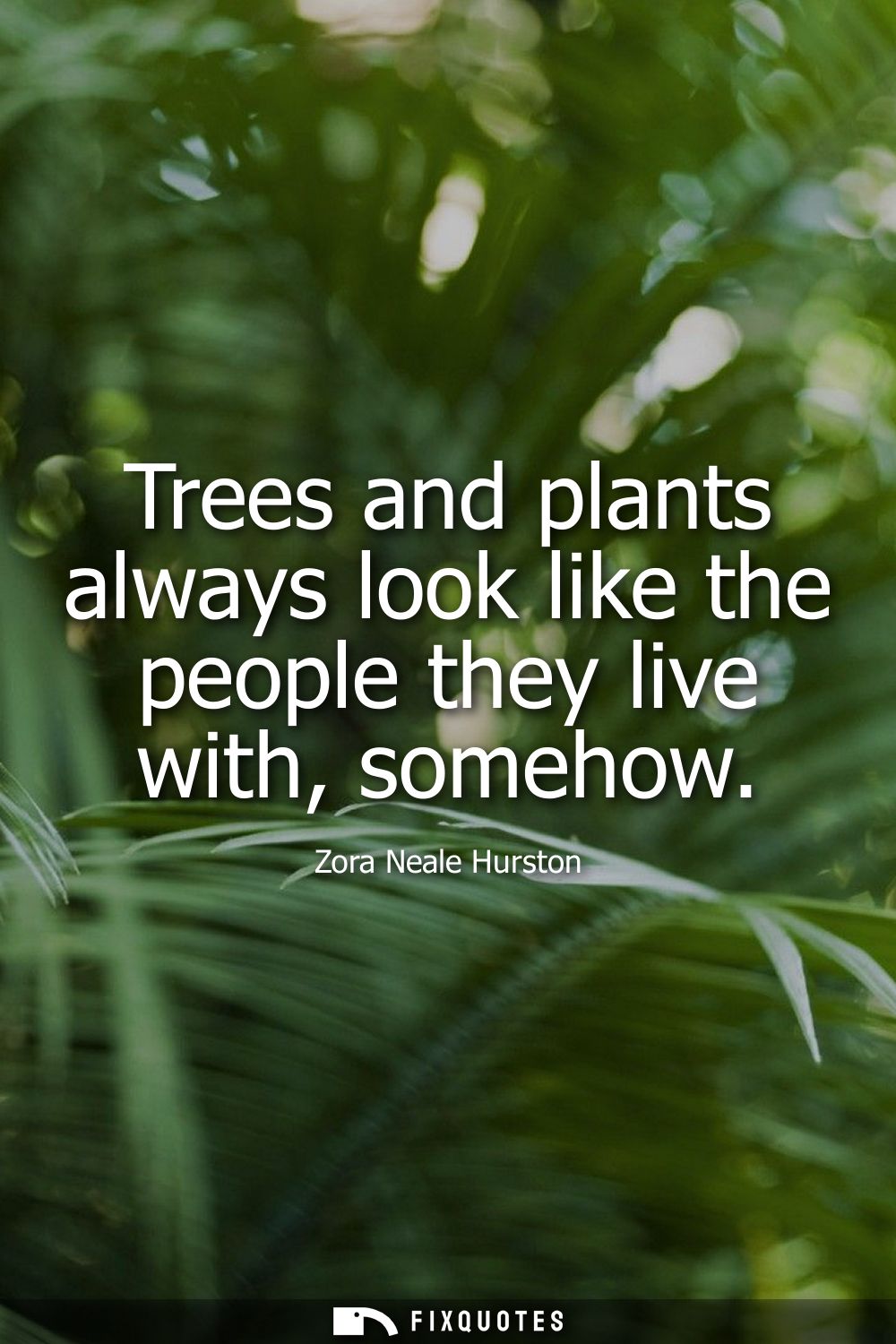
"Trees and plants always look like the people they live with, somehow"
About this Quote
The intent is slyly observational, the kind of sentence that sounds casual until you realize it’s making an argument about environment, power, and taste. “Live with” does more work than “grow near.” It frames plants as cohabitants, not decor, implying relationships and routines: who waters, who neglects, who prunes too hard, who lets things sprawl. The subtext is that care leaves a signature. So does deprivation. Even aesthetics carry class and culture: neat hedges, wild vines, showy blooms, hard-packed dirt. The landscape becomes a readable text of habits, stress, patience, and attention.
Hurston’s broader context sharpens the bite. As a Black folklorist and dramatist attuned to how communities perform identity under pressure, she knew that surfaces get policed and interpreted. A yard, like a body or a voice, is judged. This line flips that surveillance into insight: if you want to know a household, look at what it keeps alive. It also carries a gentler corollary: people shape their surroundings, but they’re shaped back. The “somehow” is crucial, leaving room for mystery, for the eerie way temperament seems to seep into everything you touch.
Quote Details
| Topic | Nature |
|---|---|
| Source | Help us find the source |
| Cite |
Citation Formats
APA Style (7th ed.)
Hurston, Zora Neale. (2026, January 17). Trees and plants always look like the people they live with, somehow. FixQuotes. https://fixquotes.com/quotes/trees-and-plants-always-look-like-the-people-they-38044/
Chicago Style
Hurston, Zora Neale. "Trees and plants always look like the people they live with, somehow." FixQuotes. January 17, 2026. https://fixquotes.com/quotes/trees-and-plants-always-look-like-the-people-they-38044/.
MLA Style (9th ed.)
"Trees and plants always look like the people they live with, somehow." FixQuotes, 17 Jan. 2026, https://fixquotes.com/quotes/trees-and-plants-always-look-like-the-people-they-38044/. Accessed 12 Feb. 2026.