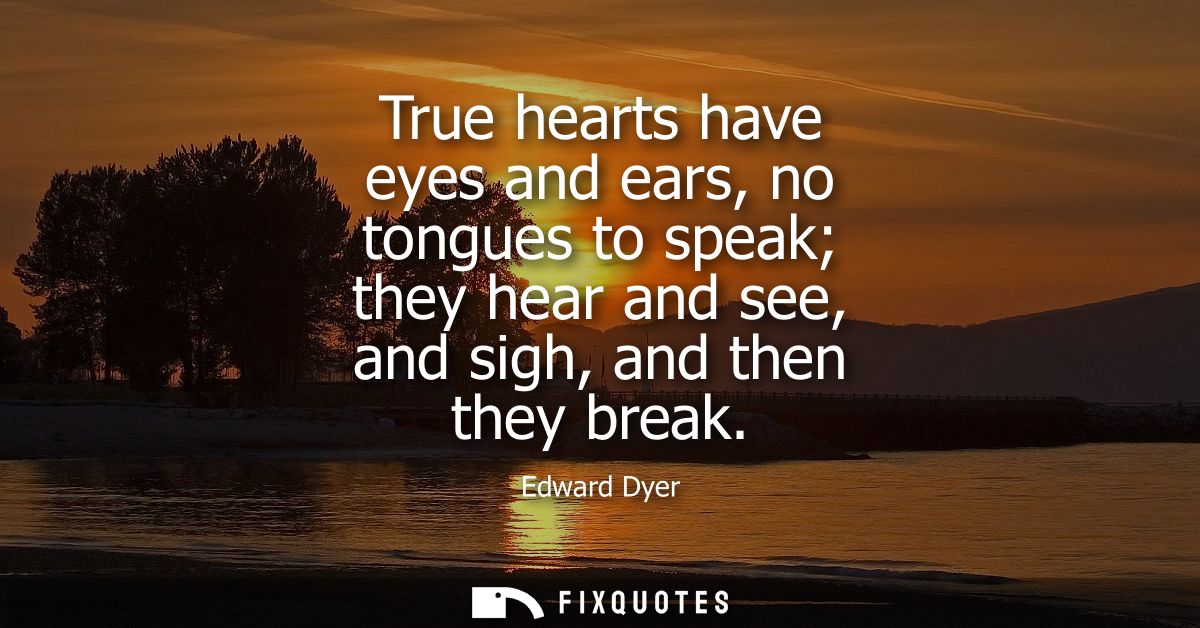
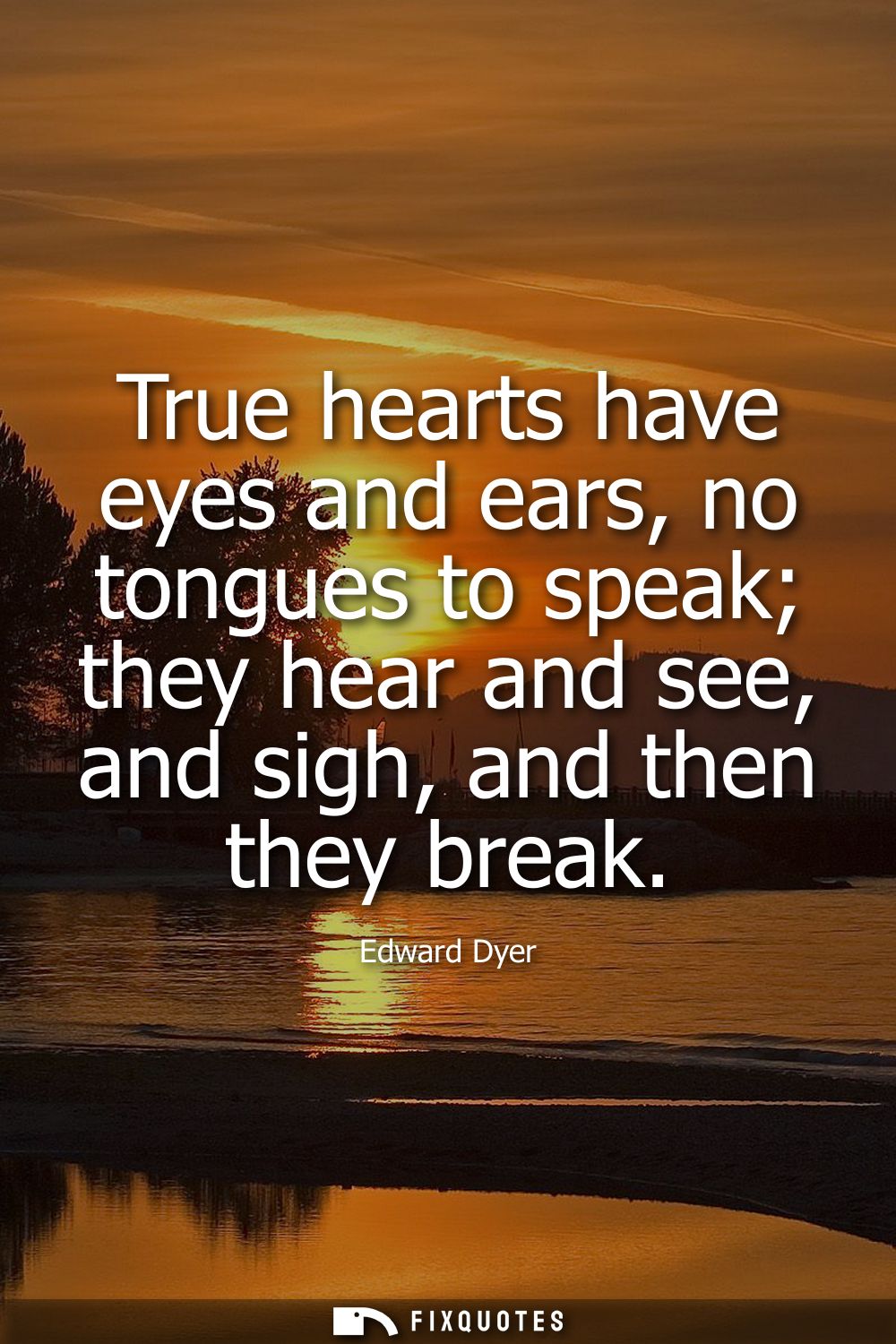
"True hearts have eyes and ears, no tongues to speak; they hear and see, and sigh, and then they break"
About this Quote
The sequence is mercilessly efficient: “hear and see, and sigh, and then they break.” The repeated “and” mimics the piling-on of small injuries, the way hurt accrues through ordinary moments rather than dramatic blows. “Sigh” is doing heavy lifting here - a socially acceptable leak of emotion that signals restraint, not release. It’s the sound of someone managing themselves in public, or in a courtly environment where speaking plainly can cost you status, safety, or access.
That context matters. Dyer, a Tudor-era poet and courtier, writes from a culture steeped in codes: courtly love’s ideal of devotion, Protestant-inflected suspicion of excess, and a political court where saying the wrong thing could be fatal. Silence becomes both virtue and punishment. The subtext reads like a warning to anyone who mistakes purity for protection: the “true” heart may be morally elevated, but it’s structurally vulnerable. Perception without speech isn’t wisdom; it’s exposure.
Quote Details
| Topic | Heartbreak |
|---|---|
| Source | Help us find the source |
| Cite |
Citation Formats
APA Style (7th ed.)
Dyer, Edward. (2026, January 15). True hearts have eyes and ears, no tongues to speak; they hear and see, and sigh, and then they break. FixQuotes. https://fixquotes.com/quotes/true-hearts-have-eyes-and-ears-no-tongues-to-143286/
Chicago Style
Dyer, Edward. "True hearts have eyes and ears, no tongues to speak; they hear and see, and sigh, and then they break." FixQuotes. January 15, 2026. https://fixquotes.com/quotes/true-hearts-have-eyes-and-ears-no-tongues-to-143286/.
MLA Style (9th ed.)
"True hearts have eyes and ears, no tongues to speak; they hear and see, and sigh, and then they break." FixQuotes, 15 Jan. 2026, https://fixquotes.com/quotes/true-hearts-have-eyes-and-ears-no-tongues-to-143286/. Accessed 12 Feb. 2026.