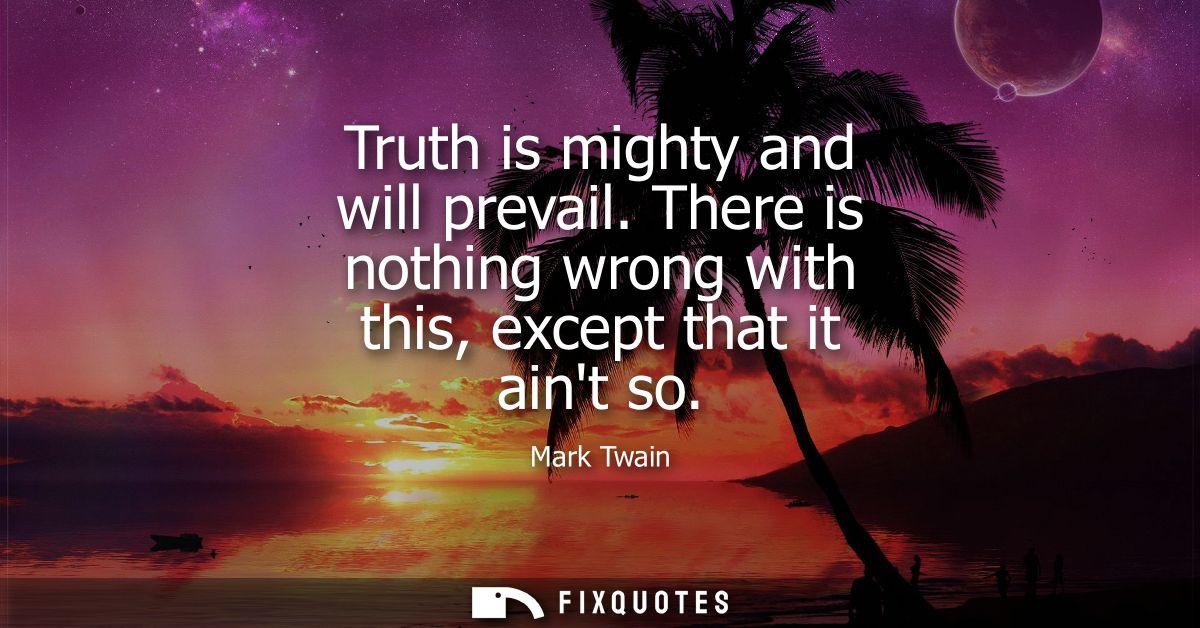
"Truth is mighty and will prevail. There is nothing wrong with this, except that it ain't so"
About this Quote
Twain takes a pious civic slogan and snaps it in half. “Truth is mighty and will prevail” has the polished feel of a courthouse inscription: comforting, inevitable, self-congratulatory. Then comes the trapdoor: “except that it ain’t so.” The punchline isn’t just disbelief; it’s an indictment of the American habit of treating morality as a self-correcting machine. Twain’s genius is to mimic the rhythm of uplift and then let vernacular skepticism (“ain’t”) do the killing. High-minded inevitability meets riverboat common sense, and common sense wins.
The specific intent is to puncture complacency. Twain isn’t arguing that truth has no power; he’s arguing that power doesn’t automatically belong to truth. Truth competes with narrative, money, institutions, prejudice, boredom. People don’t merely “discover” truth and then act accordingly; they’re recruited into versions of it, often by forces that benefit from confusion. The line is a warning against outsourcing ethical responsibility to fate: if truth doesn’t prevail, it’s because someone didn’t fight for it, or because the public preferred a more convenient story.
Context matters: Twain wrote in the afterglow of American idealism and the grime of Gilded Age reality, when industrial fortunes, political machines, and imperial ambitions made “progress” feel like a marketing campaign. The quote works because it weaponizes a familiar platitude, revealing it as a kind of cultural anesthetic. It’s funny the way cold water is funny: you laugh, then you wake up.
The specific intent is to puncture complacency. Twain isn’t arguing that truth has no power; he’s arguing that power doesn’t automatically belong to truth. Truth competes with narrative, money, institutions, prejudice, boredom. People don’t merely “discover” truth and then act accordingly; they’re recruited into versions of it, often by forces that benefit from confusion. The line is a warning against outsourcing ethical responsibility to fate: if truth doesn’t prevail, it’s because someone didn’t fight for it, or because the public preferred a more convenient story.
Context matters: Twain wrote in the afterglow of American idealism and the grime of Gilded Age reality, when industrial fortunes, political machines, and imperial ambitions made “progress” feel like a marketing campaign. The quote works because it weaponizes a familiar platitude, revealing it as a kind of cultural anesthetic. It’s funny the way cold water is funny: you laugh, then you wake up.
Quote Details
| Topic | Sarcastic |
|---|
More Quotes by Mark
Add to List