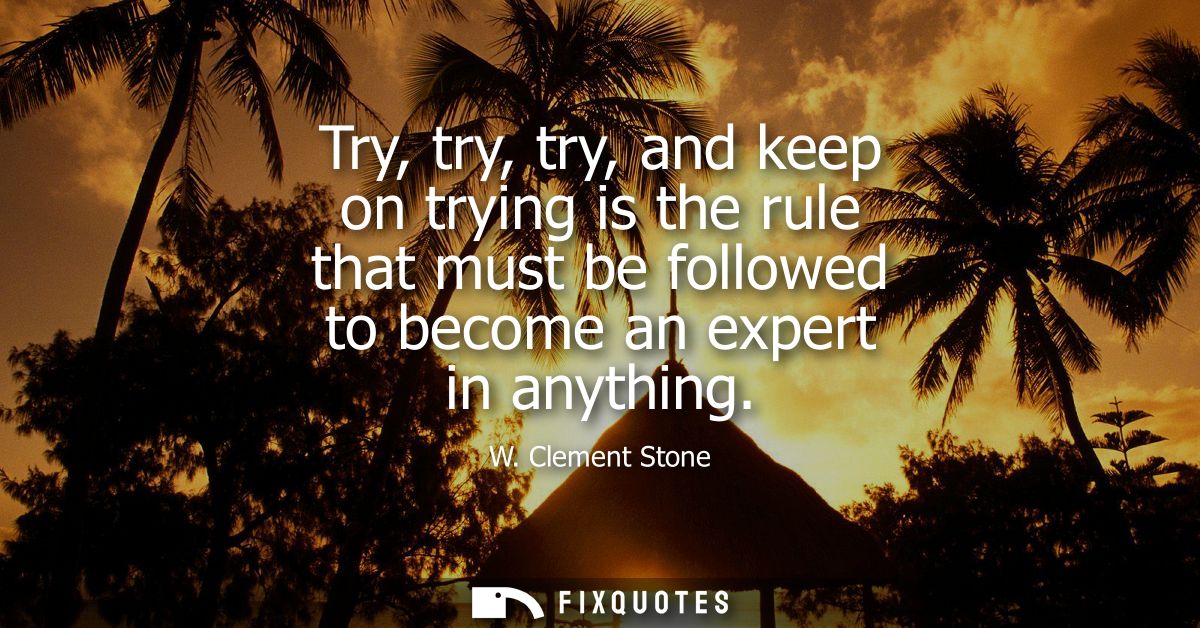
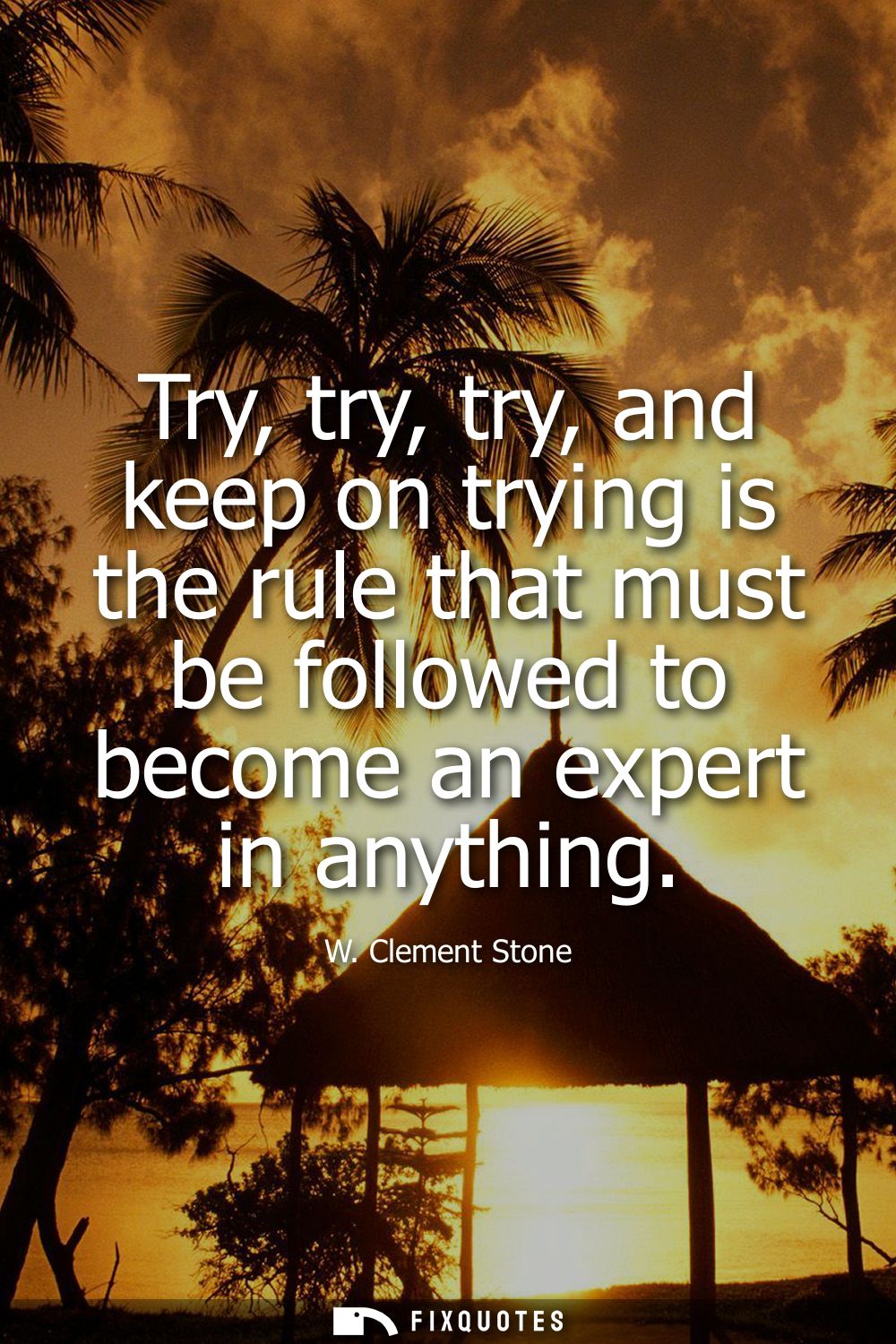
"Try, try, try, and keep on trying is the rule that must be followed to become an expert in anything"
About this Quote
The subtext is both empowering and quietly coercive. If expertise is a simple function of repeated trying, then quitting becomes a moral failure, not a strategic choice. The messier realities - unequal starting lines, luck, gatekeeping, burnout - get edited out. Stone’s world is one where grit is the great equalizer, a comforting story for strivers and a convenient one for employers and sales cultures that need people to absorb risk personally: if you’re not winning, you’re not trying hard enough.
Context matters: Stone helped popularize “positive mental attitude” and thrived in an era when corporate America was busy translating Protestant work ethic into motivational seminars. The line works because it compresses a whole ideology into a pocket-sized rule: keep producing effort, and expertise (and status) will eventually pay out. It’s less a description of how mastery actually happens than a rallying cry for people who can’t afford to believe otherwise.
Quote Details
| Topic | Perseverance |
|---|---|
| Source | Help us find the source |
| Cite |
Citation Formats
APA Style (7th ed.)
Stone, W. Clement. (2026, January 15). Try, try, try, and keep on trying is the rule that must be followed to become an expert in anything. FixQuotes. https://fixquotes.com/quotes/try-try-try-and-keep-on-trying-is-the-rule-that-29426/
Chicago Style
Stone, W. Clement. "Try, try, try, and keep on trying is the rule that must be followed to become an expert in anything." FixQuotes. January 15, 2026. https://fixquotes.com/quotes/try-try-try-and-keep-on-trying-is-the-rule-that-29426/.
MLA Style (9th ed.)
"Try, try, try, and keep on trying is the rule that must be followed to become an expert in anything." FixQuotes, 15 Jan. 2026, https://fixquotes.com/quotes/try-try-try-and-keep-on-trying-is-the-rule-that-29426/. Accessed 13 Feb. 2026.