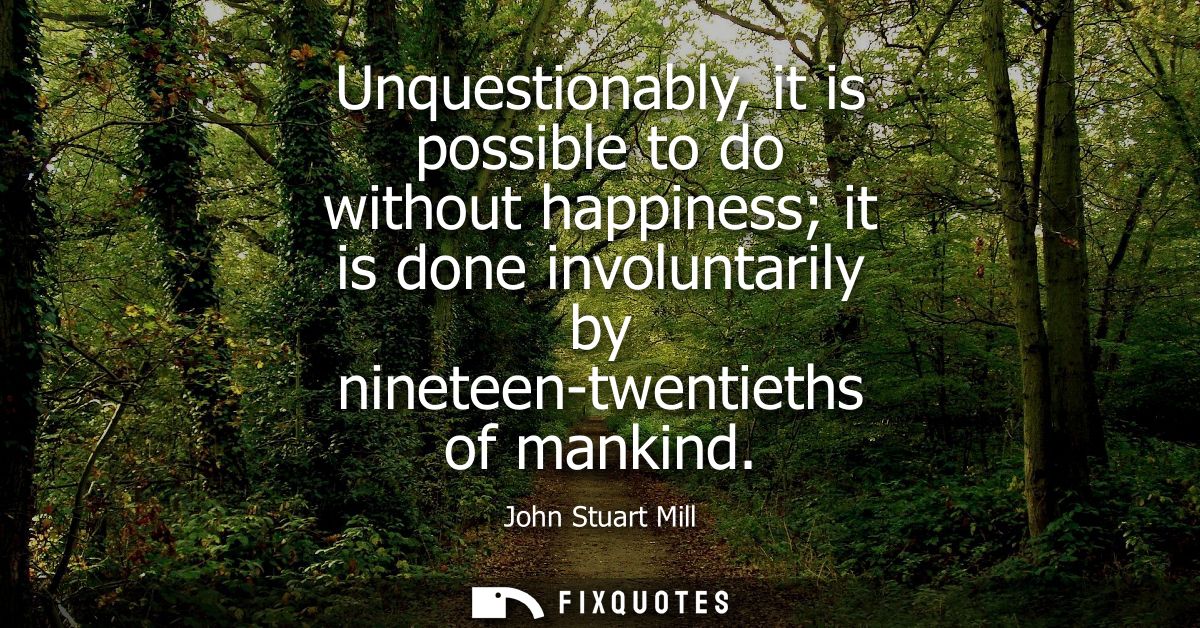
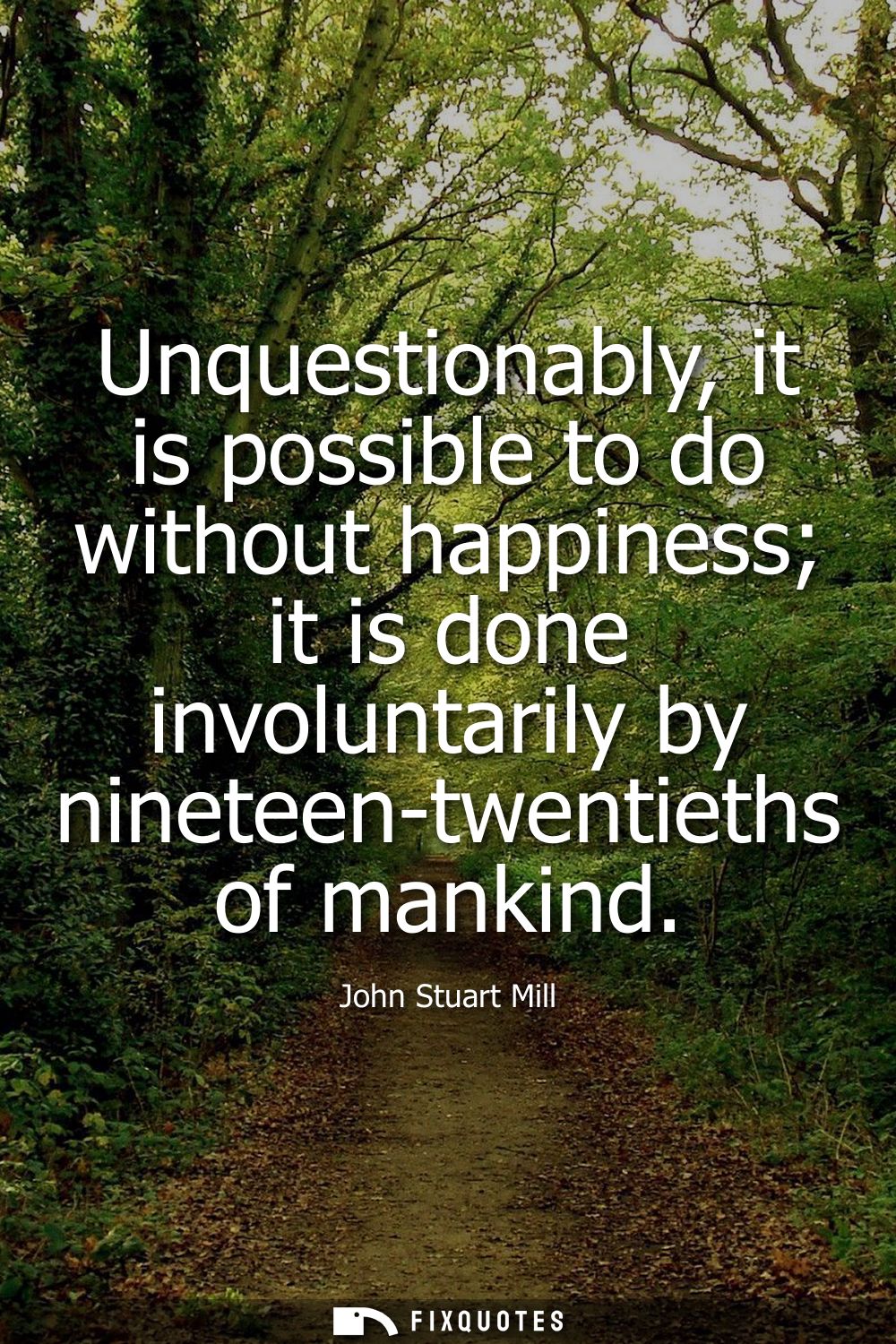
"Unquestionably, it is possible to do without happiness; it is done involuntarily by nineteen-twentieths of mankind"
About this Quote
The intent is polemical, aimed at the complacent comfort of Victorian moral talk that treated happiness as either a private virtue or a frivolous pursuit. Mill, a utilitarian, is supposed to be the happiness guy. Here he flips that expectation into a critique of what passes for "practical" life: work, duty, respectability, survival. The subtext is classed and industrial. The nineteenth century’s progress narrative ran on factories, discipline, and empire; Mill points out the human cost in a single sentence, as if the ledger of modernity has a missing column.
It also carries a personal shadow. Mill wrote with the memory of his own depression and the sense that rational systems can function while the person inside them goes dim. "Involuntarily" is the sting: unhappiness isn’t a chosen aesthetic or noble stoicism, it’s what happens when the conditions of living leave no room for anything else. The line doesn’t romanticize suffering; it normalizes it only to make that normalization look obscene.
Quote Details
| Topic | Happiness |
|---|---|
| Source | Help us find the source |
| Cite |
Citation Formats
APA Style (7th ed.)
Mill, John Stuart. (2026, January 15). Unquestionably, it is possible to do without happiness; it is done involuntarily by nineteen-twentieths of mankind. FixQuotes. https://fixquotes.com/quotes/unquestionably-it-is-possible-to-do-without-18437/
Chicago Style
Mill, John Stuart. "Unquestionably, it is possible to do without happiness; it is done involuntarily by nineteen-twentieths of mankind." FixQuotes. January 15, 2026. https://fixquotes.com/quotes/unquestionably-it-is-possible-to-do-without-18437/.
MLA Style (9th ed.)
"Unquestionably, it is possible to do without happiness; it is done involuntarily by nineteen-twentieths of mankind." FixQuotes, 15 Jan. 2026, https://fixquotes.com/quotes/unquestionably-it-is-possible-to-do-without-18437/. Accessed 12 Feb. 2026.