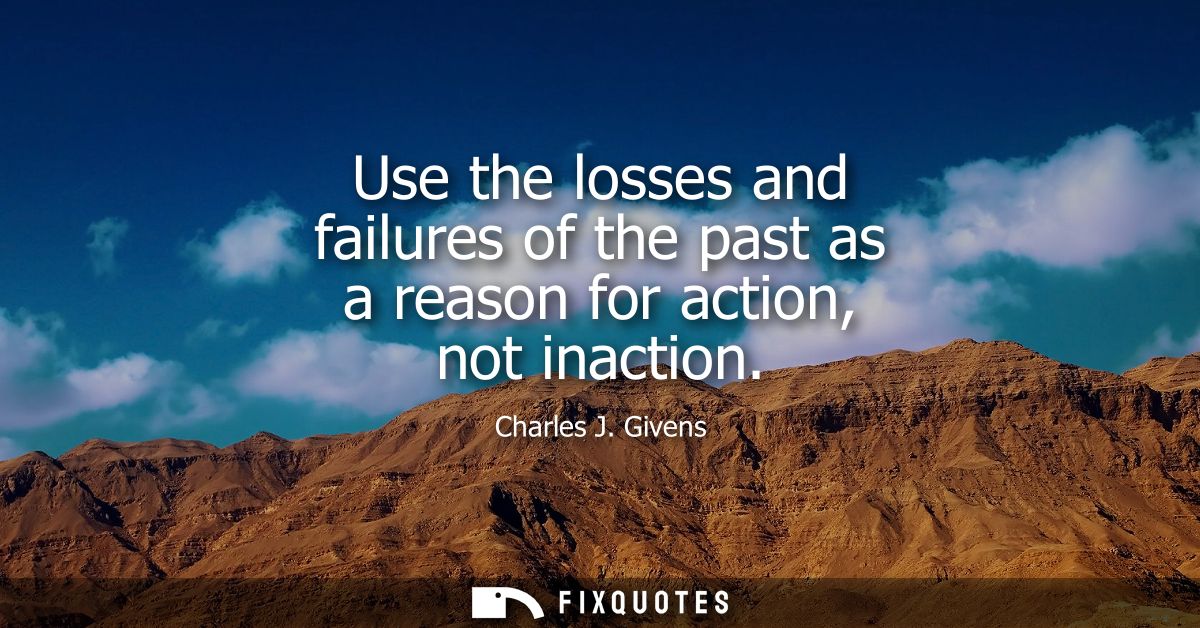
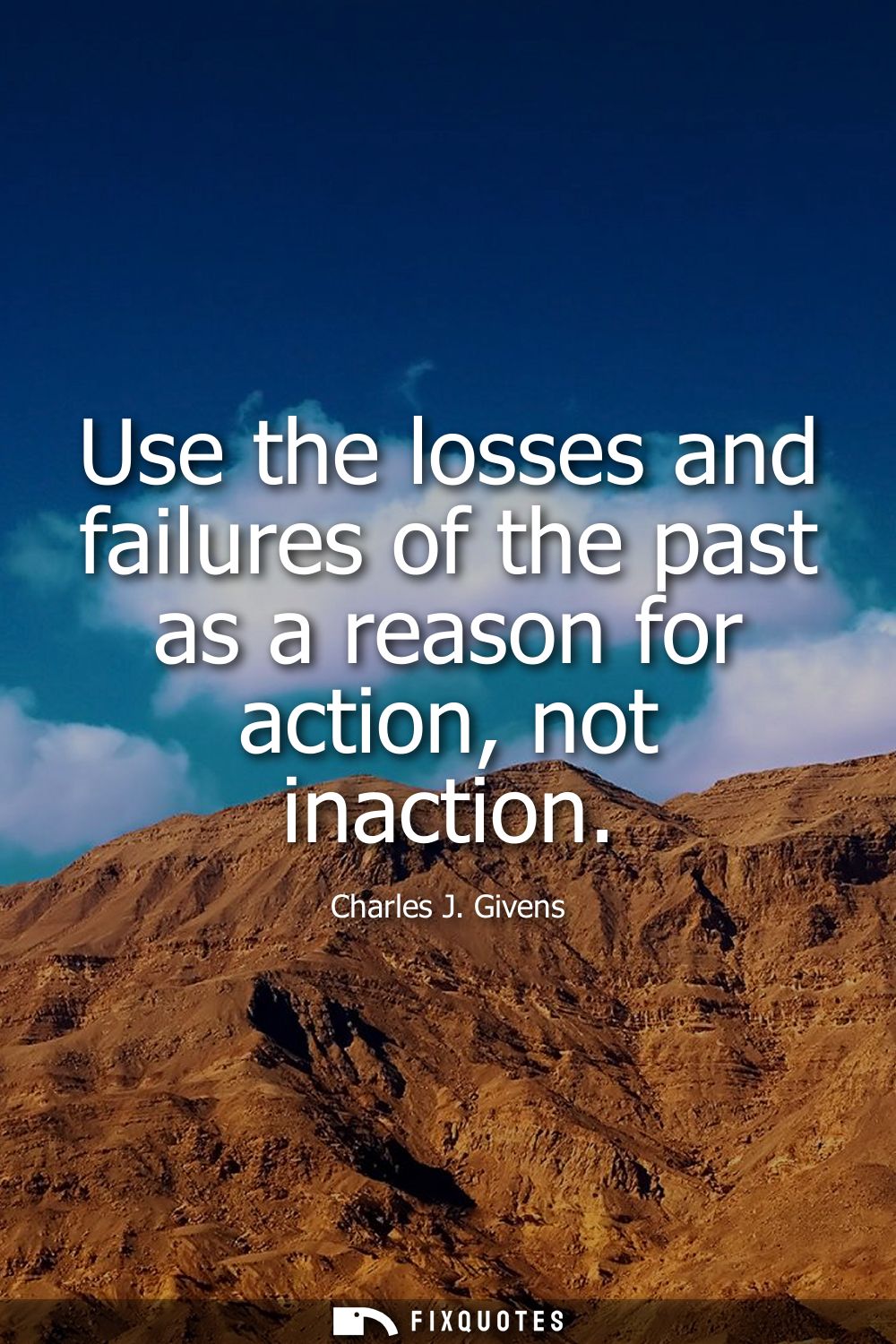
"Use the losses and failures of the past as a reason for action, not inaction"
About this Quote
The subtext is a quiet rebuke of the most common defense mechanism in ambition culture: using past disappointment as moral permission to stop trying. “I already failed, so why risk it again?” becomes the real opponent. Givens answers with a managerial ethic dressed up as personal advice: treat the past like a balance sheet, not a biography. Losses are sunk costs; they shouldn’t dictate future investment.
The phrasing matters. “Reason for action, not inaction” is a binary that flattens nuance on purpose. In a corporate context, ambiguity is expensive; decisiveness reads as virtue. The quote also smuggles in a worldview where agency is always available - where circumstances can hurt you, but they don’t get to define your next move. That’s motivating, and a little unforgiving.
Contextually, it fits a late-20th-century self-help-meets-entrepreneurship ethos: resilience as strategy, grit as branding. It works because it offers a clean conversion rate: take yesterday’s losses, turn them into tomorrow’s momentum. The comfort is practical, not sentimental.
Quote Details
| Topic | Learning from Mistakes |
|---|---|
| Source | Help us find the source |
| Cite |
Citation Formats
APA Style (7th ed.)
Givens, Charles J. (2026, January 17). Use the losses and failures of the past as a reason for action, not inaction. FixQuotes. https://fixquotes.com/quotes/use-the-losses-and-failures-of-the-past-as-a-41503/
Chicago Style
Givens, Charles J. "Use the losses and failures of the past as a reason for action, not inaction." FixQuotes. January 17, 2026. https://fixquotes.com/quotes/use-the-losses-and-failures-of-the-past-as-a-41503/.
MLA Style (9th ed.)
"Use the losses and failures of the past as a reason for action, not inaction." FixQuotes, 17 Jan. 2026, https://fixquotes.com/quotes/use-the-losses-and-failures-of-the-past-as-a-41503/. Accessed 12 Feb. 2026.