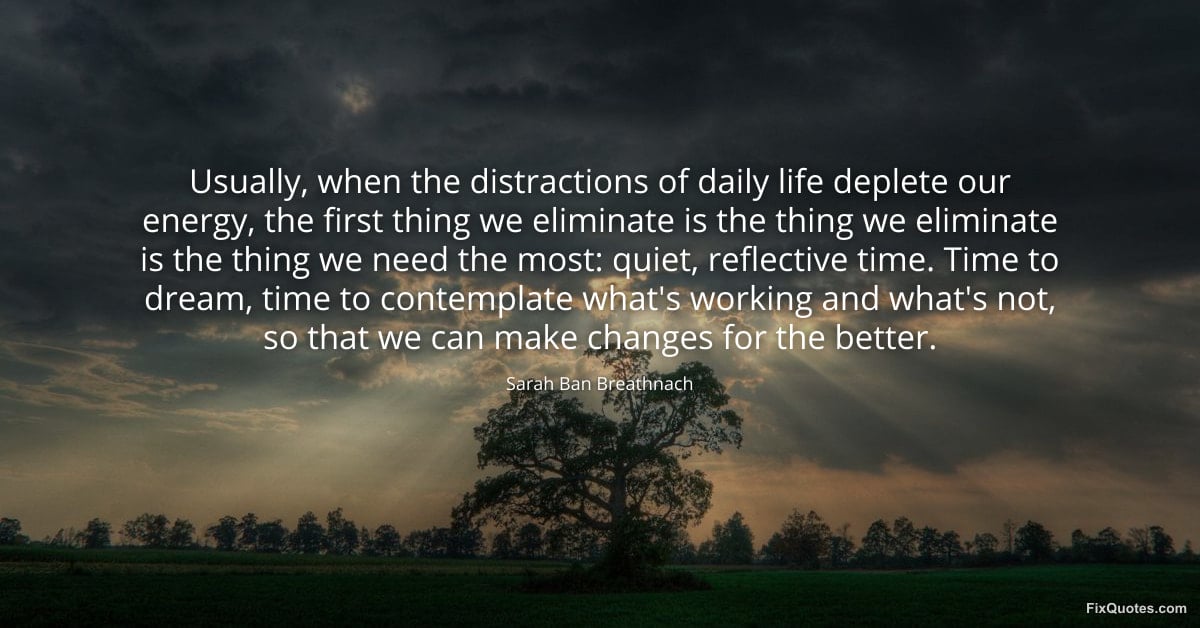
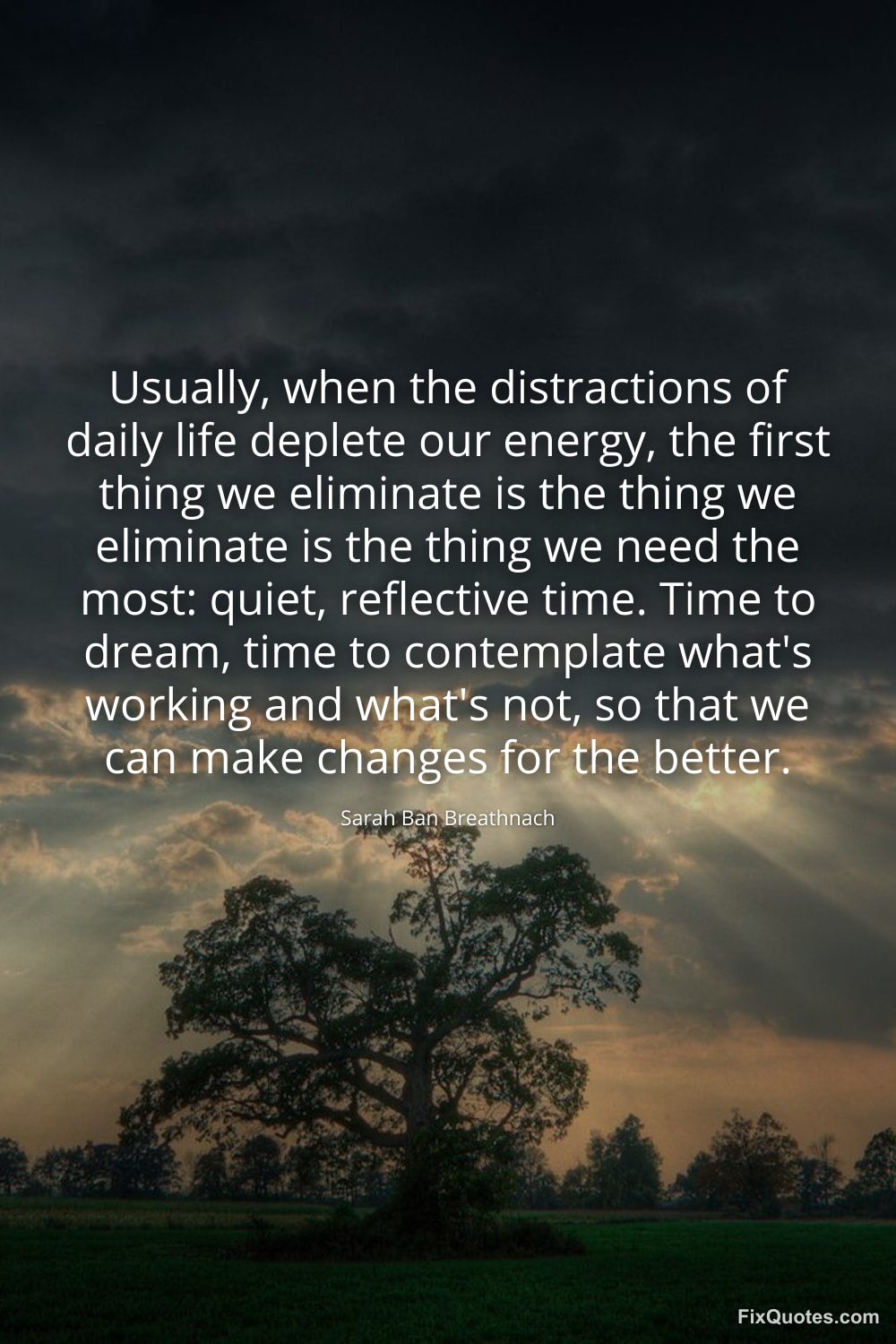
"Usually, when the distractions of daily life deplete our energy, the first thing we eliminate is the thing we eliminate is the thing we need the most: quiet, reflective time. Time to dream, time to contemplate what's working and what's not, so that we can make changes for the better"
About this Quote
Her repetition - "the thing we eliminate is the thing we eliminate is the thing we need the most" - reads like a verbal stumble on purpose, mimicking the mental loop of exhaustion. It's the syntax of burnout: saying the same sentence again because you can't quite get out of it. The line performs what it criticizes, which is why it lands.
The subtext is also a gentle indictment of productivity culture's false math. Reflection has no immediate deliverable, so it becomes expendable, even though it's the only space where priorities get clarified and habits get audited. She sneaks in a radical claim under the soothing language of self-care: dreaming and contemplating are not passive; they're decision-making tools. "What's working and what's not" is basically a performance review for your own life, one most people never schedule.
Contextually, this sits in late-20th/early-21st-century wellness discourse, but it avoids the usual platitudes by targeting the mechanism of collapse. Not "slow down", but: notice what you cut first, because that's your diagnosis.
Quote Details
| Topic | Self-Care |
|---|---|
| Source | Help us find the source |
| Cite |
Citation Formats
APA Style (7th ed.)
Breathnach, Sarah Ban. (2026, January 11). Usually, when the distractions of daily life deplete our energy, the first thing we eliminate is the thing we eliminate is the thing we need the most: quiet, reflective time. Time to dream, time to contemplate what's working and what's not, so that we can make changes for the better. FixQuotes. https://fixquotes.com/quotes/usually-when-the-distractions-of-daily-life-183943/
Chicago Style
Breathnach, Sarah Ban. "Usually, when the distractions of daily life deplete our energy, the first thing we eliminate is the thing we eliminate is the thing we need the most: quiet, reflective time. Time to dream, time to contemplate what's working and what's not, so that we can make changes for the better." FixQuotes. January 11, 2026. https://fixquotes.com/quotes/usually-when-the-distractions-of-daily-life-183943/.
MLA Style (9th ed.)
"Usually, when the distractions of daily life deplete our energy, the first thing we eliminate is the thing we eliminate is the thing we need the most: quiet, reflective time. Time to dream, time to contemplate what's working and what's not, so that we can make changes for the better." FixQuotes, 11 Jan. 2026, https://fixquotes.com/quotes/usually-when-the-distractions-of-daily-life-183943/. Accessed 12 Mar. 2026.