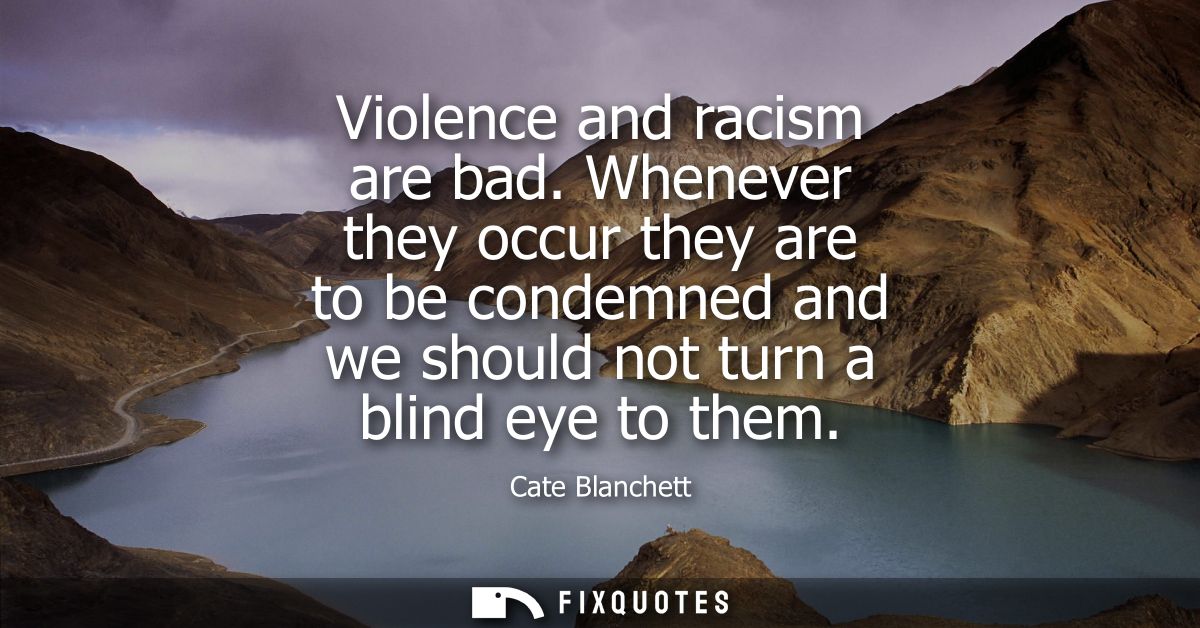
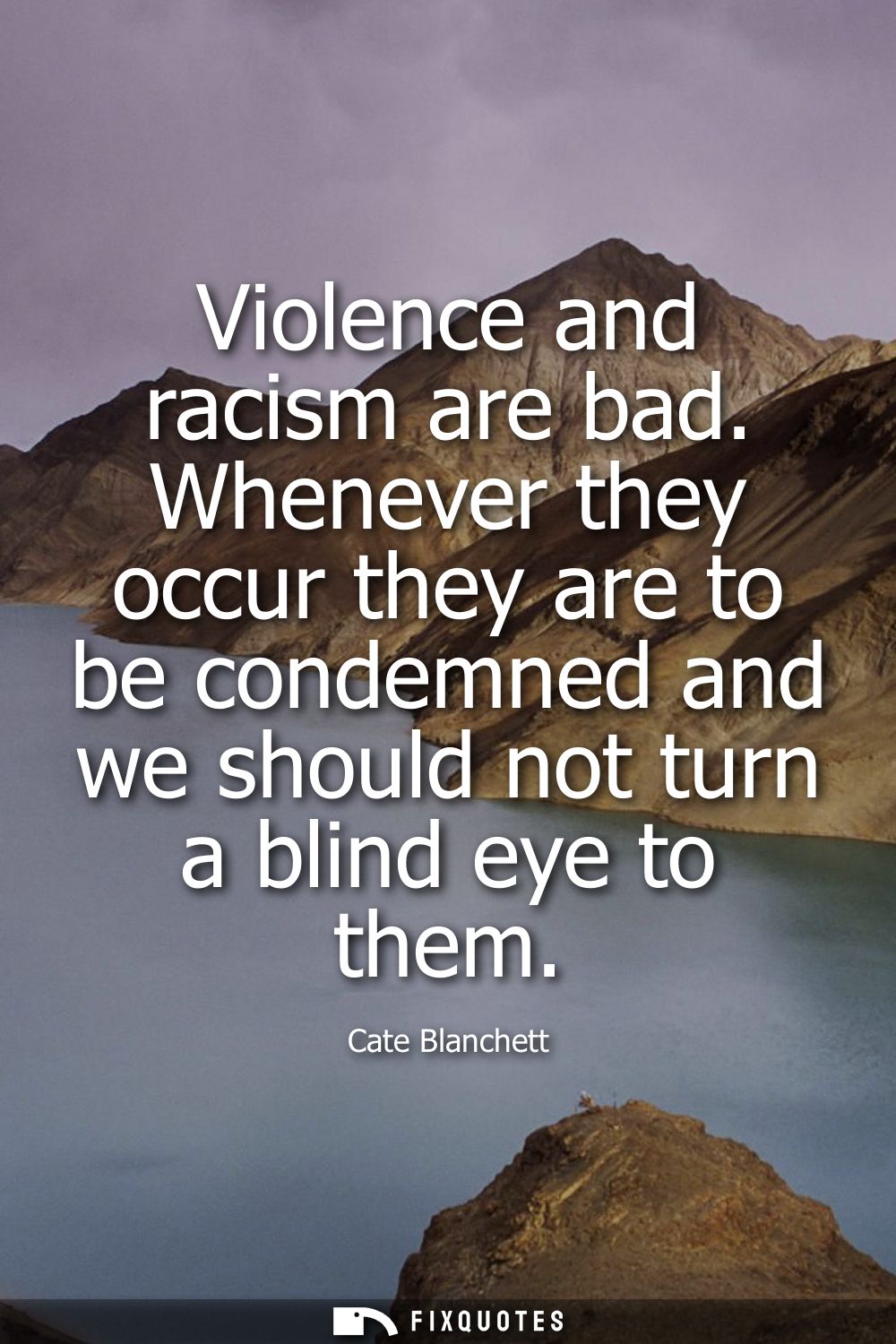
"Violence and racism are bad. Whenever they occur they are to be condemned and we should not turn a blind eye to them"
About this Quote
The phrasing also reveals the modern public-figure calculus: condemn without adjudicating. "Whenever they occur" universalizes the claim, refusing the tribal logic of selective outrage. That word "condemned" signals a baseline of civic belonging, not a policy program. She’s not staking out a radical position; she’s asserting the minimum terms of decency and asking the audience to treat them as non-negotiable.
Then there’s the quiet accusation embedded in the last clause. "We should not turn a blind eye" shifts the target from perpetrators to bystanders - the comfortable majority that benefits from distance. It’s inclusive ("we"), but it’s not gentle: the failure being named is complicity through convenience. Coming from an actress whose industry is routinely criticized for performative allyship, the quote doubles as self-policing: a reminder that visibility carries responsibility, and that neutrality is rarely neutral.
Quote Details
| Topic | Human Rights |
|---|---|
| Source | Help us find the source |
| Cite |
Citation Formats
APA Style (7th ed.)
Blanchett, Cate. (2026, January 17). Violence and racism are bad. Whenever they occur they are to be condemned and we should not turn a blind eye to them. FixQuotes. https://fixquotes.com/quotes/violence-and-racism-are-bad-whenever-they-occur-51790/
Chicago Style
Blanchett, Cate. "Violence and racism are bad. Whenever they occur they are to be condemned and we should not turn a blind eye to them." FixQuotes. January 17, 2026. https://fixquotes.com/quotes/violence-and-racism-are-bad-whenever-they-occur-51790/.
MLA Style (9th ed.)
"Violence and racism are bad. Whenever they occur they are to be condemned and we should not turn a blind eye to them." FixQuotes, 17 Jan. 2026, https://fixquotes.com/quotes/violence-and-racism-are-bad-whenever-they-occur-51790/. Accessed 18 Feb. 2026.