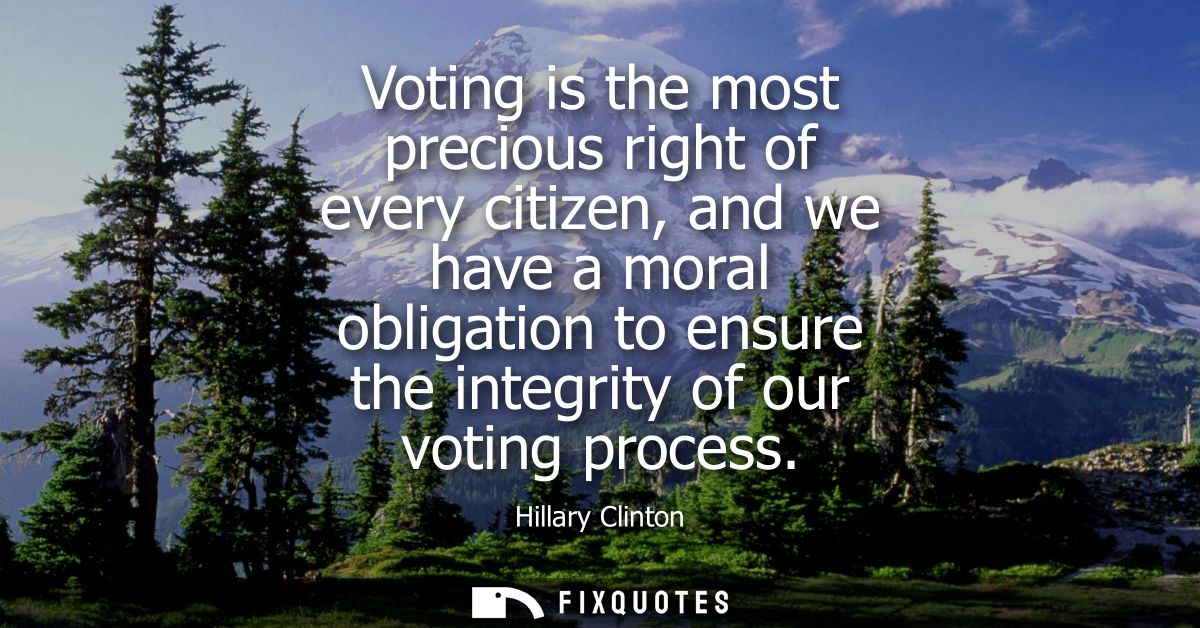
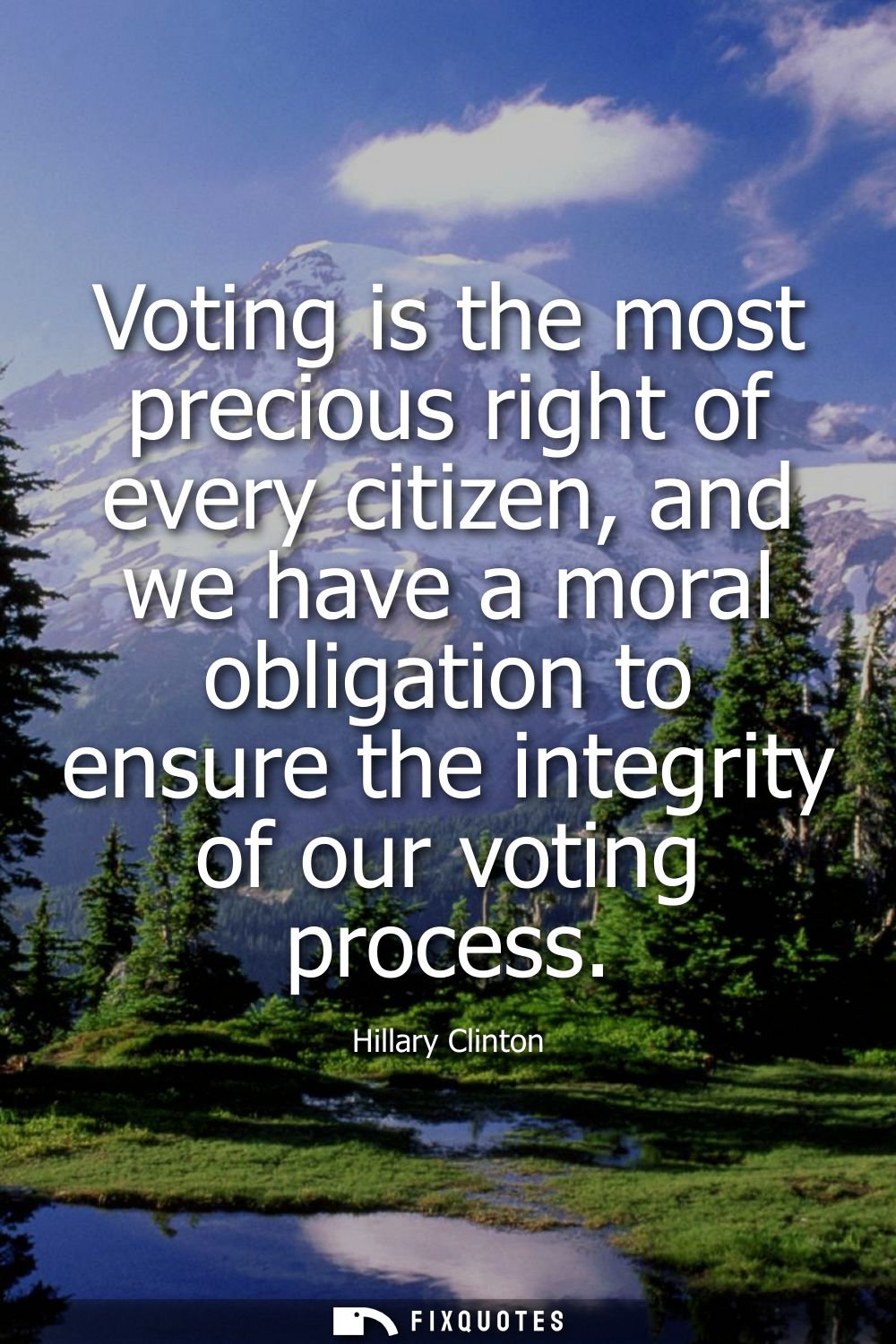
"Voting is the most precious right of every citizen, and we have a moral obligation to ensure the integrity of our voting process"
About this Quote
The subtext is that “integrity” is not a neutral word in modern American politics; it’s a battleground. Since the 2000 Florida debacle, the rise of voter-ID fights, and the post-2016 explosion of misinformation, “election integrity” has been used both to argue for trust-building safeguards and to justify restrictions that disproportionately burden marginalized voters. Clinton’s wording tries to reclaim the term without conceding the premise that elections are broadly illegitimate. She’s signaling: protect the ballot, but don’t weaponize protection against the voter.
Context matters because Clinton’s brand is institutionalism. She’s not offering romantic populism; she’s defending the machinery of democracy at a moment when faith in that machinery is collapsing. The line works because it fuses two anxieties Americans share, even when they disagree about causes: the fear of being shut out, and the fear the system is being gamed.
Quote Details
| Topic | Human Rights |
|---|---|
| Source | Help us find the source |
| Cite |
Citation Formats
APA Style (7th ed.)
Clinton, Hillary. (2026, January 15). Voting is the most precious right of every citizen, and we have a moral obligation to ensure the integrity of our voting process. FixQuotes. https://fixquotes.com/quotes/voting-is-the-most-precious-right-of-every-41367/
Chicago Style
Clinton, Hillary. "Voting is the most precious right of every citizen, and we have a moral obligation to ensure the integrity of our voting process." FixQuotes. January 15, 2026. https://fixquotes.com/quotes/voting-is-the-most-precious-right-of-every-41367/.
MLA Style (9th ed.)
"Voting is the most precious right of every citizen, and we have a moral obligation to ensure the integrity of our voting process." FixQuotes, 15 Jan. 2026, https://fixquotes.com/quotes/voting-is-the-most-precious-right-of-every-41367/. Accessed 3 Apr. 2026.