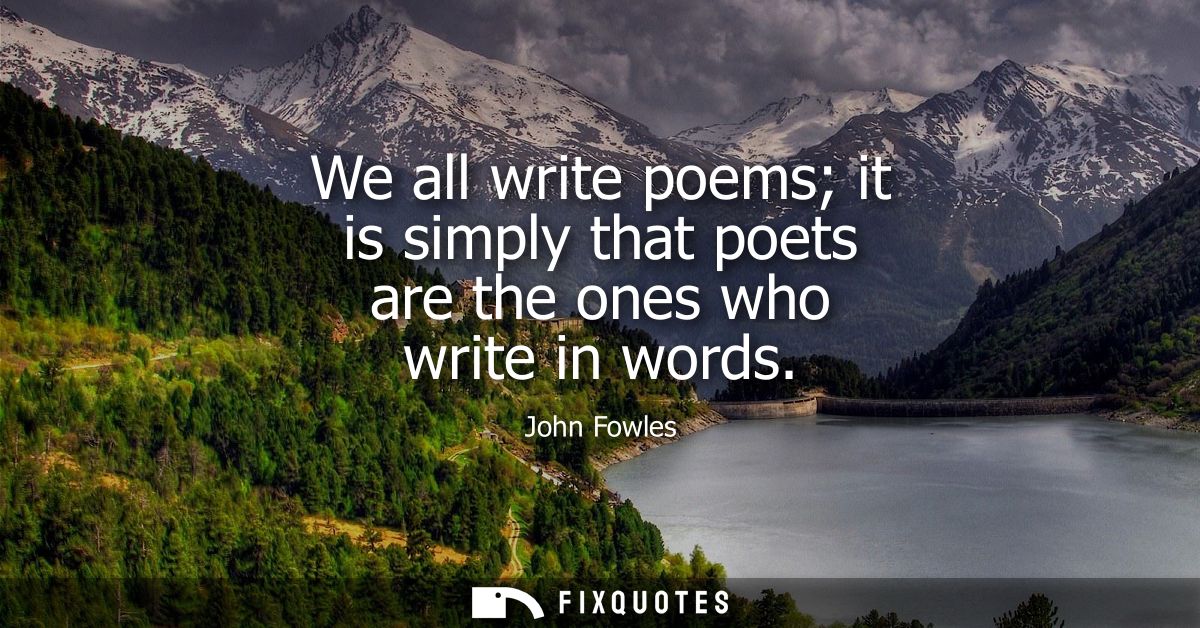
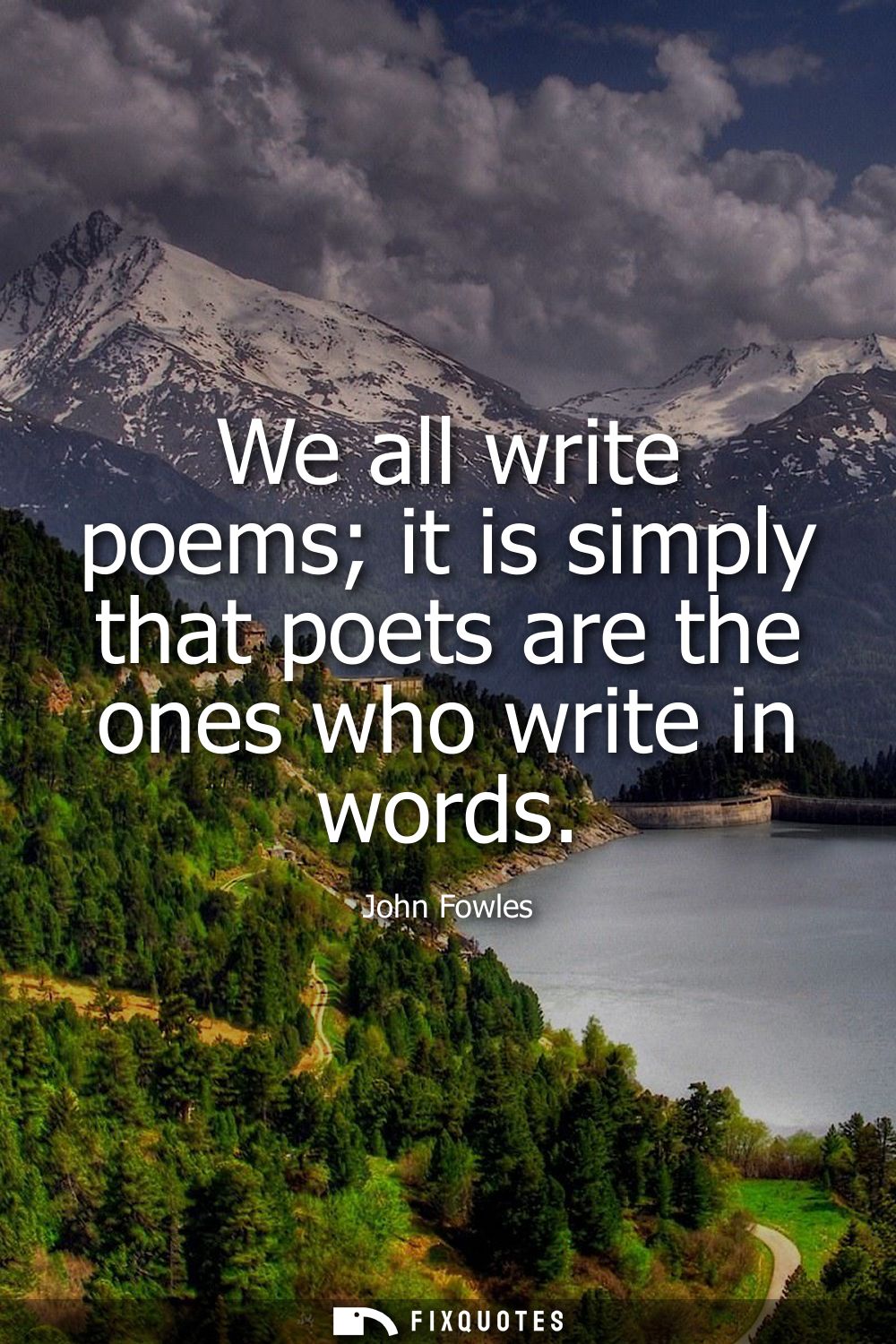
"We all write poems; it is simply that poets are the ones who write in words"
About this Quote
The intent is partly democratizing, partly needling. It flatters the reader (you have an inner lyric life) while also challenging the cultural bureaucracy around art: credentials, gatekeepers, the idea that creativity needs official permission. In Fowles's world - steeped in postwar skepticism and the metafictional games of the 1960s and 70s - authorship is never just authorship. Its a performance of control. This line nudges against that control by suggesting that the raw material of poetry lives outside the page: in memory, desire, moral choice, even the stories people tell themselves to survive.
The subtext is that language is both medium and limitation. Poets are not the only ones living poetically; they are the ones willing (or cursed) to translate the private intensity of experience into public symbols. "Simply" is doing sly work here: it pretends the difference is small, but it underlines how hard it is to make words carry what life actually feels like.
Quote Details
| Topic | Poetry |
|---|---|
| Source | Help us find the source |
| Cite |
Citation Formats
APA Style (7th ed.)
Fowles, John. (2026, January 16). We all write poems; it is simply that poets are the ones who write in words. FixQuotes. https://fixquotes.com/quotes/we-all-write-poems-it-is-simply-that-poets-are-137368/
Chicago Style
Fowles, John. "We all write poems; it is simply that poets are the ones who write in words." FixQuotes. January 16, 2026. https://fixquotes.com/quotes/we-all-write-poems-it-is-simply-that-poets-are-137368/.
MLA Style (9th ed.)
"We all write poems; it is simply that poets are the ones who write in words." FixQuotes, 16 Jan. 2026, https://fixquotes.com/quotes/we-all-write-poems-it-is-simply-that-poets-are-137368/. Accessed 29 Mar. 2026.