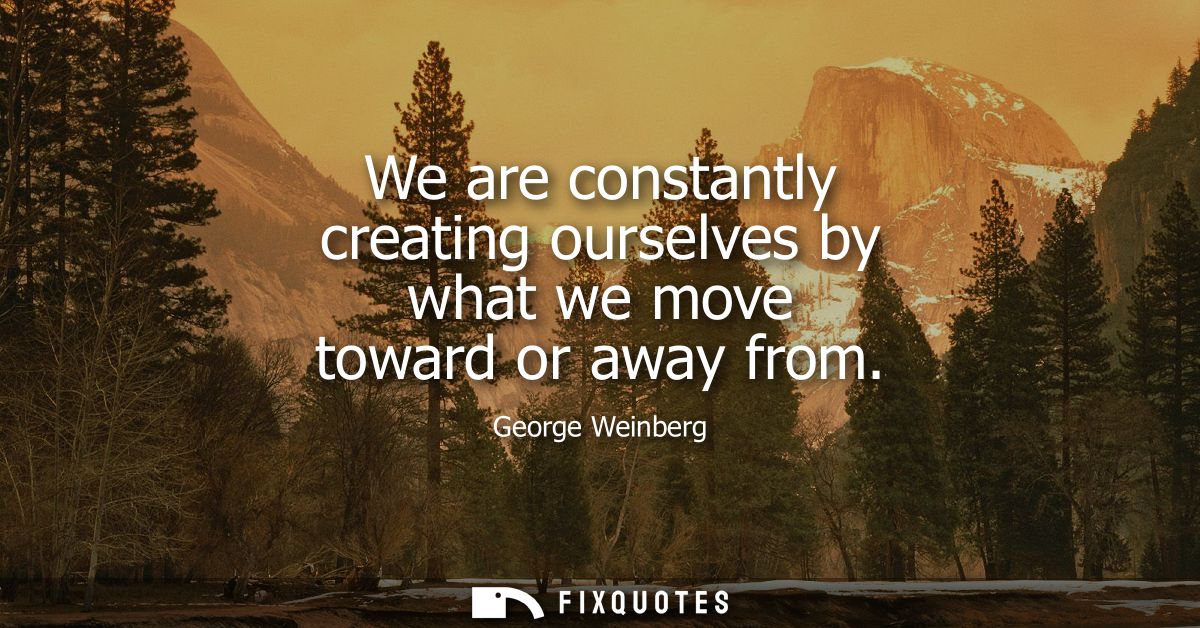
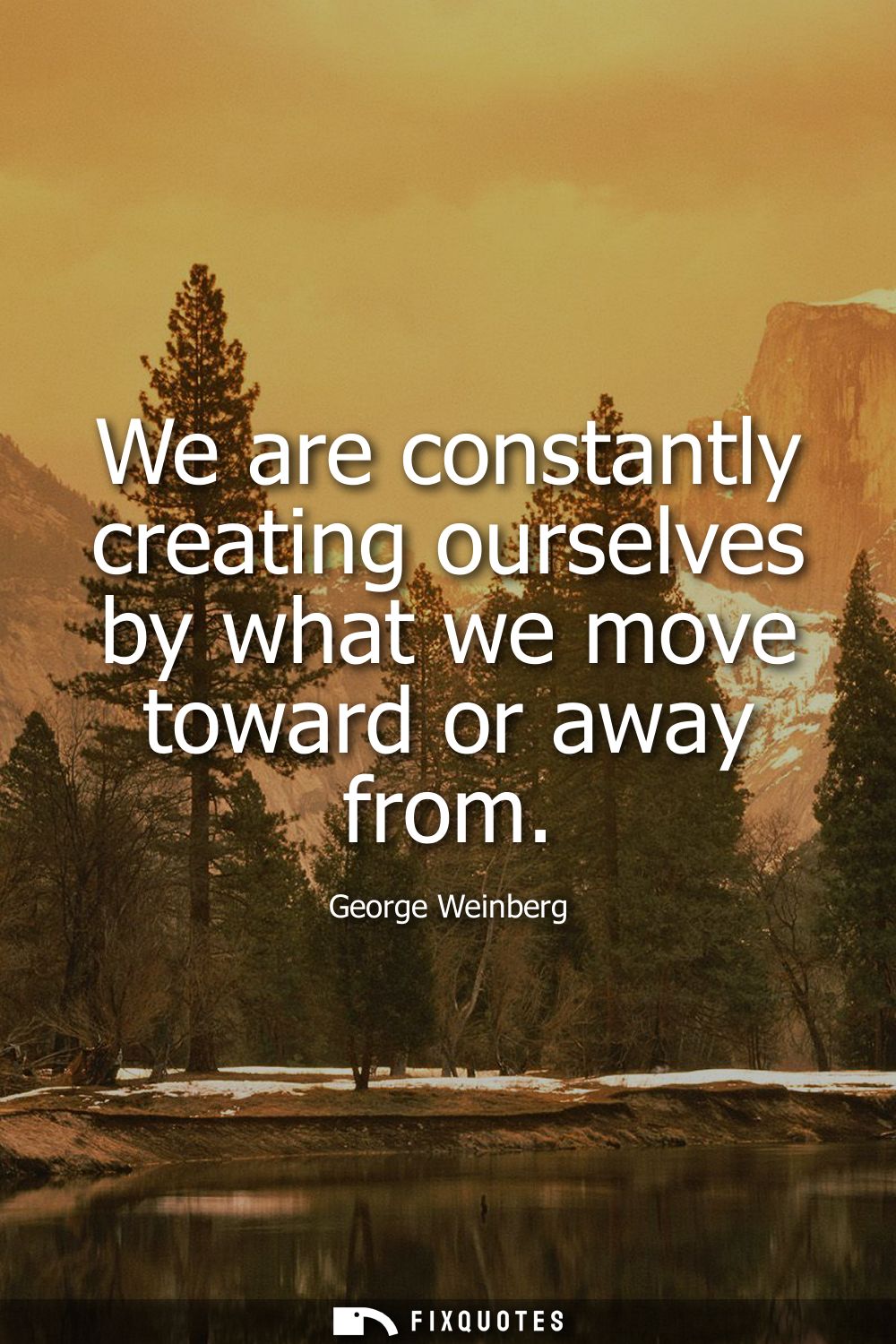
"We are constantly creating ourselves by what we move toward or away from"
About this Quote
As a psychologist, Weinberg is smuggling in a clinical insight without clinical language: our patterns of attraction and aversion are not just symptoms, they’re architects. What you move toward signals your values (or your cravings); what you move away from reveals your anxieties, shame points, and learned alarms. The subtext is mildly accusatory in a useful way. You don’t get to pretend you’re neutral. Avoidance is action, too, and over time it hardens into personality: the friend who “isn’t a people person” may be a person who practiced retreat until it felt like a trait.
Context matters here because Weinberg’s career intersected with a cultural fight over what counted as “real” identity, especially around sexuality and stigma. Read through that lens, the quote doubles as an anti-essentialist argument and a quiet rebuke to pathologizing labels: people aren’t fixed categories; they’re shaped by what society rewards them for approaching and punishes them for nearing.
It’s also a warning about drift. If you don’t choose your toward, your away will choose you.
Quote Details
| Topic | Reinvention |
|---|---|
| Source | Help us find the source |
| Cite |
Citation Formats
APA Style (7th ed.)
Weinberg, George. (2026, January 17). We are constantly creating ourselves by what we move toward or away from. FixQuotes. https://fixquotes.com/quotes/we-are-constantly-creating-ourselves-by-what-we-59518/
Chicago Style
Weinberg, George. "We are constantly creating ourselves by what we move toward or away from." FixQuotes. January 17, 2026. https://fixquotes.com/quotes/we-are-constantly-creating-ourselves-by-what-we-59518/.
MLA Style (9th ed.)
"We are constantly creating ourselves by what we move toward or away from." FixQuotes, 17 Jan. 2026, https://fixquotes.com/quotes/we-are-constantly-creating-ourselves-by-what-we-59518/. Accessed 12 Feb. 2026.