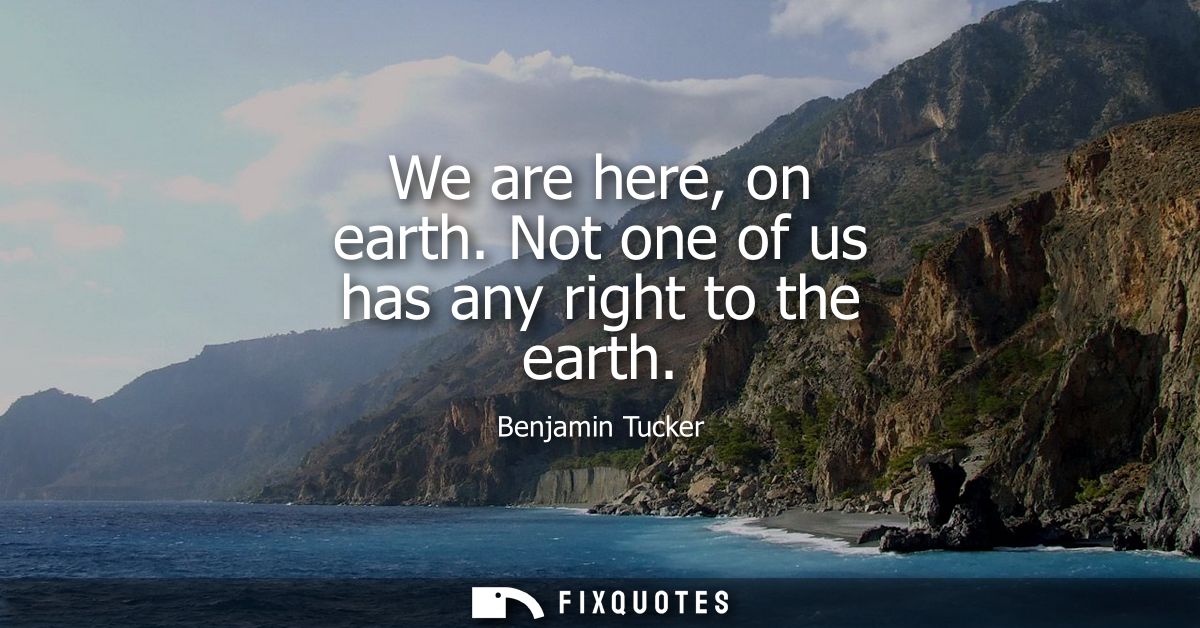
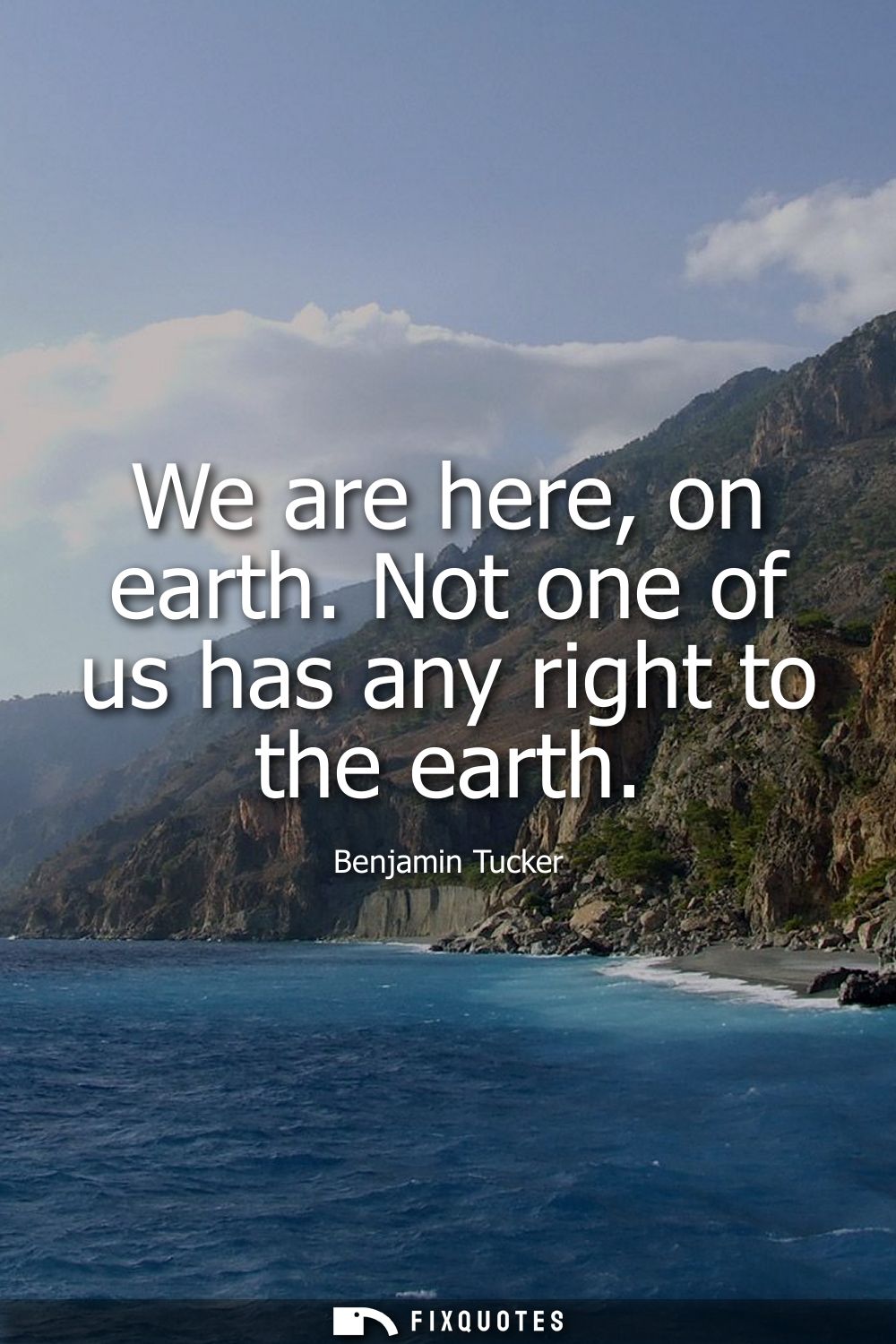
"We are here, on earth. Not one of us has any right to the earth"
About this Quote
Tucker’s line lands like a moral eviction notice. He starts with the one fact nobody can debate - we’re here - then immediately strips away the comforting sequel most political systems smuggle in: therefore we own. The sentence is built to puncture entitlement. “On earth” is deliberately plain, almost childlike, because the next clause isn’t metaphysical poetry; it’s a political claim aimed at property, rent, and the everyday permissions people assume they can buy.
The subtext is classic Tucker: possession is not the same thing as right. In the late 19th century, “the earth” wasn’t an abstract planet; it was land monopolies, railroads, deed law, and the violence that makes exclusion stick. Tucker’s individualist anarchism attacked the state’s role in converting force into legitimacy - titles, police, courts - and this quote reads as a compressed indictment of that whole machinery. He’s not arguing that nobody can use land; he’s arguing that no one can claim a moral veto over it simply because paperwork says so.
There’s also a deliberate leveling in “Not one of us.” Tucker isn’t flattering “the people” against elites. He’s warning that the impulse to dominion is contagious: today’s tenant can become tomorrow’s petty sovereign the moment he gets a deed. The line’s power comes from refusing the usual escape hatches (heritage, improvement, merit) and forcing the reader to face an unsettling premise: if we didn’t create the earth, claiming absolute ownership starts to look less like civilization and more like a well-administered superstition.
The subtext is classic Tucker: possession is not the same thing as right. In the late 19th century, “the earth” wasn’t an abstract planet; it was land monopolies, railroads, deed law, and the violence that makes exclusion stick. Tucker’s individualist anarchism attacked the state’s role in converting force into legitimacy - titles, police, courts - and this quote reads as a compressed indictment of that whole machinery. He’s not arguing that nobody can use land; he’s arguing that no one can claim a moral veto over it simply because paperwork says so.
There’s also a deliberate leveling in “Not one of us.” Tucker isn’t flattering “the people” against elites. He’s warning that the impulse to dominion is contagious: today’s tenant can become tomorrow’s petty sovereign the moment he gets a deed. The line’s power comes from refusing the usual escape hatches (heritage, improvement, merit) and forcing the reader to face an unsettling premise: if we didn’t create the earth, claiming absolute ownership starts to look less like civilization and more like a well-administered superstition.
Quote Details
| Topic | Human Rights |
|---|---|
| Source | Help us find the source |
| Cite |
Citation Formats
APA Style (7th ed.)
Tucker, Benjamin. (2026, January 17). We are here, on earth. Not one of us has any right to the earth. FixQuotes. https://fixquotes.com/quotes/we-are-here-on-earth-not-one-of-us-has-any-right-62734/
Chicago Style
Tucker, Benjamin. "We are here, on earth. Not one of us has any right to the earth." FixQuotes. January 17, 2026. https://fixquotes.com/quotes/we-are-here-on-earth-not-one-of-us-has-any-right-62734/.
MLA Style (9th ed.)
"We are here, on earth. Not one of us has any right to the earth." FixQuotes, 17 Jan. 2026, https://fixquotes.com/quotes/we-are-here-on-earth-not-one-of-us-has-any-right-62734/. Accessed 19 Feb. 2026.
More Quotes by Benjamin
Add to List