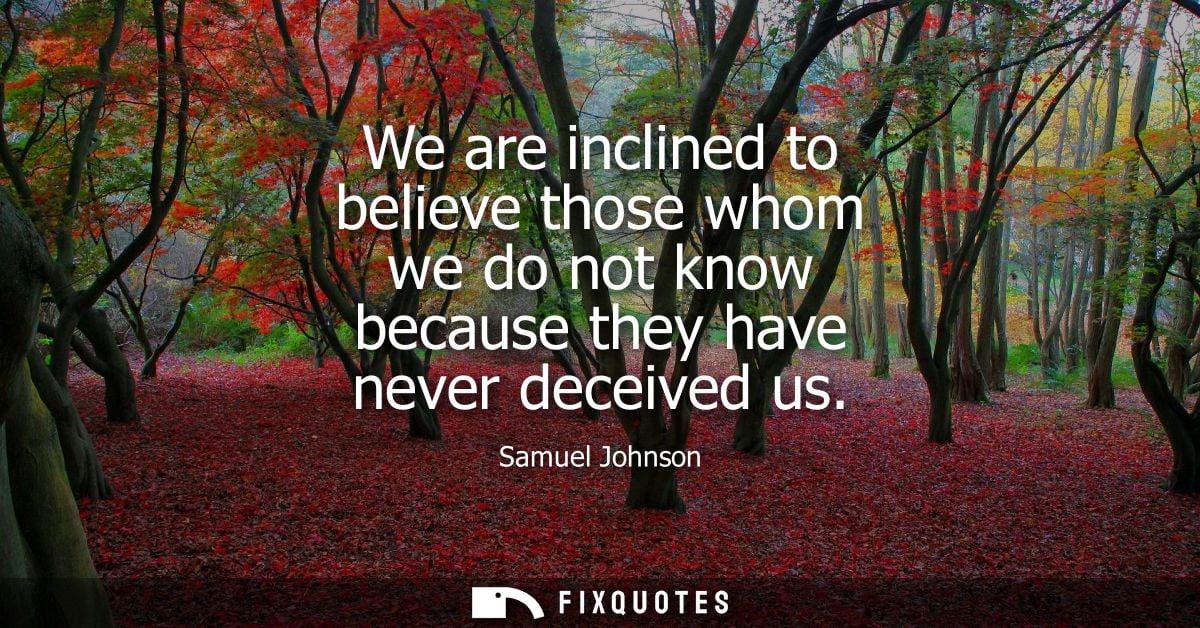
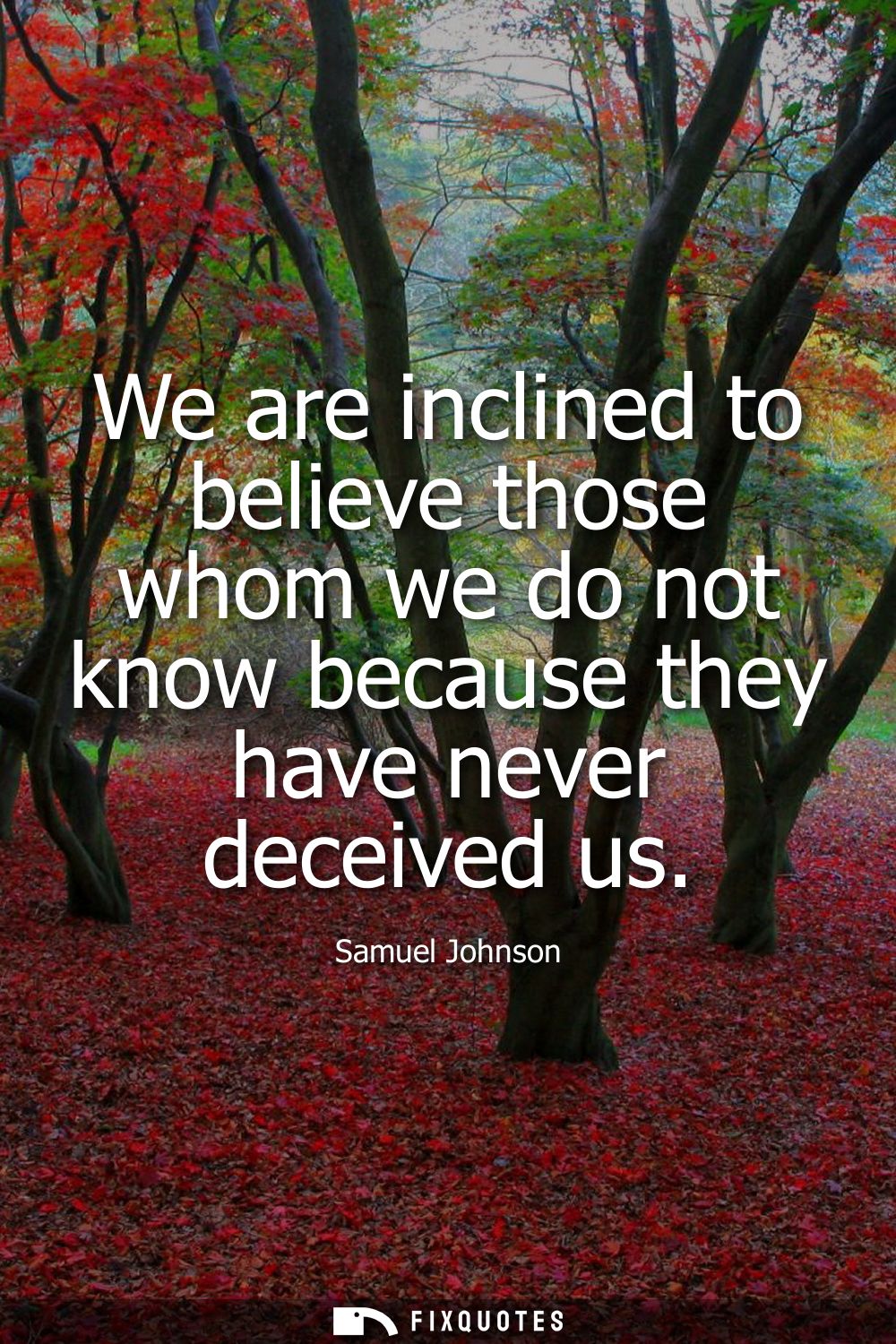
"We are inclined to believe those whom we do not know, because they have never deceived us"
About this Quote
Johnson is poking at a familiar vanity. We like to imagine ourselves as good judges of character, yet we routinely outsource judgment to distance. The person we dont know becomes a blank screen for our wishes: impartial, unmessy, untainted by the petty contradictions that accumulate in real relationships. Meanwhile the people closest to us carry the burden of their documented missteps. One lie, one broken promise, one bad week and the file stays open forever. The stranger, by contrast, gets the benefit of a virgin dossier.
The subtext is not that everyone is deceitful; its that our criteria for belief are warped by memory and proximity. We punish the known for being human and reward the unknown for being untested. Its a subtle critique of social and political credulity, too: distant authorities, fashionable writers, and charismatic newcomers can seem trustworthy precisely because they arrive without a personal history. In Johnsons London - dense with pamphlets, rumors, reputations made and ruined in coffeehouses - this is also practical advice. Familiarity breeds not contempt, exactly, but evidence.
Quote Details
| Topic | Honesty & Integrity |
|---|---|
| Source | Help us find the source |
| Cite |
Citation Formats
APA Style (7th ed.)
Johnson, Samuel. (2026, February 20). We are inclined to believe those whom we do not know, because they have never deceived us. FixQuotes. https://fixquotes.com/quotes/we-are-inclined-to-believe-those-whom-we-do-not-21111/
Chicago Style
Johnson, Samuel. "We are inclined to believe those whom we do not know, because they have never deceived us." FixQuotes. February 20, 2026. https://fixquotes.com/quotes/we-are-inclined-to-believe-those-whom-we-do-not-21111/.
MLA Style (9th ed.)
"We are inclined to believe those whom we do not know, because they have never deceived us." FixQuotes, 20 Feb. 2026, https://fixquotes.com/quotes/we-are-inclined-to-believe-those-whom-we-do-not-21111/. Accessed 9 Mar. 2026.