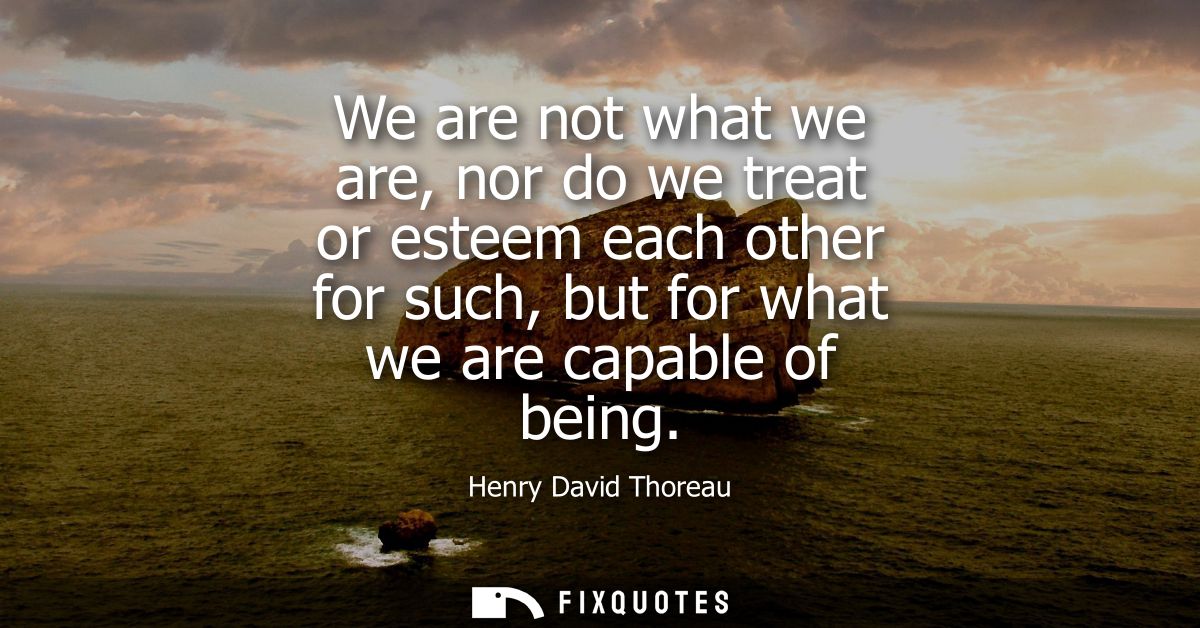
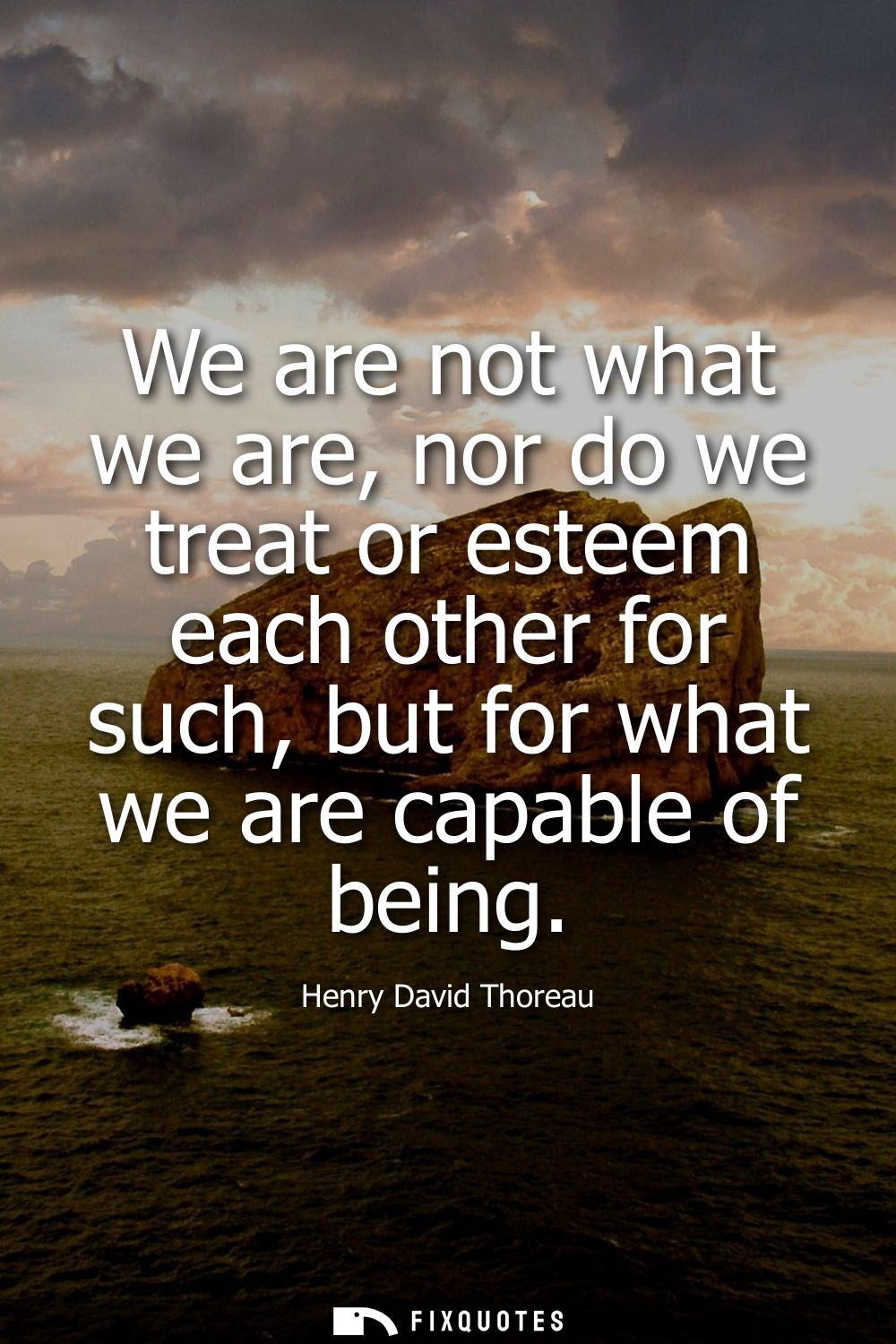
"We are not what we are, nor do we treat or esteem each other for such, but for what we are capable of being"
About this Quote
The sharper subtext lands in the second clause: “nor do we treat or esteem each other for such.” He’s not describing an ideal; he’s exposing a reality. Social esteem rarely attaches to character as it is. It attaches to trajectory, promise, usefulness, proximity to a future we find flattering. That’s both aspirational and accusatory. On one hand, it suggests a radical generosity: see the person as becoming, not as stuck. On the other, it reveals how conditional our respect can be, how quickly “potential” becomes a social currency, a way of valuing people for what they might deliver rather than who they are when no one is watching.
In Thoreau’s 19th-century America, with its booming faith in self-making and its brutal exclusions, the idea cuts two ways. It resonates with transcendentalism’s belief in growth and self-reliance, while also challenging the hypocrisy of a society that praises human perfectibility yet denies whole groups the freedom to become. The sentence works because it flatters our ideals and implicates our habits in the same breath.
Quote Details
| Topic | Wisdom |
|---|---|
| Source | Help us find the source |
| Cite |
Citation Formats
APA Style (7th ed.)
Thoreau, Henry David. (2026, January 17). We are not what we are, nor do we treat or esteem each other for such, but for what we are capable of being. FixQuotes. https://fixquotes.com/quotes/we-are-not-what-we-are-nor-do-we-treat-or-esteem-33248/
Chicago Style
Thoreau, Henry David. "We are not what we are, nor do we treat or esteem each other for such, but for what we are capable of being." FixQuotes. January 17, 2026. https://fixquotes.com/quotes/we-are-not-what-we-are-nor-do-we-treat-or-esteem-33248/.
MLA Style (9th ed.)
"We are not what we are, nor do we treat or esteem each other for such, but for what we are capable of being." FixQuotes, 17 Jan. 2026, https://fixquotes.com/quotes/we-are-not-what-we-are-nor-do-we-treat-or-esteem-33248/. Accessed 12 Feb. 2026.