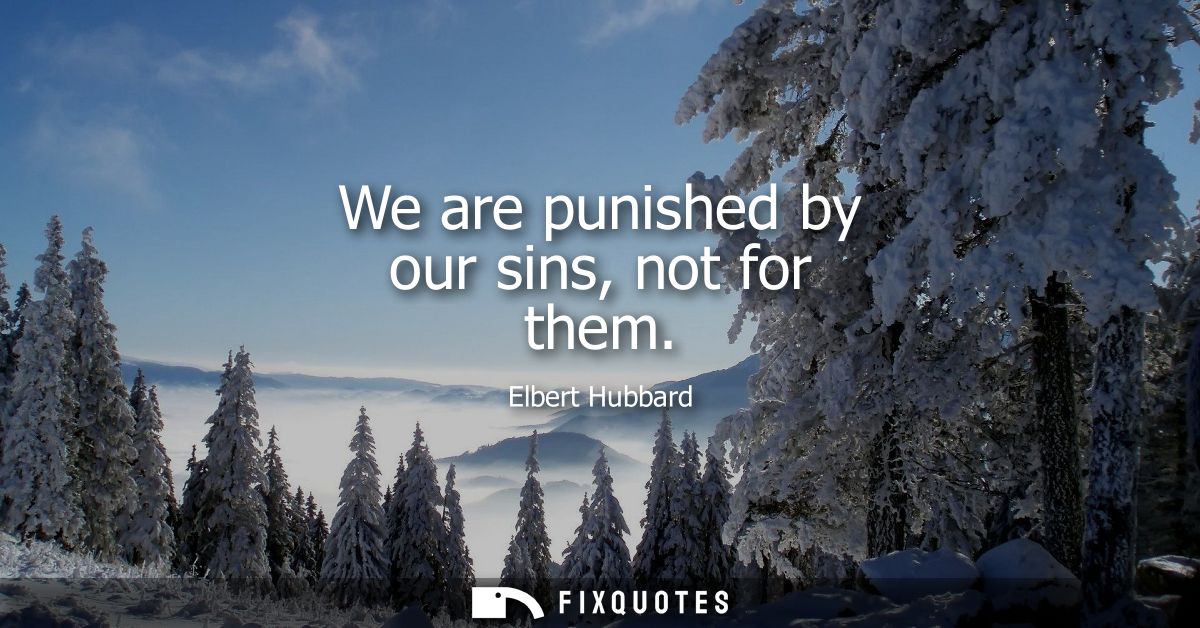
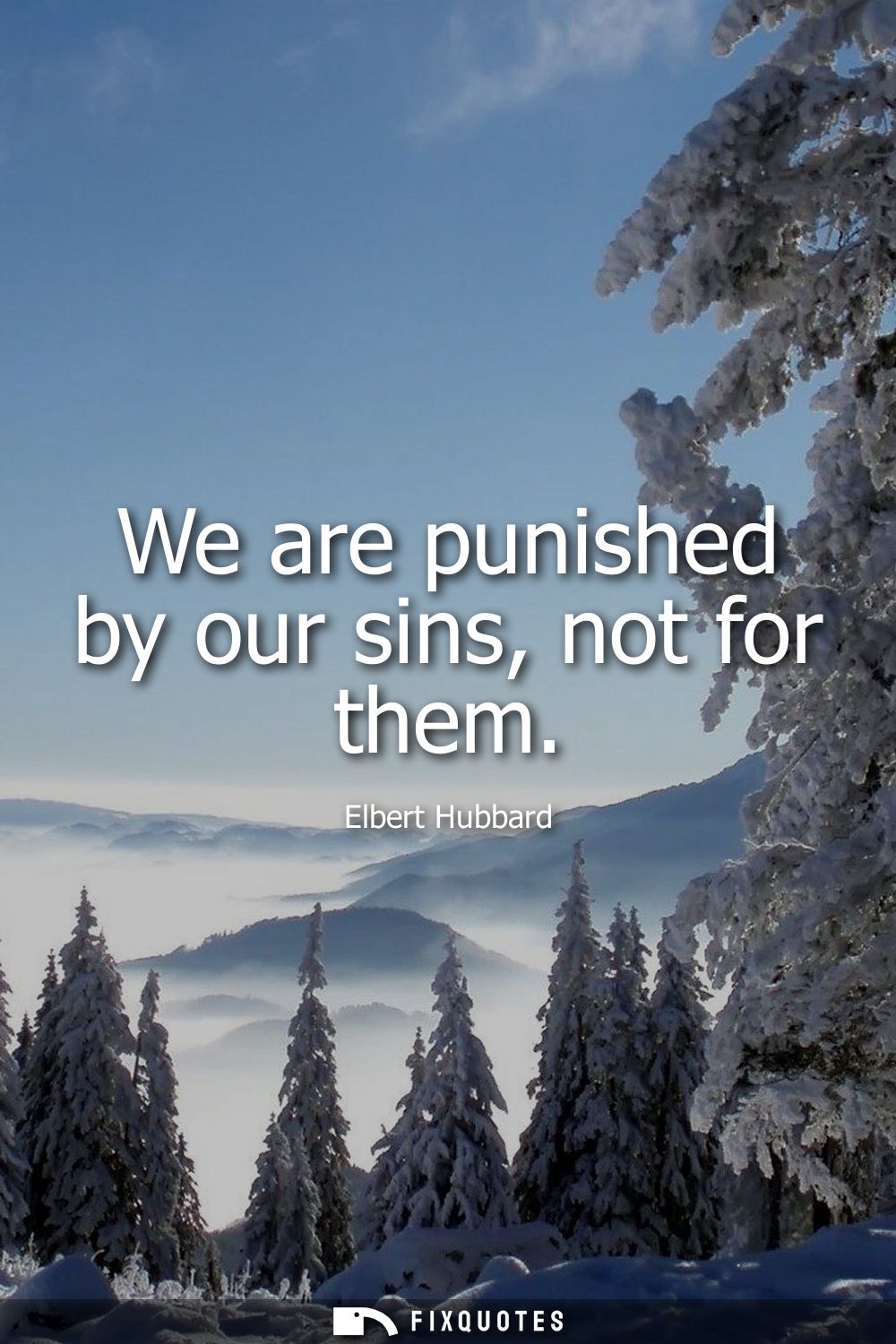
"We are punished by our sins, not for them"
About this Quote
Hubbard’s line lands like a moral reversal: sin isn’t a crime that triggers an external sentence, it’s a self-administered toxin. The sting is in the preposition swap. “By” turns punishment into consequence rather than verdict, yanking the judge out of the sky and placing the gavel in the sinner’s own hand. It’s an ethic built for modernity: less hellfire, more hangover; less courtroom, more cause-and-effect.
The intent is partly corrective, partly liberating. Corrective because it strips away the comforting fiction that wrongdoing can be neatly balanced by later penance, or erased through appeasing authority. Liberating because it also implies a universe that isn’t primarily punitive. If you’re punished by your sins, then the mechanism is internal: guilt, degraded character, damaged relationships, lost trust, addiction’s feedback loop, the creeping shrinkage of possibility. The “punishment” is that sin reshapes you into someone who has to live inside the outcomes.
In Hubbard’s context - early-20th-century American self-help optimism with a hard-edged Protestant inheritance - this is moral instruction translated into a proto-psychological idiom. It’s less sermon than life lesson, suited to an era obsessed with self-making and personal responsibility. The subtext is quietly anti-theocratic: God needn’t thunder. Human behavior contains its own penalties, and the most convincing justice system is the one built into the act itself.
The intent is partly corrective, partly liberating. Corrective because it strips away the comforting fiction that wrongdoing can be neatly balanced by later penance, or erased through appeasing authority. Liberating because it also implies a universe that isn’t primarily punitive. If you’re punished by your sins, then the mechanism is internal: guilt, degraded character, damaged relationships, lost trust, addiction’s feedback loop, the creeping shrinkage of possibility. The “punishment” is that sin reshapes you into someone who has to live inside the outcomes.
In Hubbard’s context - early-20th-century American self-help optimism with a hard-edged Protestant inheritance - this is moral instruction translated into a proto-psychological idiom. It’s less sermon than life lesson, suited to an era obsessed with self-making and personal responsibility. The subtext is quietly anti-theocratic: God needn’t thunder. Human behavior contains its own penalties, and the most convincing justice system is the one built into the act itself.
Quote Details
| Topic | Ethics & Morality |
|---|
More Quotes by Elbert
Add to List