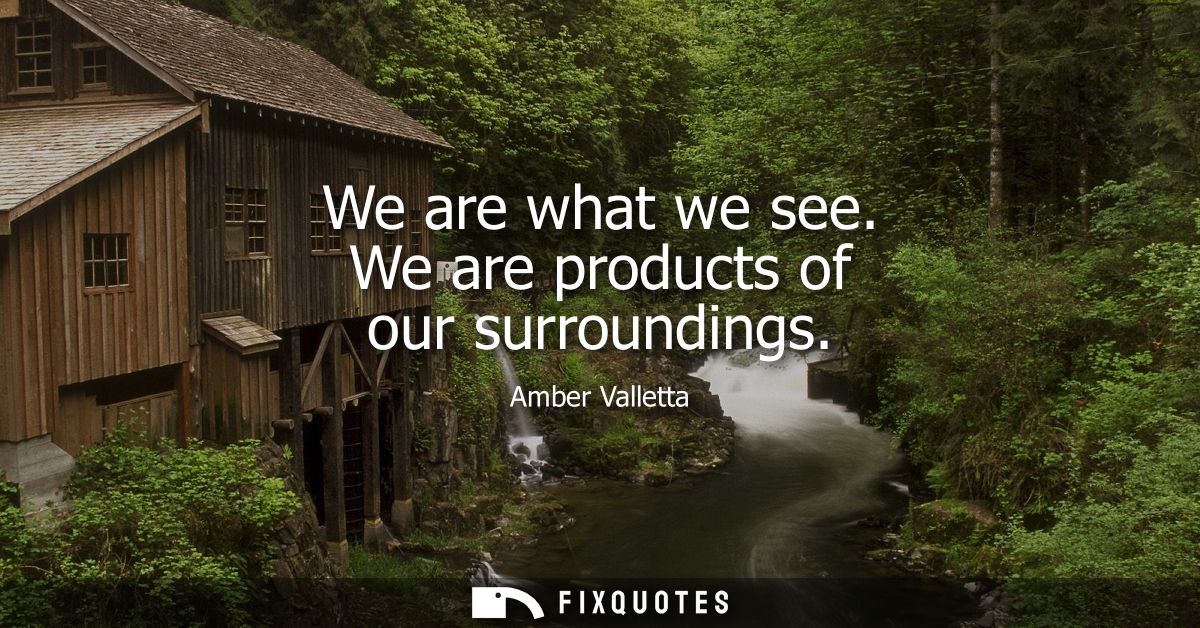
"We are what we see. We are products of our surroundings"
About this Quote
Sight is not passive; it sculpts identity. What enters through the eyes becomes the clay of our beliefs, desires, and sense of possibility. When Amber Valletta says we are what we see, she names a simple feedback loop: attention directs the mind, the mind forms habits, and habits become character. Neuroscience calls it plasticity; culture calls it socialization. Both point to the same reality that images and environments train us.
Valletta speaks from a world built on images. As a model and actor who later became a sustainability advocate, she has witnessed how fashion and media set norms, stage aspirations, and determine who gets to be visible. Representation is not a decorative issue; it is a map for identity formation. If people only see narrow versions of beauty, success, or leadership, they learn to contort themselves toward those shapes or to internalize exclusion. Conversely, when we see dignity and diversity reflected back, we inherit permission to exist fully.
The second line, we are products of our surroundings, widens the frame beyond screens. Spaces, communities, and materials carry values. Cluttered, extractive systems produce anxious, extractive habits; generous, sustainable systems invite different rhythms. Valletta’s environmental work underscores that our closets and cities participate in making us. A supply chain is not merely out there. It touches bodies and routines, and it teaches us how to relate to the planet and to one another.
There is caution and agency here. Media diets, friendships, workplace cultures, neighborhood design all press fingerprints into the self. The availability of certain images fuels comparison and fear; the availability of others nurtures empathy and courage. To change who we are becoming, curate what we consume and help build better surroundings. Gatekeepers in fashion and media bear responsibility for what they circulate. Individuals share responsibility for what they elevate. If seeing shapes being, then choosing what to see is a moral act.
Valletta speaks from a world built on images. As a model and actor who later became a sustainability advocate, she has witnessed how fashion and media set norms, stage aspirations, and determine who gets to be visible. Representation is not a decorative issue; it is a map for identity formation. If people only see narrow versions of beauty, success, or leadership, they learn to contort themselves toward those shapes or to internalize exclusion. Conversely, when we see dignity and diversity reflected back, we inherit permission to exist fully.
The second line, we are products of our surroundings, widens the frame beyond screens. Spaces, communities, and materials carry values. Cluttered, extractive systems produce anxious, extractive habits; generous, sustainable systems invite different rhythms. Valletta’s environmental work underscores that our closets and cities participate in making us. A supply chain is not merely out there. It touches bodies and routines, and it teaches us how to relate to the planet and to one another.
There is caution and agency here. Media diets, friendships, workplace cultures, neighborhood design all press fingerprints into the self. The availability of certain images fuels comparison and fear; the availability of others nurtures empathy and courage. To change who we are becoming, curate what we consume and help build better surroundings. Gatekeepers in fashion and media bear responsibility for what they circulate. Individuals share responsibility for what they elevate. If seeing shapes being, then choosing what to see is a moral act.
Quote Details
| Topic | Wisdom |
|---|
More Quotes by Amber
Add to List