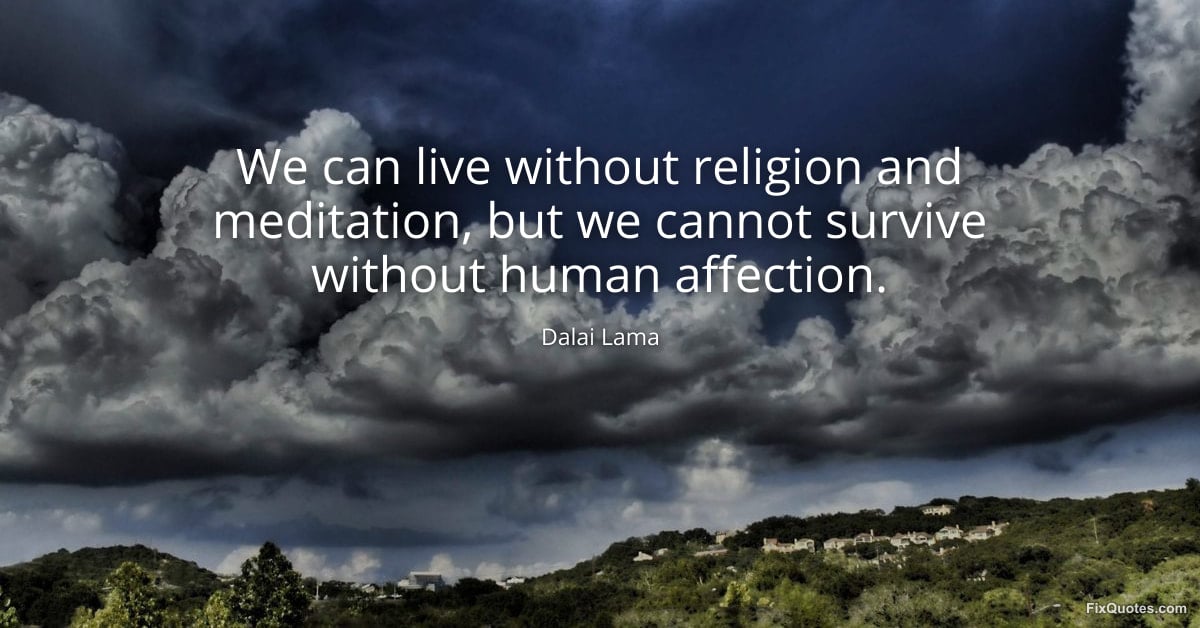
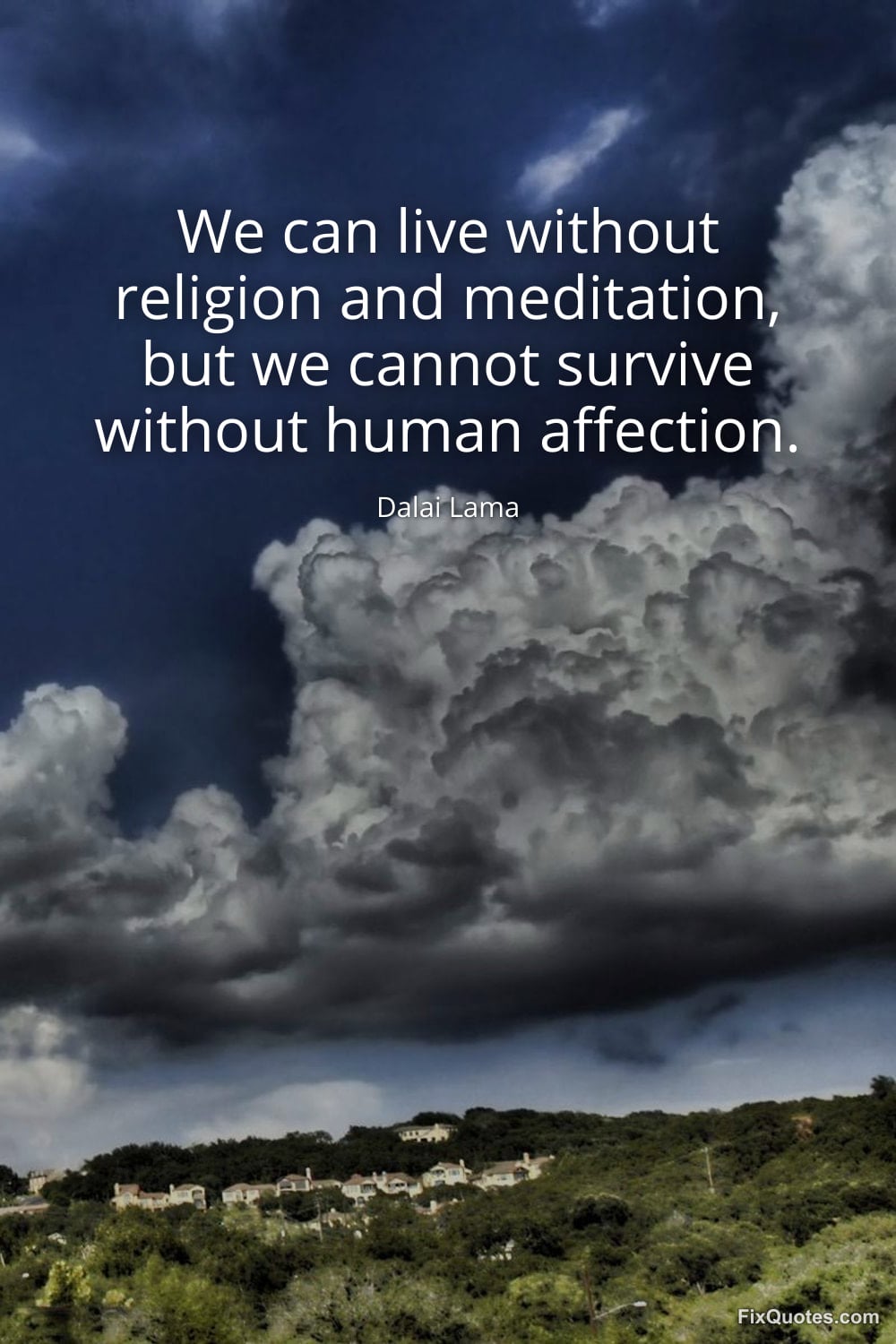
"We can live without religion and meditation, but we cannot survive without human affection"
About this Quote
The intent is strategic universality. “Religion” is a boundary marker; it sorts people into camps. “Meditation” has become both wellness commodity and moral badge. By naming both as dispensable, he sidesteps the culture-war trap where spiritual talk gets read as sectarian or self-help. The subtext is that practices are only as good as the social capacities they produce. If they don’t make you gentler, more patient, more available to others, they’ve missed the point.
“Cannot survive” is doing heavy lifting. He’s not talking about survival as a poetic metaphor; he’s pointing at the social and biological infrastructure of being human: infants need touch to develop, adults need connection to withstand stress, communities need trust to function. Affection here isn’t romance; it’s the everyday ethic of care that keeps people from becoming isolated units.
Context matters: the Dalai Lama has spent decades translating Tibetan Buddhist ideas into a secular moral language for global audiences. This line is part bridge-building, part critique - aimed as much at rigid religiosity and solo spiritual optimization as at modern loneliness.
Quote Details
| Topic | Love |
|---|---|
| Source | Help us find the source |
| Cite |
Citation Formats
APA Style (7th ed.)
Lama, Dalai. (2026, January 18). We can live without religion and meditation, but we cannot survive without human affection. FixQuotes. https://fixquotes.com/quotes/we-can-live-without-religion-and-meditation-but-228/
Chicago Style
Lama, Dalai. "We can live without religion and meditation, but we cannot survive without human affection." FixQuotes. January 18, 2026. https://fixquotes.com/quotes/we-can-live-without-religion-and-meditation-but-228/.
MLA Style (9th ed.)
"We can live without religion and meditation, but we cannot survive without human affection." FixQuotes, 18 Jan. 2026, https://fixquotes.com/quotes/we-can-live-without-religion-and-meditation-but-228/. Accessed 29 Mar. 2026.