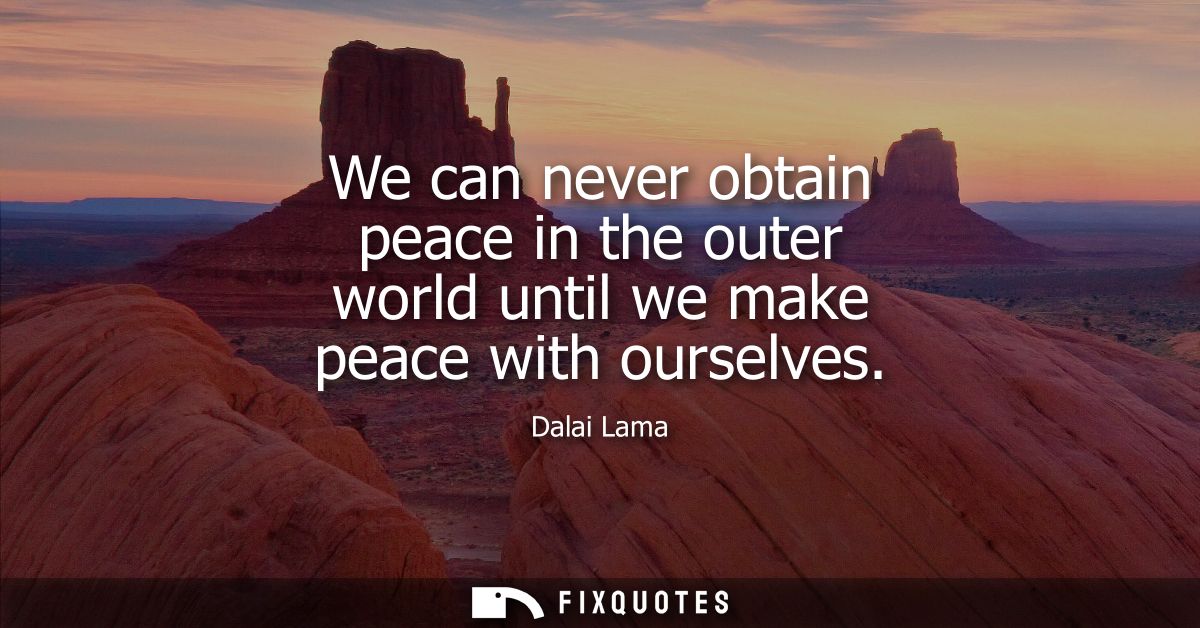
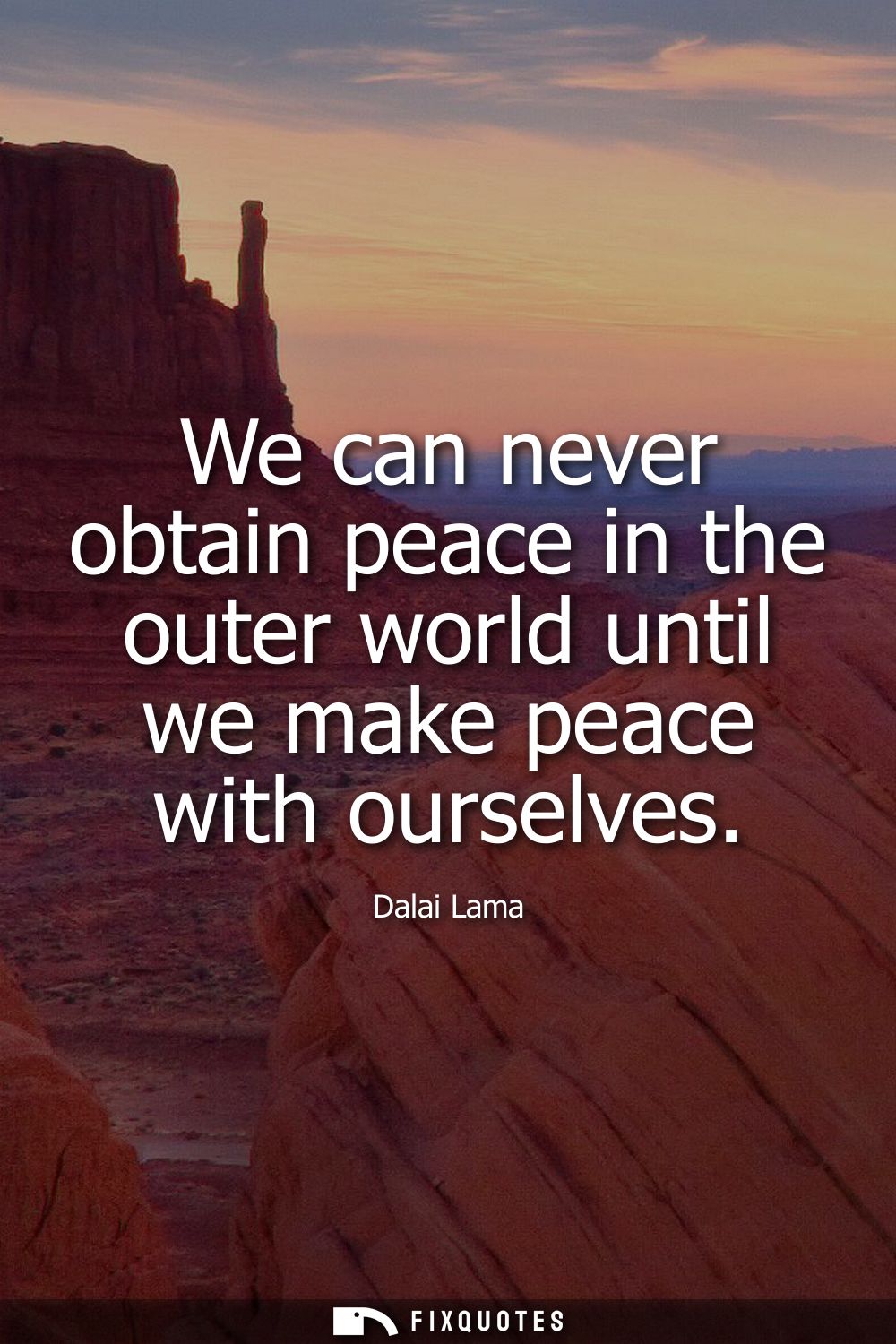
"We can never obtain peace in the outer world until we make peace with ourselves"
About this Quote
The subtext is quietly radical. It refuses the comforting story that turmoil is always caused by “them” out there. If your inner life is governed by agitation - ego, humiliation, hunger for control - then any “outer peace” you build will be brittle, a pause between flare-ups. The quote also contains a check on righteousness: even noble causes can become engines of cruelty when powered by unexamined rage. “Make peace with ourselves” is less about serenity-as-aesthetic and more about disarming the psychological triggers that turn moral certainty into permission.
Context matters: Tibetan Buddhism emphasizes compassion and non-attachment, but the Dalai Lama’s public role forces that ethic into the arena of geopolitics. The sentence works rhetorically because it sounds like counsel yet lands like an indictment. It offers a pathway that’s both intimate and politically consequential: cultivate inner stability, and you reduce the demand for enemies. It’s leadership by inward discipline, insisting the world changes only as fast as our nervous systems do.
Quote Details
| Topic | Peace |
|---|---|
| Source | Help us find the source |
| Cite |
Citation Formats
APA Style (7th ed.)
Lama, Dalai. (2026, January 18). We can never obtain peace in the outer world until we make peace with ourselves. FixQuotes. https://fixquotes.com/quotes/we-can-never-obtain-peace-in-the-outer-world-229/
Chicago Style
Lama, Dalai. "We can never obtain peace in the outer world until we make peace with ourselves." FixQuotes. January 18, 2026. https://fixquotes.com/quotes/we-can-never-obtain-peace-in-the-outer-world-229/.
MLA Style (9th ed.)
"We can never obtain peace in the outer world until we make peace with ourselves." FixQuotes, 18 Jan. 2026, https://fixquotes.com/quotes/we-can-never-obtain-peace-in-the-outer-world-229/. Accessed 12 Feb. 2026.