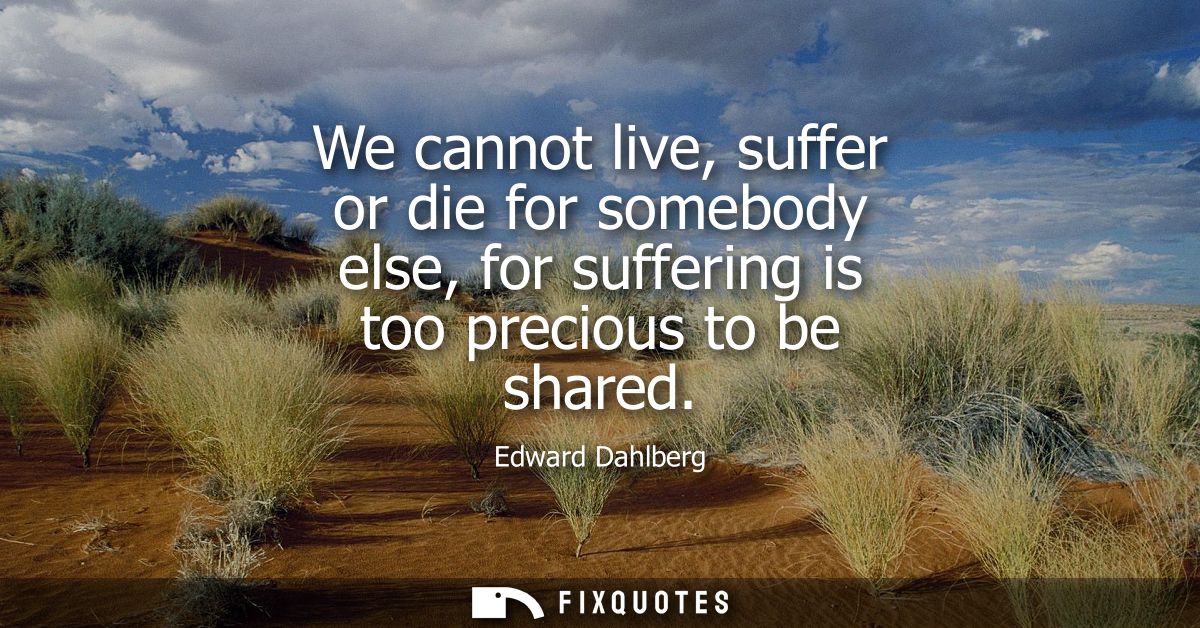
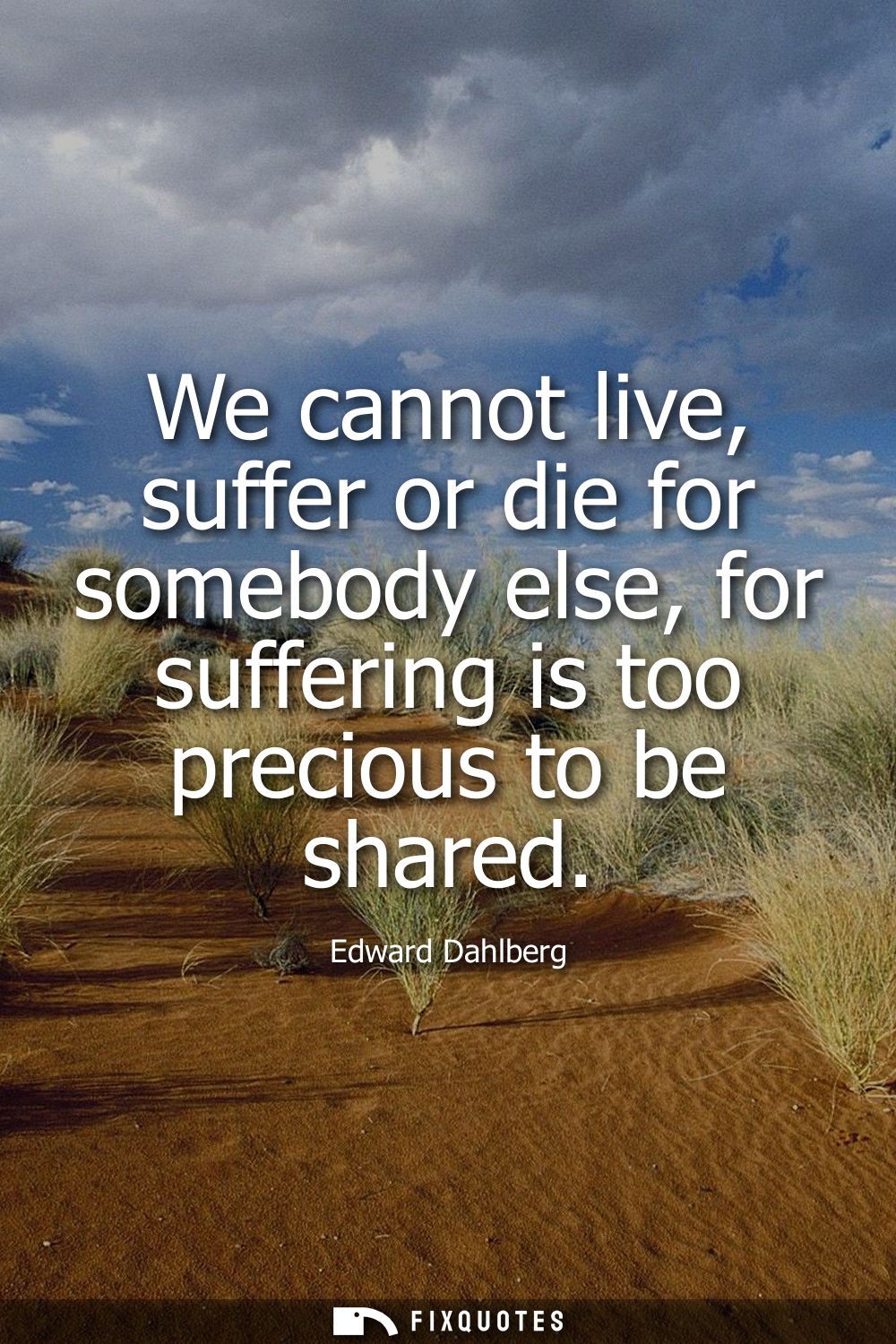
"We cannot live, suffer or die for somebody else, for suffering is too precious to be shared"
About this Quote
Dahlberg’s line lands like a slap at the sentimental myth that love can fully substitute for another person’s pain. He starts by denying the consolations we reach for in crisis - that we can carry someone, redeem them, “take it on” for them. The blunt tricolon “live, suffer or die” compresses a whole human biography into three verbs, then rejects the comforting fantasy that any of it is transferable. The rhetoric is stark because the claim is stark: interior experience is an unshareable property.
Then he pivots into the real provocation: suffering is “too precious.” That word is the barb. Dahlberg isn’t romanticizing misery so much as insisting it has value because it is singular, formative, and ultimately private. Pain, in his worldview, is not a communal currency; it’s the brutal raw material out of which character, art, and self-knowledge get made. To “share” it in the easy moral sense - to distribute it, dilute it, perform it for sympathy - would cheapen it. Precious here means costly and instructive, not desirable.
Context matters. Dahlberg, a caustic American novelist shaped by early deprivation and a lifetime of quarrels with institutions and pieties, writes from a tradition that distrusts comfort as a cultural posture. The subtext is an attack on consolatory rhetoric itself: we can accompany, witness, even love fiercely, but we can’t outsource the existential bill. The best we can offer is presence without the lie of substitution.
Then he pivots into the real provocation: suffering is “too precious.” That word is the barb. Dahlberg isn’t romanticizing misery so much as insisting it has value because it is singular, formative, and ultimately private. Pain, in his worldview, is not a communal currency; it’s the brutal raw material out of which character, art, and self-knowledge get made. To “share” it in the easy moral sense - to distribute it, dilute it, perform it for sympathy - would cheapen it. Precious here means costly and instructive, not desirable.
Context matters. Dahlberg, a caustic American novelist shaped by early deprivation and a lifetime of quarrels with institutions and pieties, writes from a tradition that distrusts comfort as a cultural posture. The subtext is an attack on consolatory rhetoric itself: we can accompany, witness, even love fiercely, but we can’t outsource the existential bill. The best we can offer is presence without the lie of substitution.
Quote Details
| Topic | Wisdom |
|---|
More Quotes by Edward
Add to List