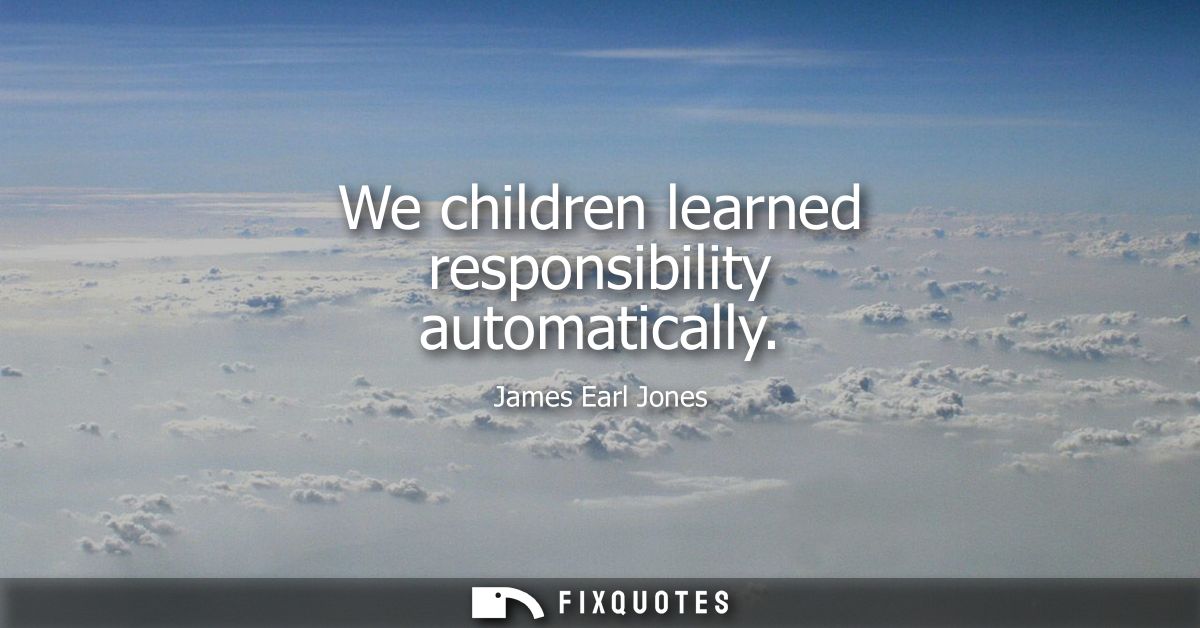
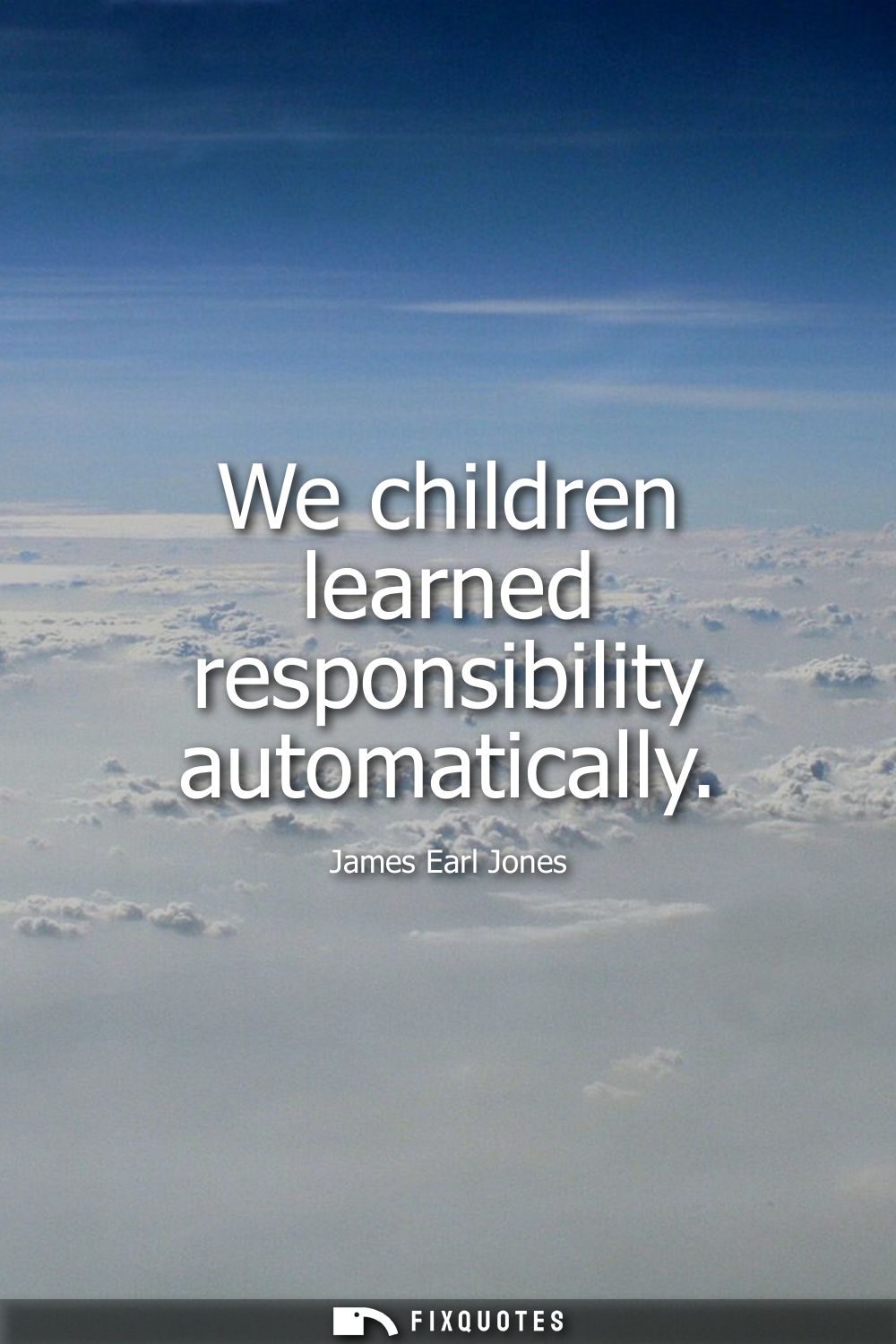
"We, children, learned responsibility automatically"
About this Quote
"We children learned responsibility automatically" lands with the quiet authority of someone who grew up before "adulting" became a meme and before parenting turned into a 24/7 coaching enterprise. James Earl Jones isn’t bragging; he’s pointing at an older social contract where responsibility wasn’t a lesson delivered in a workshop, it was the air you breathed. The key word is "automatically" - not magically, not effortlessly, but embedded. It suggests a childhood structured by necessity: chores that weren’t negotiable, expectations that weren’t customized to your mood, and consequences that didn’t require a PowerPoint.
The subtext carries a gentle indictment of the present without needing to say it outright. If responsibility once arrived "automatically", what changed? Jones implies that modern life buffers kids from the kinds of real stakes that once taught competence: fewer chances to roam unsupervised, more institutional oversight, more consumer convenience, more parents managing risk like a second job. Responsibility gets outsourced, then re-imported later as self-help.
Coming from an actor known for a voice that sounds like history itself, the line also works as performance. Jones grew up in an era and environment where dignity was often stitched together from discipline and self-reliance, especially for Black families navigating limited room for error. He compresses that lived reality into a single, deceptively simple sentence: not nostalgia for hardship, but respect for what hardship taught, and a warning about what comfort can quietly erode.
The subtext carries a gentle indictment of the present without needing to say it outright. If responsibility once arrived "automatically", what changed? Jones implies that modern life buffers kids from the kinds of real stakes that once taught competence: fewer chances to roam unsupervised, more institutional oversight, more consumer convenience, more parents managing risk like a second job. Responsibility gets outsourced, then re-imported later as self-help.
Coming from an actor known for a voice that sounds like history itself, the line also works as performance. Jones grew up in an era and environment where dignity was often stitched together from discipline and self-reliance, especially for Black families navigating limited room for error. He compresses that lived reality into a single, deceptively simple sentence: not nostalgia for hardship, but respect for what hardship taught, and a warning about what comfort can quietly erode.
Quote Details
| Topic | Parenting |
|---|---|
| Source | Help us find the source |
| Cite |
Citation Formats
APA Style (7th ed.)
Jones, James Earl. (2026, February 18). We, children, learned responsibility automatically. FixQuotes. https://fixquotes.com/quotes/we-children-learned-responsibility-automatically-85102/
Chicago Style
Jones, James Earl. "We, children, learned responsibility automatically." FixQuotes. February 18, 2026. https://fixquotes.com/quotes/we-children-learned-responsibility-automatically-85102/.
MLA Style (9th ed.)
"We, children, learned responsibility automatically." FixQuotes, 18 Feb. 2026, https://fixquotes.com/quotes/we-children-learned-responsibility-automatically-85102/. Accessed 6 Mar. 2026.
More Quotes by James
Add to List