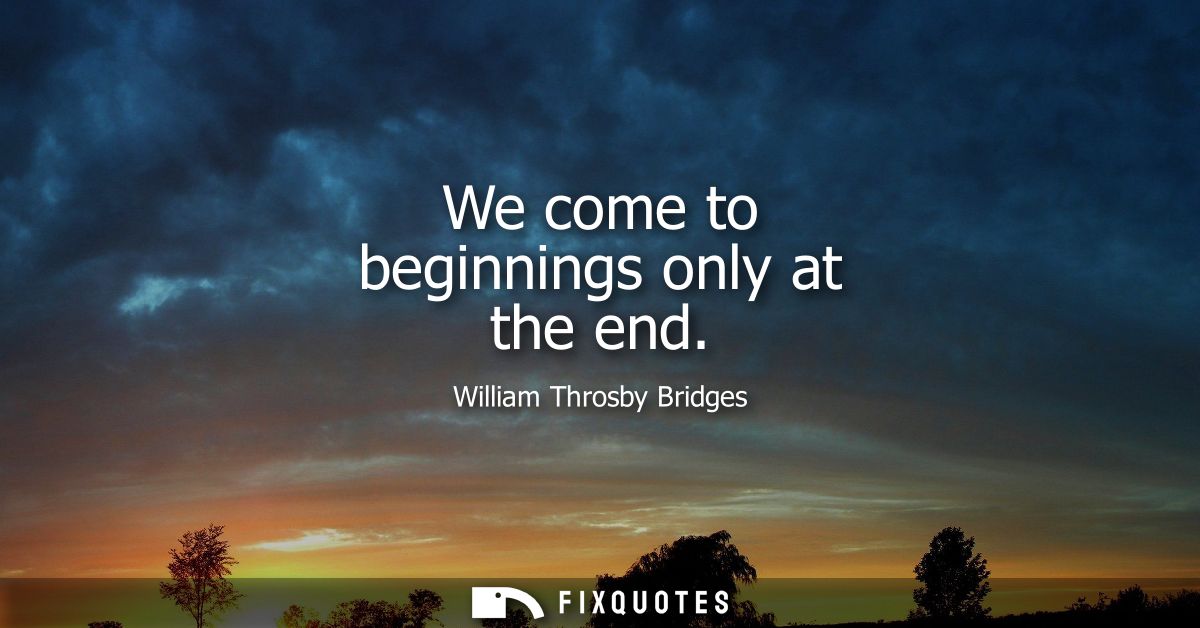
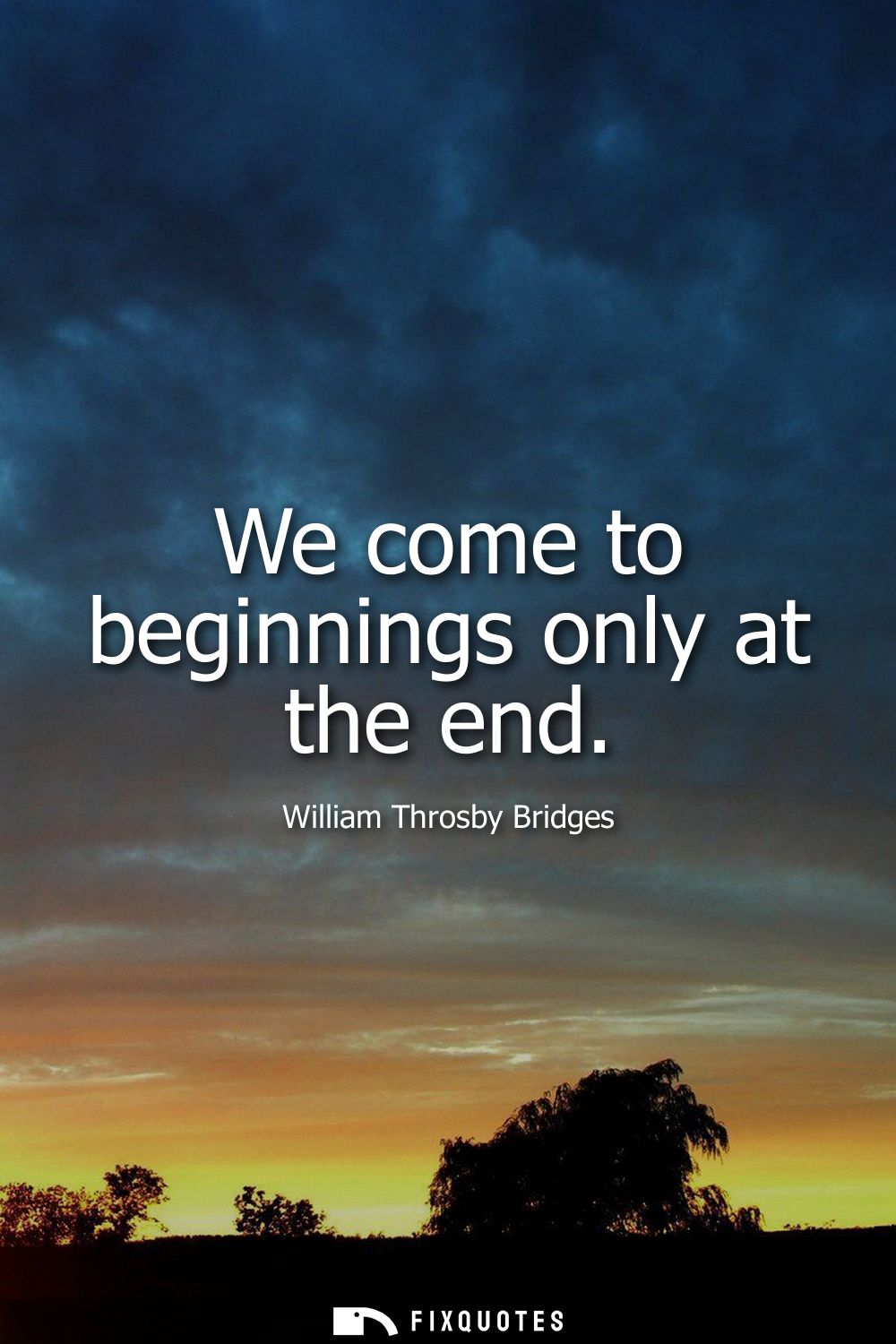
"We come to beginnings only at the end"
About this Quote
A soldier’s line that lands like a quiet after-action report: you only understand where something truly began once it’s already over. “We come to beginnings only at the end” flips the sentimental idea of fresh starts into something harder and more fatalistic. The grammar does the work. “Come to” implies arrival, like reaching a town on a march, not choosing a new chapter. “Beginnings” aren’t opportunities; they’re locations you recognize too late, after the terrain has been crossed and the costs tallied.
Bridges writes from a profession built on irreversibility. In military life, causality is often reconstructed backward: the battle is fought, then the briefing becomes history, then the history becomes explanation. The subtext is less philosophical than procedural. You act under uncertainty; only afterward do you discover what the first decisive step actually was. That’s also how trauma and grief operate: the mind returns to small, ordinary moments and retrofits them as the “start” of catastrophe, a way of making chaos narratable.
The line’s sting is its refusal to flatter agency. It suggests that beginnings are not self-authored declarations but retrospective inventions, the stories we tell to make endings feel earned. For a soldier of Bridges’s era, living in the long shadow of imperial campaigns and looming global war, that irony isn’t clever; it’s survival. The sentence offers a disciplined consolation: you won’t see the turning point when it happens, but you may live long enough to name it.
Bridges writes from a profession built on irreversibility. In military life, causality is often reconstructed backward: the battle is fought, then the briefing becomes history, then the history becomes explanation. The subtext is less philosophical than procedural. You act under uncertainty; only afterward do you discover what the first decisive step actually was. That’s also how trauma and grief operate: the mind returns to small, ordinary moments and retrofits them as the “start” of catastrophe, a way of making chaos narratable.
The line’s sting is its refusal to flatter agency. It suggests that beginnings are not self-authored declarations but retrospective inventions, the stories we tell to make endings feel earned. For a soldier of Bridges’s era, living in the long shadow of imperial campaigns and looming global war, that irony isn’t clever; it’s survival. The sentence offers a disciplined consolation: you won’t see the turning point when it happens, but you may live long enough to name it.
Quote Details
| Topic | New Beginnings |
|---|
More Quotes by William
Add to List